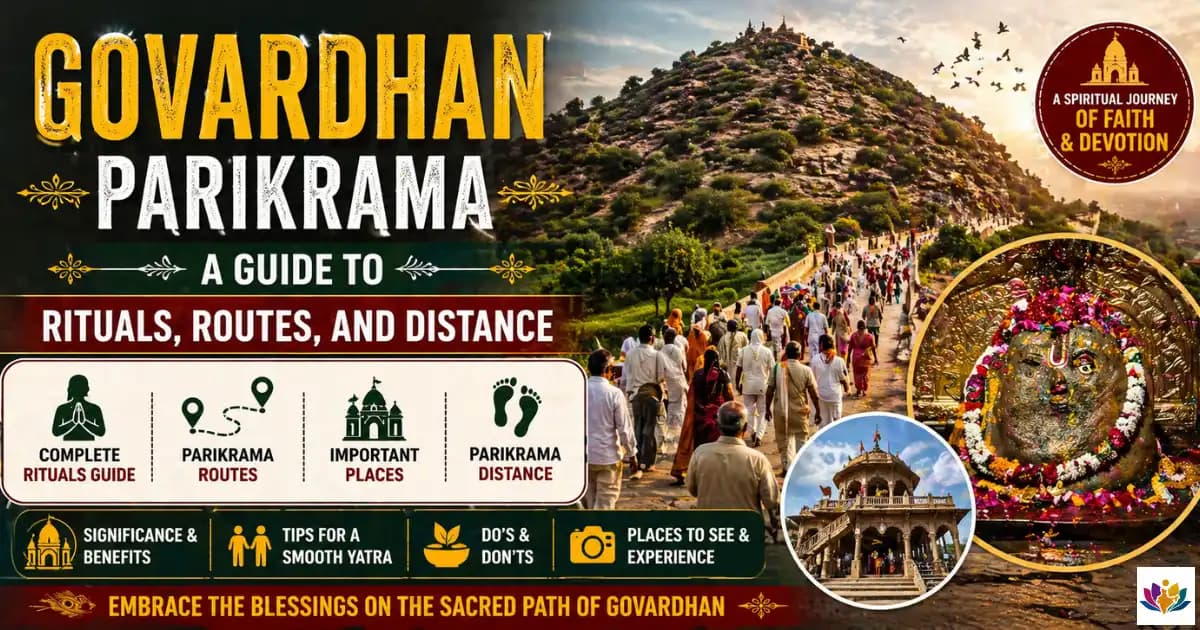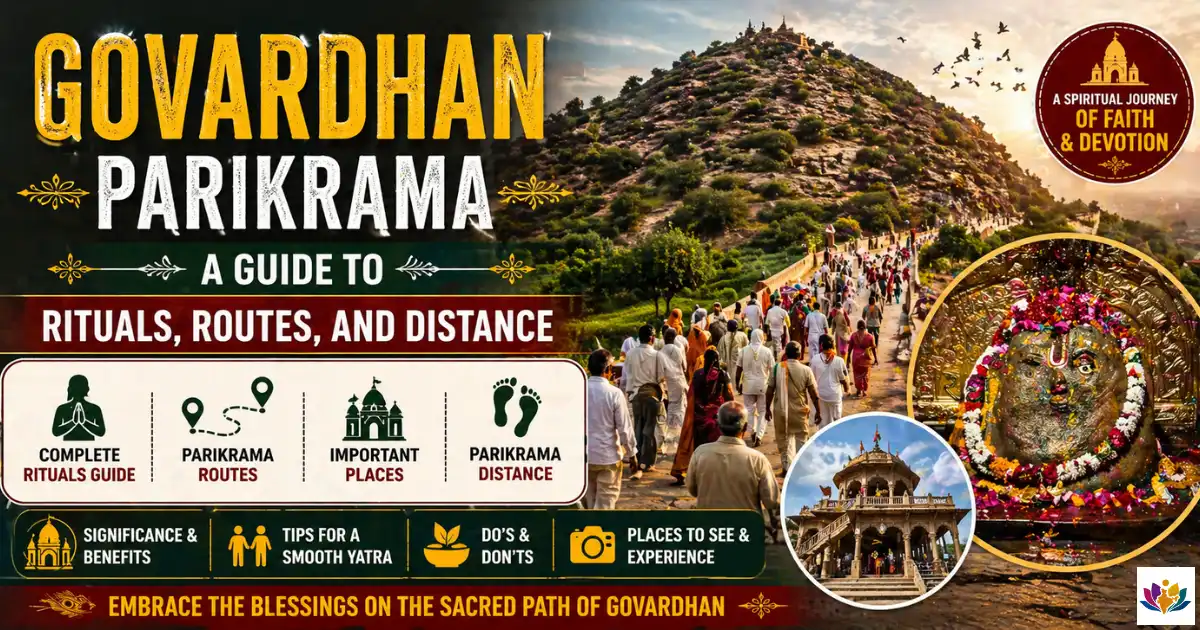
There’s a moment, usually somewhere between the first few steps and the quiet stretch near Mansi Ganga, when people realize this isn’t just a walk. Govardhan Parikrama doesn’t begin when you start walking… it begins when your pace slows down without you forcing it. The dust, the chants, the occasional “Radhe Radhe” from strangers it all blends into something that feels less like travel and more like participation.
Some come with a checklist complete the distance, visit the temples, return. Others come without any plan at all. And interestingly, both kinds of people end up walking the same path, but they experience it very differently. That’s the thing about Govardhan Parikrama it meets you wherever you are, but it doesn’t rush to explain itself.
Quick Overview - Govardhan Parikrama
Detail | Information |
Place | Govardhan Hill, Mathura District, Uttar Pradesh |
Primary Ritual | Parikrama (Circumambulation of Govardhan Hill) |
Total Distance | 21 km (Complete Parikrama) |
Duration | 5-7 Hours |
Height of Hill | Approx 80 feet |
Best Starting Point | Mansi Ganga Kund |
Ideal Months | October to March, Kartik Month |
Entry Fee | Free |
Main Experience | Walking barefoot, temple visits, spiritual chanting |
Understanding Govardhan Parikrama Distance - What You Actually Walk
When people search for Govardhan Parikrama distance, they usually expect a fixed number. But the reality is slightly layered. There isn’t just one route. There are two main types, and many devotees choose based on time, physical ability, or spiritual intent.
Parikrama Distance Breakdown
Parikrama Type | Distance | Description |
Badi Parikrama | 12 km | Outer route covering temples, villages, and full hill circuit |
Chhoti Parikrama | 9 km | Inner route focusing on sacred kunds and core areas |
Total Distance | 21 km | Combined full Govardhan Parikrama |
Now here’s something people don’t always expect this distance feels different depending on when you walk. Early morning feels lighter. Afternoon feels heavier. Night parikrama, especially in summer, feels calmer but slightly surreal.
Govardhan Parikrama Route Map - How the Path Naturally Flows
You won’t really need a strict Govardhan Parikrama route map once you start walking. The path is self-guided in a way. Devotees, signboards, and temple flow naturally lead you forward. Still, understanding the sequence helps you stay aware of where you are.
Key Route Flow:
Mansi Ganga Kund (Starting Point)
Daan Ghati Mandir
Govind Kund
Radha Kund & Shyam Kund
Kusum Sarovar
Jatipura (Mukharvind)
Poonchhari Ka Lautha
Return toward starting point
Interestingly, even if you lose track of sequence, you don’t feel lost. The route keeps pulling you forward.
Landmarks That Shape the Journey
Each stop during Govardhan Parikrama carries its own rhythm. Some are crowded, some are unexpectedly quiet.
Important Landmarks:
Mansi Ganga Kund - Traditional starting point; believed to be manifested by Lord Krishna
Daan Ghati Mandir - Associated with Krishna’s playful “daan leela”
Radha Kund & Shyam Kund - Considered the most spiritually intense spots, especially during Kartik Purnima
Kusum Sarovar - Architectural beauty with peaceful surroundings
Jatipura (Mukharvind) - Devotees offer direct prayers to Govardhan Hill
Poonchhari Ka Lautha - Symbol of devotion and loyalty
Govind Kund - Linked to Indra’s surrender to Krishna
Haridev Temple - Ancient temple near starting point
Many people rush through these, but the ones who pause at even two or three places often describe a deeper connection.
Govardhan Parikrama Timings - When the Experience Feels Right
Timing is not just about comfort it shapes your entire experience.
Ideal Parikrama Timings
Time | Experience |
4:00 AM - 6:00 AM | Most peaceful, deeply spiritual |
Morning | Comfortable walking, moderate crowd |
Night Parikrama | Preferred in summer, calm and less crowded |
Early morning has a certain stillness that’s hard to explain. Night parikrama, on the other hand, feels more introspective.
Best Time to Do Govardhan Parikrama - Months & Festivals
Not every month feels the same here. The energy changes with seasons and festivals.
Best Time to Visit
Month / Season | Experience |
October - March | Pleasant weather, best for walking |
Kartik Month | Highly spiritual, peak devotion |
Festival Days (Janmashtami, Govardhan Puja) | Extremely crowded but powerful |
Summer (April - June) | Better for night parikrama |
Kartik month has a completely different atmosphere. You’ll see more devotees walking barefoot, chanting continuously, and spending longer time at each stop.
Rituals During Govardhan Parikrama - More Than Just Walking
Some people walk casually. Others follow strict rituals. Both are accepted, but the intention changes the experience.
Walking barefoot (most common practice)
Offering milk or water at Mukharvind
Taking a dip at Radha Kund
Performing dandvat parikrama (full-body prostration)
You’ll notice people walking silently, some chanting, some counting beads. No one explains it to you, but you slowly understand the rhythm.
Crowd Behavior & Real Observations
Crowd here doesn’t behave like temple queues. It spreads out.
Early morning = disciplined and calm
Midday = scattered, slightly tiring
Evening/night = relaxed and steady
One thing you’ll notice people help each other without asking. Someone offers water, someone guides directions. It feels less like a crowd and more like a shared journey.
Planning Support Partner
Planning a complete Govardhan Parikrama can feel simple at first, but once you consider distance, timing, weather, and temple stops, it becomes more layered. This is where Vrindavan Tours and Packages helps travelers bring clarity to the experience without making it complicated. From suggesting the right starting time to organizing nearby stays and managing travel flow between Mathura, Vrindavan, and Govardhan, it allows visitors to focus more on the journey itself rather than constantly figuring out logistics.
How to Reach Govardhan Parikrama
By Car
From Mathura → 23 km (40–45 minutes)
From Vrindavan → 25 km approx
Parking available near Mansi Ganga
By Train
Nearest station: Mathura Junction
Distance: 23 km
Auto/Taxi: ₹300–₹800
By Air
Nearest Airport: Delhi Airport (150 km)
Travel Time: 3-4 hours via Yamuna Expressway
A Small Detail Most People Notice Late
At some point during Govardhan Parikrama, usually after a few kilometers, you stop checking distance. You stop calculating time. And without realizing it, you start walking slower. That shift doesn’t happen because someone tells you to it just happens.
Conclusion
The distance of Govardhan Parikrama may be measured in kilometers, but the experience isn’t. It stretches beyond the path, beyond the temples, into something quieter and more personal. And maybe that’s why people return not to complete it again, but to feel that same unhurried rhythm they didn’t expect the first time.
Contact Vrindavan Packages Today:
📞Call Us: +91 7300620809
📲WhatsApp Us: +91 7300620809
🌐Visit Our Website: Vrindavan Packages
Check Vrindavan Packages Google Reviews