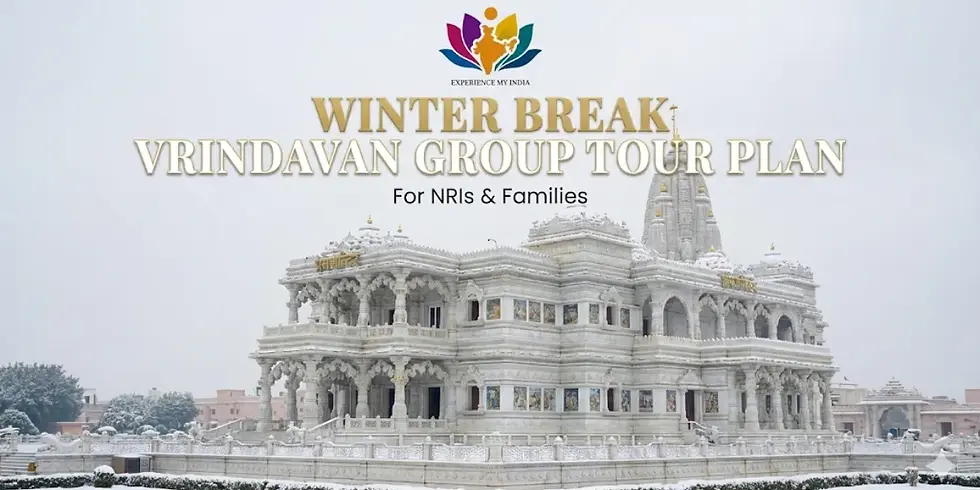
Winter Break Vrindavan Group Tour Plan for NRIs & Families
- Vrindavan Tours and Packages
- Dec 25, 2025
- 5 min read

Winter holidays often arrive quietly. Flights were booked months ago. School calendars finally open up. Elders say they are free “whenever you decide.” And somewhere in the middle of those conversations, Vrindavan comes up—not loudly, not insistently, but with a kind of calm certainty.
A Vrindavan Group Tour Plan during winter usually isn’t about sightseeing. It’s about timing. About choosing a season when everyone can walk a little slower, wait a little longer, and still feel comfortable doing so. Winter gives Vrindavan that softness. The town remains intense, devotional, alive—but the weather stops fighting you.
For NRIs returning home with families, and for joint families traveling together, winter creates a rare alignment. Bodies cooperate. Minds stay open. And Vrindavan begins to feel less overwhelming and more welcoming.
Book Now Your Mathura Vrindavan Tour Package
Why Winter Changes the Way Vrindavan Feels
Vrindavan never becomes quiet. But winter changes how it touches you.
From October through February, the cold air sharpens the senses without exhausting the body. Standing in temple queues doesn’t feel punishing. Walking through narrow lanes doesn’t drain patience. Elders don’t look for the next chair every ten minutes. Children don’t lose interest halfway through darshan.
That’s why most thoughtful Vrindavan group travel itinerary plans naturally fall in winter. The town stays the same, but the experience changes because you are no longer rushing against heat, fatigue, or discomfort.
Winter doesn’t simplify Vrindavan. It simply gives you the space to stay with it longer.
Understanding Vrindavan Before Planning a Group Visit
Vrindavan is not a destination designed for schedules.
Associated with the childhood and divine presence of Krishna, the town moves on its own rhythm. Darshan timings stretch or compress. Streets fill and empty without warning. Silence appears suddenly, even in crowded places.
For groups—especially NRI families—this can feel confusing at first. People are used to structure. To tickets. To queues that move predictably. Vrindavan offers none of that.
What it offers instead is continuity. When a group accepts that the day will unfold rather than be controlled, something shifts. Waiting feels shared. Confusion turns into observation. The place begins to guide you rather than resist you.
Every successful Vrindavan Group Tour Plan starts with this understanding.
Vrindavan Location and How Groups Usually Reach
Vrindavan is located in Uttar Pradesh, close to Mathura, and well-connected to major cities.
By Train Mathura Junction is the nearest major railway station. From there, Vrindavan is a short road journey. Many NRI families prefer this option because it feels predictable and manageable, especially with elders.
By Road (Bus or Private Vehicle) Road travel is the most flexible option for groups. The Yamuna Expressway connects Delhi and Mathura smoothly, making it easy to plan arrivals and departures together.
By Air Delhi remains the nearest major airport. From there, groups usually continue by road or train. While indirect, this route is reliable.
For families traveling together, road journeys after landing tend to feel less fragmented and easier to coordinate.
Why Vrindavan Works So Well for NRI Family Groups
Families returning from abroad often carry more than luggage. They carry expectations.
Elders want familiarity. Children want curiosity. Parents want balance. Vrindavan meets all three—but only if the visit isn’t rushed.
For elders, the town brings memory. For children, it brings story. For adults, it brings pause. That’s why a winter Vrindavan group tour package often feels different from other pilgrimages. It doesn’t push emotion. It allows it.
You don’t explain everything. You let people notice what they notice.
Choosing Temples That Suit Group Travel
Trying to cover every temple is where group trips usually go wrong. Winter makes movement easier, but stamina still matters. The temples below offer depth without exhaustion.
Banke Bihari Temple
The Banke Bihari Temple sits at the emotional center of the town. Darshan happens in intervals, with curtains opening and closing. This rhythm feels unusual at first, then strangely comforting.
Winter mornings are the best time for groups. Crowds are still present, but patience lasts longer in cooler air.
ISKCON Vrindavan
The ISKCON Vrindavan offers structure. Wide paths. Seating areas. Predictable movement. For families, this often becomes the place where everyone breathes again after the intensity of Banke Bihari Temple.
Prem Mandir
The Prem Mandir works best in the evening. Winter nights soften the lighting and make walking around the complex pleasant rather than tiring. Elders can sit. Children can move freely.
Radha Raman Temple
Smaller, quieter, and often overlooked. Groups are often surprised by how personal the experience feels here.
Radha Vallabh Temple
This temple focuses more on devotion than elaborate ritual, which makes it accessible across generations.
Most families find that four to five temples over two days is enough.
Places in Vrindavan That Matter Beyond Temples
Some of the strongest memories don’t happen inside sanctums.
Winter mornings by the Yamuna River feel especially reflective. People walk slowly. Sit longer. Speak less. Groups often find themselves sharing silence here without planning to.
Old lanes near temples reveal daily devotion—shopkeepers opening shutters, pilgrims chanting under their breath, sadhus walking without urgency. These moments don’t require explanation. They stay because they are unforced.
A meaningful group sightseeing plan in Vrindavan leaves room for these pauses.
Winter Festivals and Group Expectations
Winter overlaps with some of Vrindavan’s most devotional periods.
Kartika month draws pilgrims steadily. Lamps appear everywhere. Bhajans carry late into the evening. The atmosphere deepens—but so do crowds.
For NRIs and families, visiting slightly before or after peak festival dates often offers the best balance. The devotional mood remains, without physical strain.
A wise Vrindavan Group Tour Plan respects group capacity as much as spiritual enthusiasm.
A Gentle 2-Day Winter Group Itinerary
Day One Morning arrival and settling in Banke Bihari Temple darshan Lunch and rest ISKCON Vrindavan visit Evening Prem Mandir walk
Day Two Early Yamuna ghat visit Radha Raman or Radha Vallabh Temple Local walks and light shopping Return journey
This flow allows elders to rest, children to stay engaged, and conversations to happen naturally.
Why Winter Group Trips Leave a Different Impression
Cold air slows everything down. Early sunsets invite reflection.
Winter removes urgency. It allows families to walk together instead of hurrying ahead. To sit together instead of chasing schedules. To notice small things without distraction.
Contact Vrindavan Packages Today:
📞Call Us: +91 7300620809
📲WhatsApp Us: +91 7300620809
🌐Visit Our Website: Vrindavan Packages
This is why many NRIs describe their winter Vrindavan visit not as dramatic, but as settling. Nothing extraordinary happened. And yet, something stayed.
Planning styles followed by Vrindavan Packages usually lean into this rhythm—less packing, more pacing—especially for family groups.
FAQs: Winter Break Vrindavan Group Tour Plan
1. Why is winter ideal for a Vrindavan Group Tour Plan?
Cool weather makes walking, waiting, and sitting comfortable.
2. Is Vrindavan suitable for elderly family members?
Yes, winter reduces physical strain significantly.
3. How many days are ideal for families?
Two days allow a relaxed and meaningful visit.
4. Are temple timings different in winter?
They vary slightly, but mornings are usually best.
5. Is this trip suitable for children?
Yes, winter makes the experience easier for them.
6. Can NRIs manage travel easily from Delhi?
Yes, road and train connectivity is reliable.
7. Are winter festivals overcrowded?
Some periods are busy; planning around peak dates helps.
8. Is local transport available for groups?
Yes, buses and private vehicles are easily arranged.
9. Should accommodation be booked in advance?
Yes, winter is a popular season.
10. Who benefits most from this tour plan?
NRI families, senior citizens, and multi-generation groups.
