📌 QUICK ANSWER
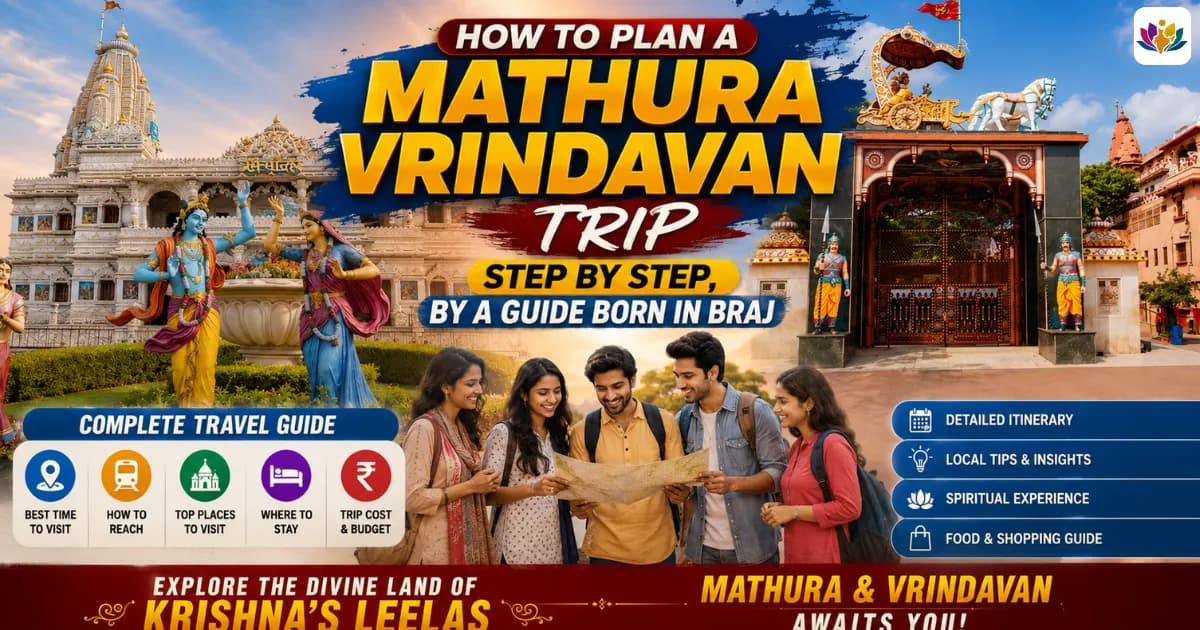
To plan a Mathura Vrindavan trip, decide your days first (two is ideal), pick a month between October and March, base yourself in Vrindavan and build each day around Banke Bihari's morning darshan. Arrange a car or train from your city and book stay early for weekends and festivals. This guide walks all nine steps. Darshan is free everywhere. To book, call or WhatsApp +91 7302265809.
Key takeaways
● Decide the number of days before anything else; stay, transport and budget all flow from it.
● October to March is the comfortable season; check both Janmashtami dates before fixing festival travel.
● Base in Vrindavan for temple density, stay options and evening life.
● Build each day around Banke Bihari's morning window.
● Darshan is free; there is no VIP pass at Banke Bihari and no daily Mangala Aarti there.
Ram Ram. I am Gurudutt, born in Gokul Mahaban Bangar, guiding Braj since 2018 with more than 50,000 yatris served. Families ask me the same question daily: how do I plan my Mathura Vrindavan trip? This is my complete answer, honest, so you can plan with confidence whether you travel with us or on your own. If you would rather hand it over, see our Mathura Vrindavan tour package or WhatsApp +91 7302265809.
Step 1: Decide how many days you need
How many days are required? Two days covers both towns properly. One day is possible from Delhi or Agra but rushed. Three days completes the wider Braj circuit with Govardhan, Barsana and Nandgaon. Everything else flows from this decision. The full day by day breakdown lives in my mathura vrindavan itinerary guide. The planning rule is simple: pick the number of days first and hold it.
Step 2: Pick your month
October to March is the comfortable season. April to June brings serious heat that punishes afternoon darshan queues. July to September is monsoon, greener and emotionally beautiful, with the trade off of humidity and slippery ghats.
Window | What to expect | Plan around |
October to March | Pleasant days, cold December mornings | Peak season, book stay early |
April to June | Harsh heat by late morning | Dawn darshan, long afternoon rest |
July to September | Monsoon greenery, humid | Waterproof footwear, flexible days |
Festivals rewrite every rule. Janmashtami and Holi multiply crowds and Janmashtami is observed on two dates by different traditions, which I present without taking sides. If a festival is your goal, plan two buffer hours into everything. Our best time to visit mathura vrindavan guide holds the month by month detail.
Step 3: Choose your base town
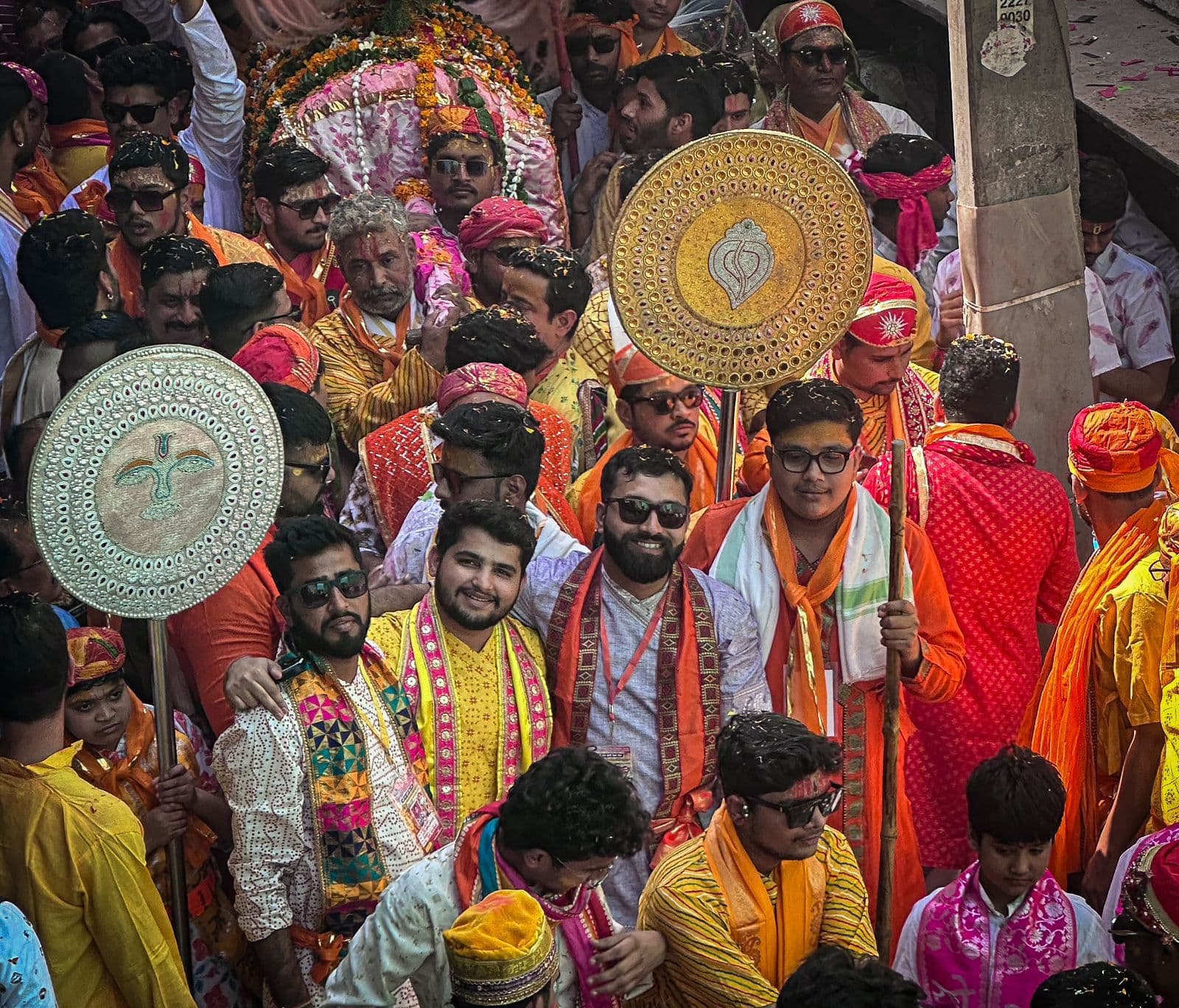
Base yourself in Vrindavan. It holds the highest density of temples, the widest range of pilgrim stays and the evening life of Prem Mandir's lighting and the ghats. Mathura works as a base only if your trip is built mainly around Krishna Janmabhoomi or you arrive very late by train. The two towns sit about 12 to 13 km apart, so no choice is fatal, but the pilgrim who stays in Vrindavan walks to morning darshan; the one who stays in Mathura drives to it.
Step 4: Decide how you will reach Braj
Mode | Best for | Honest note |
Private car | Families, seniors, 2 to 3 day plans | Delhi to Mathura is about 160 km, around three hours |
Train to Mathura Junction | Solo pilgrims, long distance travellers | Verify every schedule and fare on IRCTC |
Bus | Tight budgets | Works from Delhi and Agra; adds transfer friction |
Planning from Delhi is the most common case. Leave before sunrise to reach Banke Bihari inside the morning window and beat the expressway rush both ways. From Agra the run is about 55 to 60 km, which is why Agra add ons pair so naturally with Braj. From further cities, message me on WhatsApp and I will plan your connection personally until the dedicated source city guide for your city is live.
Step 5: Build each day around Banke Bihari
This is the step every generic article misses. Banke Bihari's darshan windows are the sun your whole day orbits. Plan the morning there, then let other temples fall into walking order around it. Three honesty rules to plan by: there is no official VIP darshan pass at Banke Bihari; there is no daily Mangala Aarti there, only rare festival days; and darshan is free everywhere in Braj. A plan built on these truths never gets ambushed. The exact windows are on our banke bihari temple timing guide.
Step 6: Book your stay
Book stay the moment your dates are fixed, especially for weekends and festivals. Vrindavan offers everything from ashram rooms to family hotels. Chhatikara Road side gives easy car access; the old town gives walkability to Banke Bihari. Our where to stay in vrindavan guide compares the areas. For elders, choose a lift or ground floor room and confirm it before paying.
Step 7: Set an honest budget
Your budget splits into transport, stay, food and offerings. Temple entry costs nothing, because darshan is free; budget only for prasad, lockers, footwear stands and chosen offerings. Precise per head figures live in my mathura vrindavan trip cost breakdown. For a packaged trip, our ladder is public: 3 day at Rs 6,999, 4 day at Rs 8,999, 5 day at Rs 10,999 per person, from Rs 5,999. If your plan includes Agra, the Taj Mahal entry ticket is never inside a package price; it is paid separately to the government.
Step 8: Pack and prepare
Modest dress across all temple towns: shoulders and knees covered is the safe standard. Comfortable footwear that slips off fast, because you remove it a dozen times a day. A small cloth bag for phones at Krishna Janmabhoomi, where lockers take everything electronic. Light woollens for December mornings. A refillable water bottle in every season. Prepare the mind too: the Yamuna is revered as mother and honestly polluted and most pilgrims today do aachman rather than a full dip. At Radha Kund, touts offer paid rituals with confidence; decline politely and walk on.
Step 9: Book it or run it yourself
You now hold every step. Run it yourself with this page and the itinerary guide. If you would rather hand the friction to someone born here, the Mathura Vrindavan tour package is these exact steps executed for you: the car on the correct side, the darshan order adjusted live, Gokul and the outer circuit included instead of quietly dropped.
The one page planning checklist
Step | Item |
1 | Days decided: 1, 2 or 3 plus |
2 | Month picked, both Janmashtami dates checked |
3 | Base fixed: Vrindavan unless a specific reason says Mathura |
4 | Transport booked; train details verified on IRCTC |
5 | Day plan built around Banke Bihari mornings |
6 | Stay booked, lift or ground floor confirmed for elders |
7 | Budget set; zero rupees to VIP darshan, because none exists |
8 | Modest clothing, easy footwear, locker ready bag packed |
9 | WhatsApp saved: +91 7302265809 for anything unclear |
Why Experience My India is the right choice
I was born in Gokul Mahaban Bangar and I have guided Braj since 2018. Over 50,000 pilgrims have travelled with us and we hold 4.5 stars across 204 Google reviews. We answer on WhatsApp from 8 AM to 9 PM daily, packages start from Rs 5,999 per person and we plan every trip on the three honesty rules above, because a Brajwasi's word in Braj is worth more than any booking portal's badge.
Tip from Gurudutt: when you fix your dates, check them against BOTH Janmashtami observances for the year, not one. Different traditions keep different dates and every year some family plans around one calendar and lands in the other date's crowd unprepared.
Ready to plan with a Brajwasi?
Send me your dates, group size and starting city and I will plan it with you personally. Browse the Mathura Vrindavan tour package or WhatsApp +91 7302265809 · 8 AM to 9 PM daily · 4.5 stars from 204 Google reviews · Based in Gokul, Mathura.
About the author
Gurudutt is the founder of Experience My India and its sole author. Born in Gokul Mahaban Bangar, Mathura, he has guided pilgrims through the Braj region since 2018, serving more than 50,000 yatris across Mathura, Vrindavan, Gokul, Govardhan, Barsana and Nandgaon. Experience My India holds 4.5 stars across 204 Google reviews. Address: Gokul Mahaban Bangar, Mathura UP 281303. Hours 8 AM to 9 PM daily. WhatsApp +91 7302265809.
Related guides
Book Your Mathura - Vrindavan Trip Today 📞 +91-7302265809 💬 WhatsApp: +91-7302265809 Packages start from ₹1,999/ person | Rated 4.5★ / 204+ Reviews Explore all: Mathura Vrindavan Tour Packages Jai Shri Krishna 🙏 |
Gurudutt — Born & Raised in Braj Bhoomi
Guiding pilgrims through Mathura & Vrindavan since 2018 · 50,000+ pilgrims served