
Lala Babu Temple, Vrindavan: A Rich Man's Renunciation
Lala Babu Temple, in Vrindavan, was raised in the nineteenth century by Krishna Chandra Singha, a wealthy trader and landlord of Kolkata known as Lala Babu, who renounced his great fortune to live as a devotee in Vrindavan. Its deities of Radha and Krishna are worshipped as Kishori Raman. The temple stands as a moving witness to one man's turning from riches to devotion. Entry is free; reconfirm timings.
Read full guide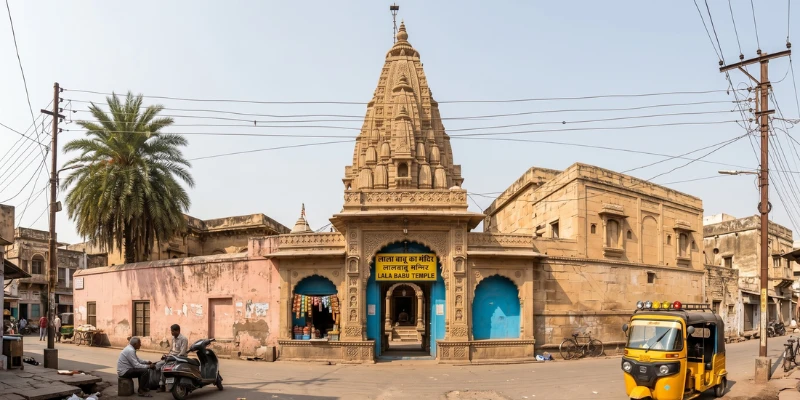
Quick answer
Lala Babu Temple, in Vrindavan, was raised in the nineteenth century by Krishna Chandra Singha, a wealthy trader and landlord of Kolkata known as Lala Babu, who renounced his great fortune to live as a devotee in Vrindavan. Its deities of Radha and Krishna are worshipped as Kishori Raman. The temple stands as a moving witness to one man's turning from riches to devotion. Entry is free; reconfirm timings.
At a glance
| What it is | A Vrindavan temple of a great devotee's renunciation |
|---|---|
| Raised by | Krishna Chandra Singha, known as Lala Babu |
| Who he was | A wealthy trader and landlord of Kolkata |
| His turning | He renounced his fortune to live for Krishna |
| Deities | Radha and Krishna, worshipped as Kishori Raman |
| When | Nineteenth century |
| Where | Vrindavan |
| The meaning | Riches set aside for devotion |
| Entry fee | Free |
| Best time | October to March; mornings |
| Pairs with | Vrindavan temple circuit |
What is the Lala Babu Temple and why visit it?
Lala Babu Temple, in Vrindavan, is one of those temples whose power lies less in its age than in the story of the heart that raised it. It was built in the nineteenth century by Krishna Chandra Singha, a hugely wealthy trader and landlord of Kolkata, known by all as Lala Babu. In the tradition, this man of great fortune turned from his riches and the world to live as a humble devotee in Vrindavan, and the temple is the fruit of that turning, an offering of all he had to Radha and Krishna.
Its deities are worshipped as Kishori Raman, Radha and Krishna together, and the temple carries the fragrance of a sincere renunciation.
The story of Lala Babu's renunciation
In the tradition, Lala Babu had everything the world prizes: wealth, position, comfort. Yet a moment of awakening turned his heart from all of it toward Krishna, and he gave up his fortune and his standing to come to Vrindavan and live in devotion, raising this temple as the work of his new life. Devotees love the temple precisely for this: that a man who could have had any pleasure chose instead the simple wealth of bhakti. It stands among the temples that show, as the people of Braj say, that in Vrindavan everything happens by Krishna's own arrangement, even the turning of a rich man's heart.
The temple's deities, Kishori Raman, receive the same loving daily service that Lala Babu began.
A tip from Gurudutt: Visit Lala Babu Temple for its story as much as its darshan: a Kolkata millionaire who walked away from it all to serve Krishna here. It is a quieter temple than the great crowd-pullers, which suits its mood of renunciation, so come unhurried. A guide can tell the tale of Lala Babu well, which is what brings the place alive. Fold it into a wider Vrindavan temple walk rather than making a special trip, and let it be the reflective stop among the busier ones. |
Lala Babu Temple among Vrindavan's devotee-temples
Vrindavan is full of temples raised not by kings but by devotees, each a frozen act of love: the Goswamis, the saints, and patrons like Lala Babu who gave their all. To visit the Lala Babu Temple alongside the founding Goswami temples and the saint-shrines is to feel how the whole town is built of devotion. See our Jugal Kishore temple guide and our Radha Raman temple guide for other temples of the devotees.
How do you reach the Lala Babu Temple?
Lala Babu Temple is in Vrindavan, within the temple town.
From | Distance | Notes |
Banke Bihari temple | 1 km | Short walk/ride |
Kesi Ghat | 1 km | Short ride |
Vrindavan centre | Close by | Short ride/walk |
Mathura | 12 km | 30 min |
Delhi | 150 km | 3-3.5 hrs |
Tips for your visit
Lala Babu Temple is free; reconfirm darshan hours, and prefer a calm morning. Dress modestly and leave footwear at the racks. It sits among Vrindavan's lanes, best folded into a temple walk. October to March is the pleasant season. Come for the reflective mood and the story of renunciation rather than grandeur.
What is nearby?
Lala Babu Temple lies among Vrindavan's town temples. To plan your visit, see our Banke Bihari guide, our Jugal Kishore temple guide, our Radha Raman temple guide and our Meera Bai temple guide.
Meet Gurudutt — Your Mathura
Vrindavan Guide
Not just a tour operator — Gurudutt was born and raised in Braj Bhoomi. 8+ years, every week, through every sacred lane of Mathura & Vrindavan.
- 🛕Born in Braj Bhoomi
- 🙏50,000+ Pilgrims Guided
- 📅Guiding Since 2018
- ⭐4.5 Google Rating
Gurudutt
Founder · Experience My India
Frequently asked questions
What is the Lala Babu Temple?
Lala Babu Temple, in Vrindavan, was raised in the nineteenth century by Krishna Chandra Singha, a wealthy Kolkata trader known as Lala Babu, who renounced his fortune for Krishna. Its deities of Radha and Krishna are worshipped as Kishori Raman.
Who was Lala Babu?
Lala Babu was Krishna Chandra Singha, a hugely wealthy trader and landlord of Kolkata who, in the tradition, renounced his riches and worldly position to live as a devotee in Vrindavan, where he raised this temple.
Where is the Lala Babu Temple?
Lala Babu Temple is in Vrindavan, within the temple town, about 12 km from Mathura, among the lanes near the other Vrindavan temples.
Why is the Lala Babu Temple famous?
It is famous for its story: a wealthy man who gave up everything for Krishna and raised this temple in Vrindavan. It is treasured as a witness to sincere renunciation more than for grandeur or age.
Who is worshipped at the Lala Babu Temple?
The deities are Radha and Krishna, worshipped together as Kishori Raman, receiving the loving daily service that Lala Babu began when he turned from his fortune to devotion in Vrindavan.
Is the Lala Babu Temple worth visiting?
Yes, for its moving story of renunciation and its quiet, reflective mood, it is a meaningful stop. Experience My India includes it among the devotee-temples of Vrindavan on a temple walk.
What does Kishori Raman mean?
Kishori Raman is a name for Radha and Krishna together: Kishori for Radha, the youthful beloved and Raman for Krishna who delights her. The Lala Babu Temple deities are worshipped in this form.
When was the Lala Babu Temple built?
The Lala Babu Temple was built in the nineteenth century by Krishna Chandra Singha, known as Lala Babu, after he renounced his Kolkata fortune to live in Vrindavan as a devotee.
Why did Lala Babu renounce his wealth?
In the tradition, a moment of awakening turned Lala Babu's heart from riches and the world toward Krishna and he gave up his fortune to live in devotion in Vrindavan, raising this temple as the work of his new life.
Is the Lala Babu Temple a Radha Krishna temple?
Yes, the Lala Babu Temple is dedicated to Radha and Krishna, worshipped together as Kishori Raman, in the Vaishnava devotion of Vrindavan.
What does the Lala Babu story teach?
The story teaches that no fortune compares to devotion: a man who had every worldly thing found that the wealth of bhakti, of loving Krishna in Vrindavan, was greater and gave up all the rest for it. The temple holds that lesson.
Where did Lala Babu come from?
Lala Babu, Krishna Chandra Singha, came from Kolkata, where he was a wealthy trader and landlord, before renouncing his fortune to settle as a devotee in Vrindavan and raise this temple.
Why do devotees love the Lala Babu Temple?
Devotees love it because it embodies a sincere renunciation: a rich man choosing the simple wealth of devotion. The temple's quiet mood and its story of a heart turned to Krishna move those who visit.
Is the Lala Babu Temple a place of renunciation?
Yes, the temple is, in spirit, a monument to renunciation, raised by a man who set aside great wealth for the love of Krishna. Its reflective calm reflects that turning from the world.
How does the Lala Babu Temple fit Vrindavan's character?
Vrindavan is full of temples raised by devotees rather than kings, each an act of love. The Lala Babu Temple fits this perfectly, the gift of a wealthy man who chose devotion, among the saint and Goswami temples.
What is daily worship like at the Lala Babu Temple?
The deities Kishori Raman receive loving daily service, the worship and offerings that Lala Babu began, in the gentle, devotional rhythm of a Vrindavan temple. Mornings and evenings are the darshan times.
Is the Lala Babu Temple historically notable?
Yes, as a nineteenth-century temple raised by a notable Kolkata figure who renounced his wealth, it is part of Vrindavan's layered history of devotee-patrons, alongside the older Goswami temples.
What is the mood of the Lala Babu Temple?
The mood is quiet and reflective, fitting a temple of renunciation, away from the crush of the great crowd-pulling shrines. It is a place to pause and consider what Lala Babu chose.
What are the Lala Babu Temple timings?
Lala Babu Temple keeps morning and evening darshan with a midday break, the hours varying by season. Reconfirm on the day; mornings are calm and reflective at this quieter temple.
What is the best time to visit the Lala Babu Temple?
October to March for pleasant weather, with mornings calmest. Janmashtami and Radhashtami are vibrant across Vrindavan, though crowded. The temple itself stays gentle.
Is there an entry fee at the Lala Babu Temple?
No, entry to the Lala Babu Temple is free, with voluntary donations. It is an open temple among Vrindavan's lanes.
How long do you need at the Lala Babu Temple?
Allow about 20 minutes for darshan and a quiet pause, as part of a wider Vrindavan temple walk. Experience My India sequences it with the nearby temples.
Is the Lala Babu Temple crowded?
No, it is generally a quieter temple than the great crowd-pullers, which suits its reflective mood of renunciation. Mornings are most peaceful.
Is photography allowed at the Lala Babu Temple?
Photography at the deity may be restricted, though the temple may allow it elsewhere. Follow posted signs and staff guidance and respect worship in progress.
Is the Lala Babu Temple suitable for elderly visitors?
Yes, the temple is fairly accessible, though Vrindavan's lanes are busy. Experience My India arranges assistance and the easiest approach for elderly pilgrims on the temple walk.
What is the dress code at the Lala Babu Temple?
Modest, traditional attire is expected, with shoulders and knees covered and footwear left at the racks. A calm, reverent manner suits this temple of devotion.
How do you reach the Lala Babu Temple?
Lala Babu Temple is in Vrindavan, reached by the lanes near the town's other temples, about 12 km from Mathura. Reach Vrindavan by road, then walk or ride. Experience My India arranges transport and a temple walk.
How far is the Lala Babu Temple from Banke Bihari?
Lala Babu Temple is about a kilometre from the Banke Bihari temple, a short walk or ride through Vrindavan's lanes, so the two are easily combined. Experience My India sequences them.
How far is the Lala Babu Temple from Mathura?
Lala Babu Temple is about 12 km from Mathura, roughly a 30 minute drive, in Vrindavan.
What is the nearest railway station to the Lala Babu Temple?
The nearest railheads are Mathura Junction, about 12 km away and the smaller Vrindavan station. From there, taxis and autos reach the temple area. Experience My India arranges the transfer.
Can you reach the Lala Babu Temple by car?
A car or auto reaches the Vrindavan temple area, with the final approach on foot through the lanes. Experience My India handles the drive and closest drop-off.
Can you combine the Lala Babu Temple with a Vrindavan temple walk?
Yes, the Lala Babu Temple fits naturally into a walk of Vrindavan's temples, the reflective stop among Banke Bihari, Radha Raman and the founding temples. Experience My India sequences them.
Can you combine the Lala Babu Temple with the Meera Bai Temple?
Yes, both are devotee-and-saint temples of Vrindavan and can be visited on the same walk, two stories of hearts given wholly to Krishna. Experience My India sequences them.
Can you visit the Lala Babu Temple in one day from Delhi?
Yes, the Lala Babu Temple and Vrindavan fit a one-day Braj trip from Delhi, about 3 to 3.5 hours each way, usually with Mathura. Experience My India plans the day.
Do you need a guide for the Lala Babu Temple?
A guide is valuable here, for the temple's meaning lies in the story of Lala Babu's renunciation, which a Braj-local guide tells well. Experience My India provides Braj-born guides.
How does Experience My India help with a Lala Babu Temple visit?
We include it among Vrindavan's devotee-temples, tell the story of Lala Babu's turning from wealth to devotion and pair it with the nearby temples. Our guides are born and raised in Braj.
Is the Lala Babu Temple good for families?
Yes, the inspiring story of renunciation is meaningful for families and the calm temple is easy to visit. Experience My India tells the tale simply and tailors the pace for all ages.
What makes the Lala Babu Temple special?
That it was raised by a wealthy man who renounced his fortune for the love of Krishna makes the Lala Babu Temple special, a quiet, moving witness to sincere devotion in Vrindavan.
Is the Lala Babu Temple good for a reflective visit?
Yes, its quiet mood and its story of renunciation make it a fine reflective stop on a Vrindavan temple walk, away from the crowds, a place to consider what truly matters. Experience My India includes it for this.
What is near the Lala Babu Temple?
Near the Lala Babu Temple are Banke Bihari, Radha Raman, the Meera Bai temple and the founding temples of Vrindavan. Experience My India sequences them on a temple walk.
Who built the Lala Babu Temple in Vrindavan?
The Lala Babu Temple was built in the nineteenth century by Krishna Chandra Singha, a wealthy Kolkata trader known as Lala Babu, who renounced his fortune to live as a devotee in Vrindavan.
What is the story of the Lala Babu Temple?
In the tradition, the wealthy Kolkata trader Lala Babu renounced his fortune and worldly position, came to Vrindavan as a devotee and raised this temple to Radha and Krishna as Kishori Raman. It witnesses his sincere renunciation.
Is the Lala Babu Temple the same as Kishori Raman?
Yes, the deities of the Lala Babu Temple are Radha and Krishna worshipped as Kishori Raman, so the temple is associated with that name. It was raised by Lala Babu, after whom it is popularly called.
What is the best time to visit the Lala Babu Temple?
October to March for pleasant weather, with mornings calmest at this quieter, reflective temple. Festivals are vibrant but crowded across Vrindavan.
Is the Lala Babu Temple open all year?
Yes, the Lala Babu Temple is open year-round on daily morning and evening schedules, free. October to March is the most pleasant season.
Why do people visit the Lala Babu Temple?
People visit for the moving story of a wealthy man who renounced everything for Krishna, for darshan of Radha and Krishna as Kishori Raman and for the quiet, reflective mood of a temple built from devotion.
Born and raised in Braj Bhoomi. I have been guiding pilgrims through Mathura Vrindavan since 2018 — that is more than a decade of yatras, every week, through every season. Experience My India was built on one belief: a well-planned yatra is a deeply felt one. 50,000+ pilgrims have trusted us with their most sacred journeys.
Jai Shri Krishna 🙏
Watch What Our Pilgrims Truly Feel
दिल्ली से गुजरात तक — हर यात्री की कहानी, उन्हीं के शब्दों में

Real Braj Experience

Mathura Darshan Journey

Temple Darshan Review

Vrindavan Yatra Review

Braj Pilgrimage Story

Govardhan Parikrama Tale

Banke Bihari Darshan

Yamuna Aarti Experience

Iskcon Temple Review

Mathura Holi Memories

Nidhuvan Night Story

Prem Mandir Darshan

Radha Kund Holy Dip

Vrindavan Parikrama Walk

Gokul Janmabhoomi Visit

Seva Kunj Evening Darshan

Barsana Dham Journey