
📌 QUICK ANSWER
Mathura and Vrindavan have a hot, semi-arid north Indian climate with three seasons: a very hot summer from April to June reaching 40 to 45 degrees Celsius, a warm humid monsoon from July to September and a pleasant cool winter from November to February dropping to 5 to 8 degrees at night. The best weather for a visit is the cool season, October to March. To plan your trip around the best weather, call or WhatsApp +91 7302265809.
Key takeaways
Mathura and Vrindavan share a hot, semi-arid climate with three seasons.
Summer, April to June, is very hot, 40 to 45 degrees Celsius.
The monsoon, July to September, is warm, humid and brings the rains.
Winter, November to February, is pleasant by day and cold at night.
The best weather for a visit is the cool season, October to March.
Mathura, Vrindavan and Gokul all share the same weather, being close together.
I am Gurudutt, born in Gokul in the Mathura district, guiding pilgrims through Braj since 2018: more than 50,000 of them, in every season of the year. Knowing the weather before you come matters, for it decides what to pack, when to sightsee and how to pace your days and the difference between the cool winter and the fierce summer is very great here. Mathura, Vrindavan and my own Gokul, being close together, all share the same weather. Here is the complete month by month guide to the weather and temperature of Mathura and Vrindavan, so you can plan well. Plan your visit with our Mathura Vrindavan Tour Package, message us on WhatsApp at +91 7302265809, any day from 8 AM to 9 PM.
The climate of Mathura and Vrindavan in brief
Mathura and Vrindavan lie in the plains of western Uttar Pradesh, in a hot, semi-arid climate typical of north India and the year divides into three clear seasons: a very hot and dry summer, a warm and humid monsoon and a pleasant, cool and dry winter. The swing between them is large, from over forty five degrees Celsius on the worst summer afternoons to as low as four or five degrees on the coldest winter nights, so the season you choose shapes your whole visit. Because the two towns and Gokul sit within about fifteen kilometres of one another, their weather is essentially the same, so a single guide serves for all of Braj. The table gives the three seasons at a glance.
The seasons of Mathura and Vrindavan at a glance.
Season | Months | Weather |
Summer | April to June | Very hot and dry, 40 to 45 degrees C |
Monsoon | July to September | Warm and humid, with the rains |
Autumn | October | Warm days, cooling nights, clear skies |
Winter | November to February | Pleasant days, cold nights, 5 to 8 degrees |
Spring | March | Warm and pleasant, warming towards summer |
Mathura Vrindavan temperature month by month
For those who want the detail, here is the weather and temperature of Mathura and Vrindavan month by month, with the typical daytime high, the typical night time low and the general conditions. These are average figures to guide your planning; the actual weather on any given day will vary, so check a live forecast close to your travel. The table covers the whole year.
Mathura and Vrindavan temperature month by month. Averages only; check a live forecast before travel.
Month | Avg high (C) | Avg low (C) | Conditions |
January | 20 to 22 | 6 to 8 | Cold nights, misty mornings, sunny days |
February | 24 to 26 | 9 to 11 | Pleasant, mild, clear |
March | 30 to 33 | 14 to 17 | Warm, pleasant, warming up |
April | 37 to 39 | 20 to 23 | Hot and dry |
May | 40 to 43 | 26 to 28 | Very hot, peak summer |
June | 39 to 42 | 28 to 30 | Very hot and humid, pre-monsoon |
July | 34 to 36 | 27 to 28 | Hot, humid, monsoon rains begin |
August | 33 to 34 | 26 to 27 | Humid, monsoon rains |
September | 33 to 35 | 24 to 26 | Humid, monsoon easing |
October | 32 to 34 | 18 to 21 | Warm days, cooling, clear |
November | 28 to 30 | 12 to 14 | Pleasant, cooling, lovely |
December | 22 to 24 | 7 to 9 | Cool days, cold nights, misty |
Summer in Mathura and Vrindavan (April to June)
The summer, from April to June, is the harshest season in Braj, hot and dry, with daytime temperatures climbing from the high thirties in April to forty three, forty five and sometimes higher in the peak of May and June. The sun is fierce, the marble of the temples and the open ghats grow burning hot and the middle of the day is punishing. If you come in summer and many pilgrims do for Janmashtami and other reasons, plan your sightseeing for the early morning and the evening, rest through the midday heat and carry water, a hat and light cotton clothing at all times. June brings a rising humidity as the monsoon approaches. It is not the ideal season for comfort, but with an early start and care it can be managed.
The monsoon (July to September)
The monsoon reaches Braj around late June or early July and lasts into September, bringing warm, humid days and spells of rain that break the summer heat. Temperatures fall from the summer peak to the low and middle thirties, but the humidity rises, so it can feel sticky. The rains are usually not constant but come in bursts and between them the skies can be dramatic and the land turns green and beautiful, with the Yamuna full and the gardens fresh. Janmashtami, the birth of Krishna, most often falls in this season and Braj is at its most devotional then. Carry an umbrella or a light raincoat, wear quick drying clothes and expect some lanes to be wet and muddy underfoot.
Winter in Mathura and Vrindavan (November to February)
The winter, from November to February, is the most pleasant and comfortable season and the best for sightseeing. The days are warm and sunny, in the low to middle twenties, ideal for walking the temples and the parikrama, while the nights and early mornings turn genuinely cold, dropping to five to eight degrees in December and January, sometimes lower, with mist over the Yamuna at dawn. It is the season of clear skies and gentle light and of the great devotional month of Kartik in autumn just before it. If you come in winter, bring warm clothing for the mornings and evenings, a jacket and a shawl, even though the days are mild. It is the season I recommend above all others.
Autumn and spring: the shoulder seasons
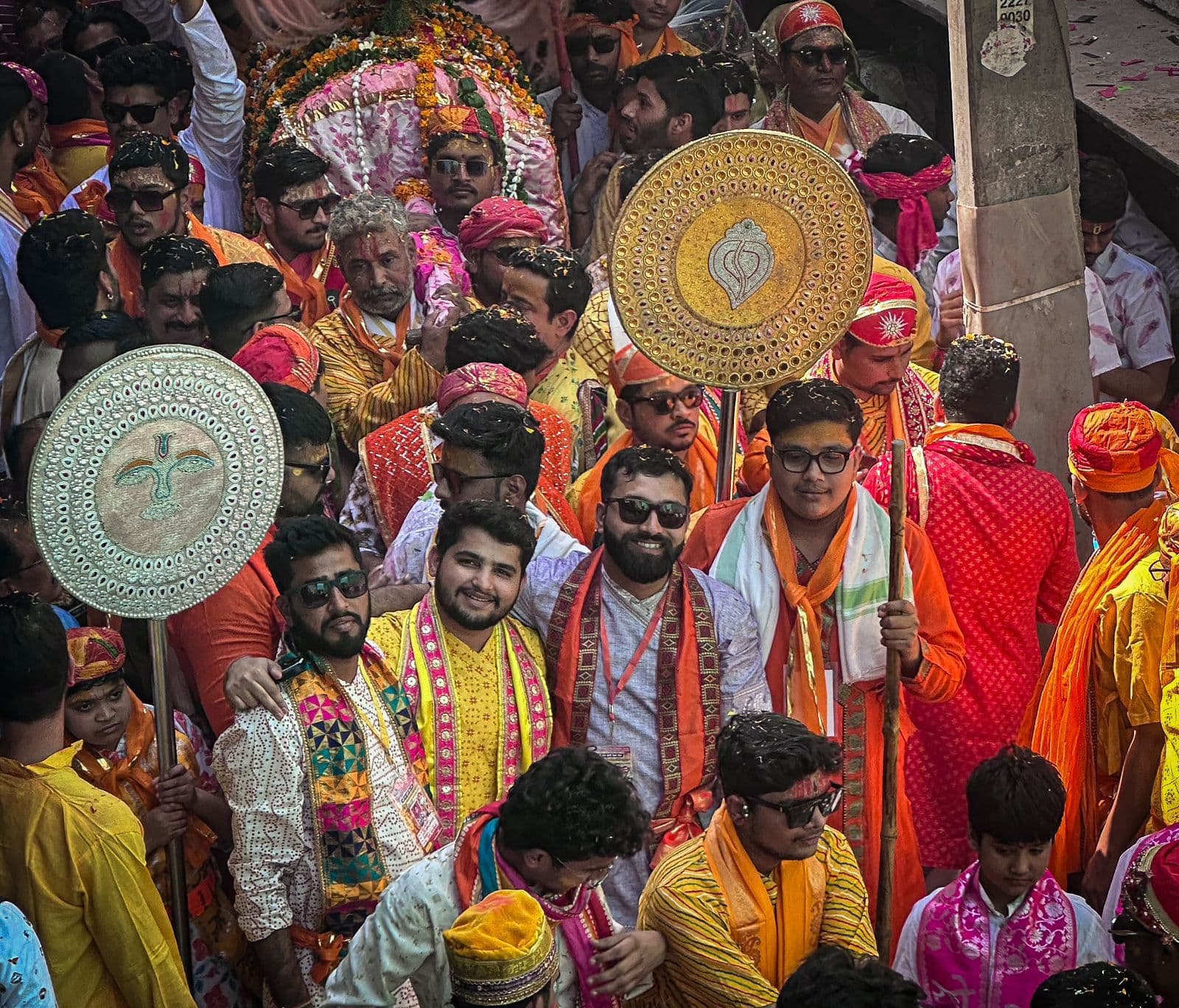
Two shorter seasons frame the winter. October, the autumn, is a lovely time as the monsoon clears and the heat eases, with warm days, cooling nights and clean, clear skies washed by the rains and it holds the sacred month of Kartik. March, the spring, is warm and pleasant, the last comfortable month before the summer heat returns and it holds the world famous Holi of Braz, celebrated here more grandly than anywhere on earth. Both October and March are excellent times to visit, part of the wider cool season, mild and beautiful and either makes a fine choice for those who cannot come in the deep of winter.
Weather by the festivals
Because most visitors come for the festivals, it helps to know the weather each falls in. Holi, in March, comes in the pleasant warmth of spring, ideal weather for the days of colour. Janmashtami, in August or the turn to September, falls in the warm, humid monsoon, so expect heat and possible rain. Radha Ashtami follows soon after, in the late monsoon. The month of Kartik, the most devotional of all, falls in the beautiful clear autumn of October to November. And Govardhan Puja and the Diwali season come in the fine, cooling weather of late autumn. For the dates each year, see our festivals of Braj page. The table sets out the festival weather.
The weather of the great Braj festivals. Dates shift by the Hindu calendar each year.
Festival | When | Weather |
Holi | March | Pleasant spring warmth |
Janmashtami | August to September | Warm, humid monsoon |
Radha Ashtami | August to September | Warm, late monsoon |
Kartik month | October to November | Clear, cool, lovely |
Govardhan Puja, Diwali | October to November | Fine, cooling autumn |
What to pack for each season
The right packing follows the season directly. For the summer, from April to June, bring light cotton clothing, a hat or cap, sunglasses, strong sunscreen and a water bottle and plan to rest at midday. For the monsoon, from July to September, add an umbrella or a light raincoat, quick drying clothes and sandals or shoes that cope with wet lanes. For the winter, from November to February, bring warm layers, a jacket and a shawl for the cold mornings and evenings, though the days are mild. In every season, modest dress that covers the shoulders and knees is right for the temples and easy footwear that slips off readily is a blessing, since you remove your shoes at every shrine.
The best time to visit by weather
Taking the weather alone, the best time to visit Mathura and Vrindavan is the cool season from October to March, when the days are pleasant for sightseeing and the harsh heat and the heavy rains are both absent. The very best months for comfort are November, December, February and March. The summer of April to June is the hardest on the visitor and the monsoon of July to September, though it cools the heat and greens the land, brings humidity and rain. Of course the festivals may draw you at other times and that is right, for Braj at Janmashtami or Holi is worth any weather. For the full recommendation on when to come, weighing the weather together with the festivals and the crowds, see our best time to visit Mathura and Vrindavan guide.
A note on live weather and forecasts
The figures in this guide are the typical averages that help you plan a trip weeks or months ahead: what to pack, which season to choose, what the days will broadly be like. For the actual weather on the days you travel, the temperature today or the forecast for the coming week, check a live weather service close to your journey, for the real weather of any given day always varies around the average. Use this guide to choose your season and pack well and a live forecast to fine tune the final days. Both together give you the fullest picture of the Mathura and Vrindavan weather for your trip.
How the weather shapes your visit
Whatever season you come in, the weather shapes how a day in Braj is best spent and a local plans around it. In the heat of summer, the temples are seen in the cool of early morning and after the late afternoon, with the midday given to rest. In the monsoon, the timing is worked around the bursts of rain. In the lovely winter, the whole day is open, though the coldest early mornings ask for warm clothes at dawn aarti. This is part of what we do for our guests: read the weather and the season and shape the darshan, the sightseeing and the parikrama around it, so that neither heat nor rain nor cold spoils the pilgrimage. Our Mathura Vrindavan trip planner helps you build the days and the three day Mathura Vrindavan pilgrimage tour is paced for the season.
The honest bit
Honest words on the weather. Do not underestimate the summer heat of Braj; April to June is genuinely fierce, well over forty degrees and the elderly and children especially should avoid it or come only with great care, early starts and rest. The winter nights and dawns are colder than many expect for a place so hot in summer, so bring warm clothes even if the days are mild. The monsoon is not a washout, for the rain comes in bursts and the land is beautiful, but the humidity is real and some lanes flood. And the figures here are averages to plan by, not a promise for any single day, so always check a live forecast before you travel. Come in the cool season if comfort is your first concern and at festival time if devotion draws you, whatever the weather.
Why Experience My India is the right choice
I was born in Gokul Mahaban Bangar and I have guided pilgrims through Braj in every month and every kind of weather. Guiding since 2018, more than 50,000 pilgrims, 4.5 stars across 204 Google reviews, WhatsApp first, 8 AM to 9 PM daily. What a local brings, whatever the season, is the day shaped around the weather: the temples timed for the cool hours in summer, the darshan worked around the monsoon rains, the dawn aarti met with warm clothes in winter and an air conditioned car to carry you between the sights in comfort in any season. One clear fare and never a charge for free darshan.
Tip from Gurudutt: let the weather choose your hours, not your whole trip. Even in the fierce summer, Braj at dawn and in the evening is cool and beautiful and even in the monsoon the rain comes in spells with lovely clear breaks between; only the plan needs to bend to the season. An air conditioned Mathura Vrindavan taxi between the sights is the greatest comfort of all in the heat. Come when your heart or the festivals call you and let a local shape the days around the weather and no season need keep you from the land of Krishna.
Related guides
Plan your trip around the weather
Tell me your dates and your group and I will plan your Braj trip around the weather of your season, the sightseeing timed for the comfortable hours, an air conditioned car and the darshan and parikrama paced for the heat, the rain or the cold, for one clear price. WhatsApp +91 7302265809, any day 8 AM to 9 PM. Packages from Rs 5,999 per person, 4.5 stars from 204 Google reviews. Born in Gokul, Mathura.
Book Your Mathura - Vrindavan Trip Today 📞 +91-7302265809 💬 WhatsApp: +91-7302265809 Packages start from ₹1,999/ person | Rated 4.5★ / 204+ Reviews Explore all: Mathura Vrindavan Tour Packages Jai Shri Krishna 🙏 |
Gurudutt — Born & Raised in Braj Bhoomi
Guiding pilgrims through Mathura & Vrindavan since 2018 · 50,000+ pilgrims served