
Kusum Sarovar Govardhan: Timings, Sunset & Complete Guide
Kusum Sarovar is a beautiful sandstone reservoir between Govardhan and Radha Kund, ringed by carved ghats and pavilions. By tradition it's where Radha came to gather flowers (kusum) and met Krishna. It's a calm, scenic stop on the Govardhan parikrama, especially at sunset, when the honey-coloured sandstone glows. Open through the day, free to enter. About 25 km from Mathura.
Read full guide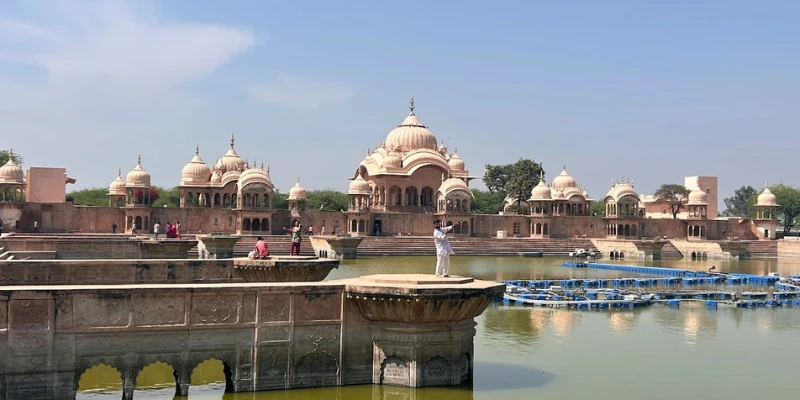
Quick answer
Kusum Sarovar is a beautiful sandstone reservoir between Govardhan and Radha Kund, ringed by carved ghats and pavilions. By tradition it's where Radha came to gather flowers (kusum) and met Krishna. It's a calm, scenic stop on the Govardhan parikrama, especially at sunset, when the honey-coloured sandstone glows. Open through the day, free to enter. About 25 km from Mathura.
At a glance
| What it is | A historic sandstone reservoir with carved ghats |
|---|---|
| Where | Between Govardhan and Radha Kund, on the parikrama |
| Tradition | Where Radha gathered flowers (kusum) and met Krishna |
| Known for | Sandstone ghats, cenotaphs, sunset reflections |
| Access | Early morning to evening |
| Entry fee | Free |
| Best time | Sunset (also sunrise for calm) |
| Distance | ~25 km from Mathura |
| Watch out | Uneven steps; limited shade; monkeys |
What is Kusum Sarovar and why visit it?
Of all the Govardhan-area sites, Kusum Sarovar is the most photogenic and the most peaceful. The sandstone ghats and the cenotaphs (chhatris) reflecting in the water make it one of Braj's loveliest spots. The name comes from "kusum," meaning flower: tradition holds Radha gathered flowers here for Krishna, and the two met by the water. It sits naturally between Govardhan and Radha Kund, so it folds into the parikrama without a detour.
It's less a temple to "see" and more a place to sit a while — especially as the light softens toward evening.
A tip from Gurudutt: Time your Govardhan day so Kusum Sarovar is your last stop, near sunset. After a long parikrama, sitting on these ghats as the stone turns gold and the reflections still — that's the quiet payoff most rushed tours miss because they come at noon. Bring a few minutes of patience and no schedule. |
Timings & best time
Detail | |
Access | Early morning to evening |
Best time | Sunset (the sandstone glows); also sunrise for calm |
Entry | Free |
On the parikrama route | Yes |
Open through the day; sunrise and sunset are the most rewarding.
How do you reach Kusum Sarovar?
From | Distance | Time |
Radha Kund | 2 km | 5–10 min |
Govardhan town | 5 km | 15 min |
Mathura | 25 km | 50 min |
Vrindavan | 26 km | 50 min |
Delhi | 40 km | 3 hrs |
Kusum Sarovar is on the Govardhan parikrama route, near Radha Kund, reachable by road and a natural stop on the circuit.
Tips for your visit
Come at sunset for the golden light, or sunrise for calm. Mind the uneven, sometimes slippery ghat steps near the water. Carry water and sun cover for a midday visit, as shade is limited. Secure phones and glasses against monkeys. Keep the heritage site clean. Pair it with Radha Kund, which is close by.
What is nearby?
Kusum Sarovar lies between Govardhan and Radha Kund, near Mansi Ganga and the Mukharvind shrine, on the parikrama route.
Meet Gurudutt — Your Mathura
Vrindavan Guide
Not just a tour operator — Gurudutt was born and raised in Braj Bhoomi. 8+ years, every week, through every sacred lane of Mathura & Vrindavan.
- 🛕Born in Braj Bhoomi
- 🙏50,000+ Pilgrims Guided
- 📅Guiding Since 2018
- ⭐4.5 Google Rating
Gurudutt
Founder · Experience My India
Frequently asked questions
What is Kusum Sarovar?
A sandstone reservoir near Govardhan with carved ghats and pavilions, traditionally where Radha gathered flowers and met Krishna; a scenic stop on the parikrama.
What is the best time to visit Kusum Sarovar?
Sunset, when the sandstone glows golden, or sunrise for calm reflections.
Is there an entry fee at Kusum Sarovar?
No, entry is free.
Where is Kusum Sarovar?
Between Govardhan and Radha Kund, on the parikrama route, about 25 km from Mathura.
Is it on the Govardhan parikrama route?
Yes - it folds into the parikrama without a detour, between Govardhan and Radha Kund.
What is the meaning of the name Kusum Sarovar?
"Kusum" means flower; tradition links it to Radha gathering flowers here for Krishna.
Is Kusum Sarovar suitable for elders?
Yes for a calm visit; the ghat steps need care near the water.
How long should I spend at Kusum Sarovar?
About 30–45 minutes, longer if you stay for sunset.
Can I take photos at Kusum Sarovar?
Yes - it's one of the most photogenic spots in Braj, especially at golden hour.
Is there shade at Kusum Sarovar?
Limited - carry water and sun cover for a midday visit.
Can it be combined with Radha Kund?
Yes - they're close together on the parikrama route, a few minutes apart.
What are the cenotaphs at Kusum Sarovar?
The chhatris (domed pavilions) are memorials in sandstone; they frame the reservoir and are part of its heritage beauty.
Who built Kusum Sarovar?
The reservoir and its ghats were developed and embellished by local rulers over the centuries; the sandstone work is its hallmark.
Is there a temple at Kusum Sarovar?
It's primarily a sacred reservoir with ghats and pavilions; there are shrines nearby on the parikrama route.
Is bathing allowed at Kusum Sarovar?
Some devotees take holy water; water quality varies, so treat any bathing as a personal choice and take care on the steps.
What is the legend of Kusum Sarovar?
Tradition holds Radha and the gopis gathered flowers here for Krishna, and Radha and Krishna met by the water - hence "kusum," flower.
How do I reach Kusum Sarovar from Mathura?
About 25 km, roughly 50 minutes by road; it's a natural stop on a Govardhan day.
Is there parking nearby?
Yes, there is parking near the site on the parikrama route; we arrange the closest drop-off.
What is the best season to visit?
October to March for pleasant weather and beautiful evening light.
Is Kusum Sarovar crowded?
It's relatively calm most of the day, busier at sunset and on festival days; far quieter than the main temples.
Is it safe for women travellers?
Yes - it's an open, scenic site; take normal care of belongings, especially toward dusk.
Can families visit comfortably?
Yes - children enjoy the open ghats and reflections; mind the steps near the water.
Are there monkeys at Kusum Sarovar?
Yes, monkeys are present in the Govardhan area; secure phones and glasses.
What should I carry?
Water, sun cover, comfortable footwear, and a secure bag; mind the steps near the water.
Is photography of the cenotaphs allowed?
Yes - the chhatris and reflections are a highlight; be respectful of any worship and keep the site clean.
Is Kusum Sarovar lit in the evening?
Lighting is modest; the real beauty is the natural golden light at sunset on the sandstone.
Is there an aarti at Kusum Sarovar?
Devotional activity occurs on the parikrama; the main draw here is the serene setting rather than a fixed aarti.
Can I sit and meditate at the ghats?
Yes - it's one of the most peaceful spots in Braj for quiet sitting, especially at sunrise or sunset.
How far is it from Radha Kund?
About 2 km, a 5–10 minute drive or a stretch of the parikrama on foot. Is the site maintained? The ghats and pavilions are maintained as a heritage site; please help keep them clean.
What makes the sandstone special?
The warm, honey-coloured sandstone glows beautifully at golden hour, giving Kusum Sarovar its photogenic reputation.
Can I combine it with the Govardhan parikrama?
Yes - it's directly on the route; most pilgrims include it, ideally toward sunset.
Is there a story linking it to Radha's flowers?
Yes - the name and tradition tie the spot to Radha and the gopis gathering flowers (kusum) for Krishna's worship and play.
Is it suitable for a short visit?
Yes - even 20–30 minutes at sunset is rewarding; it's an easy, scenic stop. Are there facilities nearby? Basic shops and stalls are on the parikrama route nearby; carry your own water.
Is the water clean?
The reservoir's condition varies by season; enjoy the setting and treat any holy-water use as a personal choice.
Do I need a guide?
Not essential, but a Braj-local guide times your visit for sunset and links it with Radha Kund and the parikrama.
What is the dress code?
Modest, comfortable clothing suitable for walking; cover shoulders and knees near shrines.
Can I visit at night?
It's best at sunrise or sunset; after dark it's quiet with limited lighting, so plan a daytime or golden-hour visit.
Is there an entry counter?
No - it's an open sacred reservoir with free access; ignore anyone demanding a "fee."
Can I combine Kusum Sarovar with Barsana?
Yes - Barsana is a drive to the west; a Braj plan can pair Govardhan-area sites one day and Barsana the next.
What is the most rewarding way to experience it?
Arrive toward sunset after the parikrama, sit on the ghats, and watch the light and reflections - unhurried.
Is it part of the Govardhan Puja celebrations?
The wider Govardhan area is central to Govardhan Puja; Kusum Sarovar is a serene stop within that sacred landscape.
How does it compare to Radha Kund?
Radha Kund is the holiest kund and a focus of ritual; Kusum Sarovar is more scenic and contemplative - they complement each other.
Is there seating at the ghats?
The stone steps serve as seating; we help elders find a comfortable, safe spot.
Can I do photography for a special occasion?
The setting is popular for serene photos; be respectful of worship and other visitors, and follow any local guidance.
What's the most common mistake visitors make?
Coming at midday and missing the golden light. Time it for sunrise or sunset.
Is Kusum Sarovar part of your tours?
Yes - it's a scenic stop on our Govardhan and Braj routes, ideally timed for sunset.
How does Experience My India help with a visit?
We schedule Kusum Sarovar for sunset as the calm finish to your Govardhan day, with the closest drop-off and a comfortable pace.
Can you arrange a guided Kusum Sarovar visit?
Yes. As a Gokul-based team since 2018, we time it for sunset and link it with Radha Kund and the parikrama. Message us on WhatsApp at +91 7302265809.
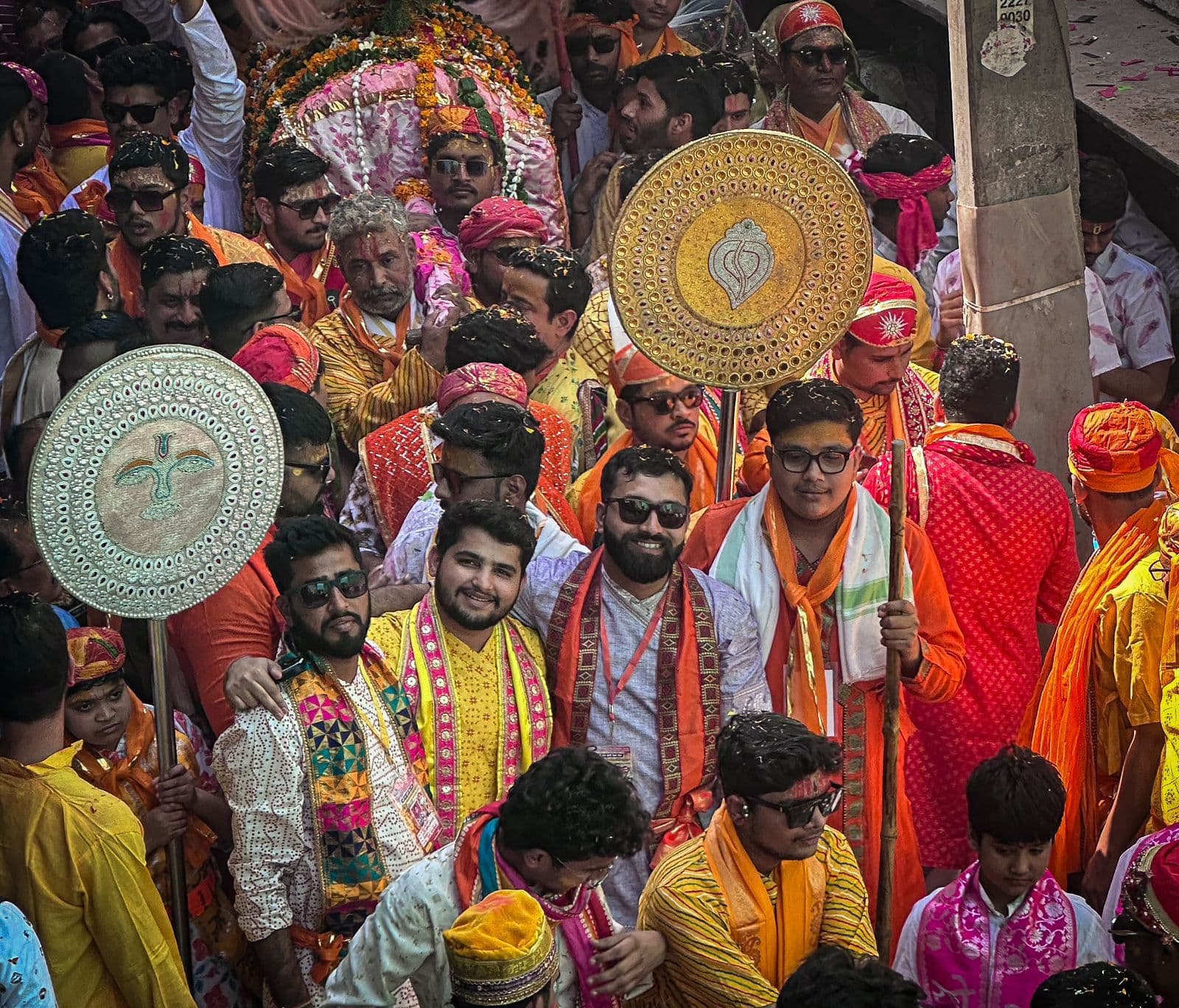
Born and raised in Braj Bhoomi. I have been guiding pilgrims through Mathura Vrindavan since 2018 — that is more than a decade of yatras, every week, through every season. Experience My India was built on one belief: a well-planned yatra is a deeply felt one. 50,000+ pilgrims have trusted us with their most sacred journeys.
Jai Shri Krishna 🙏
Watch What Our Pilgrims Truly Feel
दिल्ली से गुजरात तक — हर यात्री की कहानी, उन्हीं के शब्दों में

Real Braj Experience

Mathura Darshan Journey

Temple Darshan Review

Vrindavan Yatra Review

Braj Pilgrimage Story

Govardhan Parikrama Tale

Banke Bihari Darshan

Yamuna Aarti Experience

Iskcon Temple Review

Mathura Holi Memories

Nidhuvan Night Story

Prem Mandir Darshan

Radha Kund Holy Dip

Vrindavan Parikrama Walk

Gokul Janmabhoomi Visit

Seva Kunj Evening Darshan

Barsana Dham Journey