
Raman Reti, Gokul: The Sacred Sands of Krishna's Childhood
Raman Reti is the stretch of soft, golden sand in Gokul where, in the tradition, infant Krishna and Balarama crawled, played and wrestled with their cowherd friends. The name means the sand of play, and devotees still roll in or touch the sacred dust for blessings. There is a peaceful Krishna shrine and ashram, with a quiet meditation area. Entry is free; reconfirm timings, usually a morning and an evening slot.
Read full guide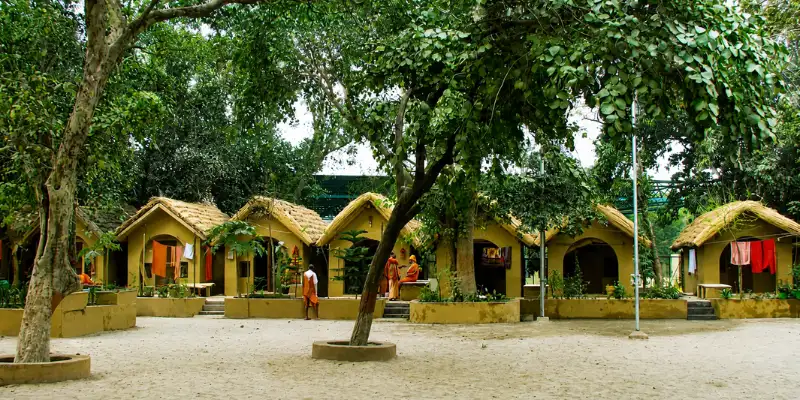
Quick answer
Raman Reti is the stretch of soft, golden sand in Gokul where, in the tradition, infant Krishna and Balarama crawled, played and wrestled with their cowherd friends. The name means the sand of play, and devotees still roll in or touch the sacred dust for blessings. There is a peaceful Krishna shrine and ashram, with a quiet meditation area. Entry is free; reconfirm timings, usually a morning and an evening slot.
At a glance
| What it is | The sacred sands where infant Krishna played in Gokul |
|---|---|
| Name means | Raman, play or delight; reti, sand |
| The tradition | Krishna and Balarama crawled and played here as children |
| What devotees do | Touch or roll in the sacred dust for blessings |
| Also here | A Krishna shrine, an ashram and a meditation area |
| Where | Gokul, on the Yamuna, Mathura district |
| Entry fee | Free |
| Distance | 12 km from Mathura |
| Best time | October to March; early morning or evening |
| Mood | Peaceful, reflective, tender |
| Pairs with | Gokul, Brahmand Ghat, Chaurasi Khamba |
What is Raman Reti and why does it matter?
Raman Reti is one of the most tender places in all of Braj: a stretch of soft, golden sand in Gokul where, in the living tradition, the infant Krishna and his brother Balarama crawled, played and wrestled with their cowherd friends. The name itself means the sand of play, raman and to walk here is to come to the very ground of Krishna's earliest childhood, his bal-leela. Where the great temples hold his image, Raman Reti holds the memory of his small feet.
It is a quiet, reflective place, with a Krishna shrine and an ashram, that many pilgrims find among the most moving in Braj.
The sand of Krishna's play
In the living tradition of Gokul, this is where Krishna spent his infancy at play, after the cowherds had brought their cattle to rest and the soft sand is held to carry the touch of his small feet.
Devotees touch the sacred dust to their heads and some roll in it, in the loving belief that the sand of Krishna's play purifies and blesses. The mood is gentle and devotional rather than grand, a place to sit quietly, remember the child Krishna and feel the sweetness of Gokul.
A tip from Gurudutt: Come to Raman Reti early in the morning or in the cool of the evening, and do not rush it, this is a place to sit on the sand a while, not to tick off a list. It is the custom to touch the sacred dust to your head, and many devotees gently roll in it; do as your heart moves you. The meditation area is genuinely peaceful, so keep your voice low. Pair it with Brahmand Ghat and Chaurasi Khamba close by, and you have the whole infant-Krishna country of Gokul in one unhurried morning. |
Raman Reti in the Gokul circuit
Raman Reti sits at the heart of the Gokul sites of Krishna's childhood. Close by are Brahmand Ghat, where Yashoda saw the universe in Krishna's mouth, and, in nearby Mahavan or old Gokul, Chaurasi Khamba, the home of Nanda where Krishna was raised. Together they tell the story of Krishna's infancy in Braj. See our Gokul guide for the wider town and our Brahmand Ghat and Chaurasi Khamba guides for the sites nearby.
How do you reach Raman Reti?
Raman Reti is in Gokul, on the Yamuna, a short drive from Mathura.
From | Distance | Time |
Mathura | 12 km | 30 min |
Gokul (town centre) | Close by | Short ride/walk |
Brahmand Ghat | 2 km | Short ride |
Chaurasi Khamba (Mahavan) | A few km | Short ride |
Delhi | 150 km | 3-3.5 hrs |
Tips for your visit
Raman Reti is free, usually open in a morning and an evening slot, so reconfirm hours and prefer early morning or evening for calm. Wear comfortable clothes, expect to walk on sand and keep silence in the meditation area. Dress modestly for the shrine. October to March is the pleasant season; pair it with the nearby Gokul sites for a complete infant-Krishna morning.
What is nearby?
Raman Reti lies among the Gokul sites of Krishna's childhood. To plan your visit, see our Gokul guide, our Brahmand Ghat guide, our Chaurasi Khamba guide and our Dauji temple guide.
Meet Gurudutt — Your Mathura
Vrindavan Guide
Not just a tour operator — Gurudutt was born and raised in Braj Bhoomi. 8+ years, every week, through every sacred lane of Mathura & Vrindavan.
- 🛕Born in Braj Bhoomi
- 🙏50,000+ Pilgrims Guided
- 📅Guiding Since 2018
- ⭐4.5 Google Rating
Gurudutt
Founder · Experience My India
Frequently asked questions
What is Raman Reti?
Raman Reti is the stretch of soft, golden sand in Gokul where, in the tradition, infant Krishna and Balarama crawled, played and wrestled with their cowherd friends. The name means the sand of play and devotees touch its sacred dust for blessings.
What does Raman Reti mean?
Raman Reti means the sand of play or delight: raman is play or delight and reti is sand. It is named for the bal-leela, the childhood play of Krishna and Balarama, on this soft sand of Gokul.
Where is Raman Reti?
Raman Reti is in Gokul, on the bank of the Yamuna in Mathura district, about 12 km from Mathura, at the heart of the sites of Krishna's childhood.
Why is Raman Reti famous?
Raman Reti is famous as the playground of infant Krishna, where in the tradition he crawled and played with the cowherd children. Its soft sand is held sacred and devotees touch or roll in it for blessings.
Is Raman Reti worth visiting?
Yes, it is among the most tender and peaceful places in Braj, the very ground of Krishna's childhood play, with a quiet shrine and meditation area. Experience My India includes it on the Gokul morning.
What do devotees do at Raman Reti?
Devotees touch the sacred sand to their heads and many gently roll in it, in the loving belief that the dust of Krishna's play purifies and blesses. They also sit in the meditation area and take darshan at the shrine.
Why do people roll in the sand at Raman Reti?
In the living belief of Gokul, the sand carries the touch of infant Krishna's play, so rolling in or touching it is an act of devotion thought to purify and bring blessings. It is a tender, much-loved custom.
Is there a temple at Raman Reti?
Yes, Raman Reti has a Krishna shrine and an ashram within its grounds, along with a peaceful meditation area, set among the sacred sands. Devotees take darshan there as well as honouring the sand.
What is the mood of Raman Reti?
Raman Reti is gentle, reflective and devotional rather than grand, a place to sit quietly on the sand, remember the child Krishna and feel the sweetness of Gokul. Many find it among Braj's most moving spots.
Is Raman Reti connected to Krishna's childhood?
Yes, Raman Reti is one of the central sites of Krishna's bal-leela, his childhood play, in Gokul, where in the tradition he crawled, played and wrestled with the cowherd children on the soft sand.
What is bal-leela and how does Raman Reti relate to it?
Bal-leela means the childhood pastimes of Krishna. Raman Reti is one of its central settings, the soft sand of Gokul where, in the tradition, the infant Krishna crawled, played and wrestled with his cowherd friends.
Did Krishna and Balarama play together at Raman Reti?
Yes, in the tradition Raman Reti is where Krishna and his elder brother Balarama played and wrestled together as children, with their cowherd friends, on the soft sacred sand of Gokul.
Why is the sand of Raman Reti considered sacred?
Because, in the living belief of Gokul, it carries the touch of infant Krishna's play, the sand of Raman Reti is held sacred and devotees take its dust to their heads as a blessing of his childhood.
Is Raman Reti good for meditation?
Yes, Raman Reti has a peaceful meditation area and its gentle, reflective mood makes it well suited to quiet contemplation. Many pilgrims sit on the sand to meditate and remember the child Krishna.
What is special about the early years of Krishna in Gokul?
Gokul is where Krishna spent his infancy after being carried from Mathura, full of his bal-leela: crawling, playing, the butter-stealing and the early miracles. Raman Reti holds the memory of that childhood play.
Is Raman Reti linked to the cowherds of Gokul?
Yes, in the tradition the cowherds of Gokul rested here after herding their cattle and the children, Krishna and Balarama among them, played on the sand. Raman Reti is the playground of that cowherd childhood.
What blessing is sought at Raman Reti?
Devotees seek the blessing of Krishna's childhood, touching the sacred sand for purity, peace and his grace. The custom expresses love for the child Krishna who played on this very ground.
Is Raman Reti mentioned in tradition?
Raman Reti lives in the rich living tradition of Gokul as the playground of infant Krishna, cherished by generations of devotees who come to honour the sand of his bal-leela. Its power is held in that devotion and memory.
What are the Raman Reti timings?
Raman Reti is usually open in a morning slot and an evening slot, often around 5:00 in the morning to midday and again from late afternoon to night, varying by season. Reconfirm on the day; early morning is calmest.
What is the best time to visit Raman Reti?
October to March for pleasant weather and early morning or the cool of the evening for calm and the gentlest light on the sand. Janmashtami and the Kartik season are vibrant but crowded.
Is there an entry fee at Raman Reti?
No, entry to Raman Reti is free, with voluntary donations at the shrine. It is an open sacred site in Gokul.
How long do you need at Raman Reti?
Allow about 30 to 45 minutes to sit on the sand, take darshan and rest in the meditation area, or longer if you wish to linger. It pairs with the nearby Gokul sites. Experience My India sequences the Gokul morning.
Is Raman Reti crowded?
On ordinary days it is calm and reflective, busier on weekends, Janmashtami and during Kartik. Early morning is most peaceful. Its quiet is part of its charm.
Is photography allowed at Raman Reti?
Photography of the grounds is often fine, but the meditation area calls for quiet and photography at the shrine may be restricted. Follow posted signs and staff guidance and keep the peace of the place.
Is Raman Reti suitable for elderly visitors?
Yes, though walking on sand needs some care. Experience My India arranges assistance and the easiest approach for elderly pilgrims, so they can sit and take the blessing of the sand comfortably.
What should you wear to Raman Reti?
Wear comfortable, modest clothing and footwear easy to remove, since you will walk on sand and may sit on it. A calm, reverent manner suits this peaceful place of Krishna's childhood.
How do you reach Raman Reti?
Raman Reti is in Gokul, about 12 km from Mathura, reached by taxi, auto or bus and a short walk. Reach Mathura by road or train, then drive to Gokul. Experience My India arranges transport and the Gokul morning.
How far is Raman Reti from Mathura?
Raman Reti is about 12 km from Mathura, roughly a 30 minute drive, in Gokul on the bank of the Yamuna.
How far is Raman Reti from Brahmand Ghat?
Raman Reti is about 2 km from Brahmand Ghat, a short ride within the Gokul area, so the two are visited together. Experience My India sequences the Gokul sites.
What is the nearest railway station to Raman Reti?
The nearest major railhead is Mathura Junction, about 12 km away. From there, taxis and autos reach Gokul. Experience My India arranges the transfer.
Can you reach Raman Reti by car?
Yes, Gokul is reachable by car or taxi about 12 km from Mathura, with parking nearby and a short walk to the sands. Experience My India handles the drive and drop-off.
Can you combine Raman Reti with the Gokul sites?
Yes, Raman Reti, Brahmand Ghat and, in nearby Mahavan, Chaurasi Khamba together make the infant-Krishna circuit of Gokul, visited in one morning. Experience My India sequences them.
Can you visit Raman Reti with Mathura?
Yes, Raman Reti and Gokul are about 12 km from Mathura and combine naturally with Krishna Janmabhoomi and the Mathura sites on a Braj itinerary. Experience My India plans the route.
Can you visit Raman Reti in one day from Delhi?
Yes, Raman Reti and Gokul fit a one-day Braj trip from Delhi, about 3 to 3.5 hours each way, usually with Mathura. Experience My India plans the day.
Do you need a guide for Raman Reti?
A guide is not essential, but a Braj-local guide tells the bal-leela of Gokul and the custom of the sacred sand, which deepens the visit. Experience My India provides Braj-born guides.
How does Experience My India help with a Raman Reti visit?
We include Raman Reti on the Gokul morning, tell the story of Krishna's childhood play, guide the custom of the sacred sand and pair it with Brahmand Ghat and Chaurasi Khamba. Our guides are born and raised in Braj.
Is Raman Reti good for families?
Yes, the gentle story of Krishna's childhood play and the open sands are lovely for families, including children. Experience My India tailors the pace and tells the bal-leela simply for all ages.
What makes Raman Reti special?
That it is the very ground of infant Krishna's play, its soft sand held sacred and touched by devotees for blessings, makes Raman Reti special, one of the most tender and reflective places in Braj.
Is Raman Reti good for a quiet, devotional visit?
Yes, with its peaceful meditation area and gentle mood, Raman Reti is ideal for a quiet, devotional visit, a place to sit on the sand and remember the child Krishna away from the crowds.
What is near Raman Reti?
Near Raman Reti are Brahmand Ghat, the Gokul town shrines and, in nearby Mahavan, Chaurasi Khamba, with Dauji at Baldeo a little further. Together they make the infant-Krishna circuit. Experience My India sequences them.
Where did Krishna play as a child?
In the tradition, Krishna played as a child on the soft sands of Raman Reti in Gokul, crawling and wrestling with Balarama and the cowherd children. The sand is held sacred and honoured by devotees today.
What is the sacred sand of Gokul?
The sacred sand of Gokul is Raman Reti, the playground of infant Krishna, whose soft golden sand devotees touch to their heads or roll in for blessings, in the belief it carries the touch of his childhood play.
Why do devotees roll in the sand at Gokul?
At Raman Reti in Gokul, devotees roll in or touch the sacred sand because, in the living belief, it carries the touch of infant Krishna's play, so the act purifies and brings his blessing. It is a tender custom.
What is the best time to visit Raman Reti?
October to March for pleasant weather and early morning or the cool of the evening for calm. Janmashtami and Kartik are vibrant but crowded times in Gokul.
Is Raman Reti open all year?
Yes, Raman Reti is open year-round on daily morning and evening schedules, free. October to March is the most pleasant season and early morning the calmest time.
Why do pilgrims visit Raman Reti?
Pilgrims visit to walk and sit on the sand where infant Krishna played, to take its sacred dust as a blessing, to meditate in its peace and to feel the sweetness of his childhood in Gokul. It is among Braj's most tender places.
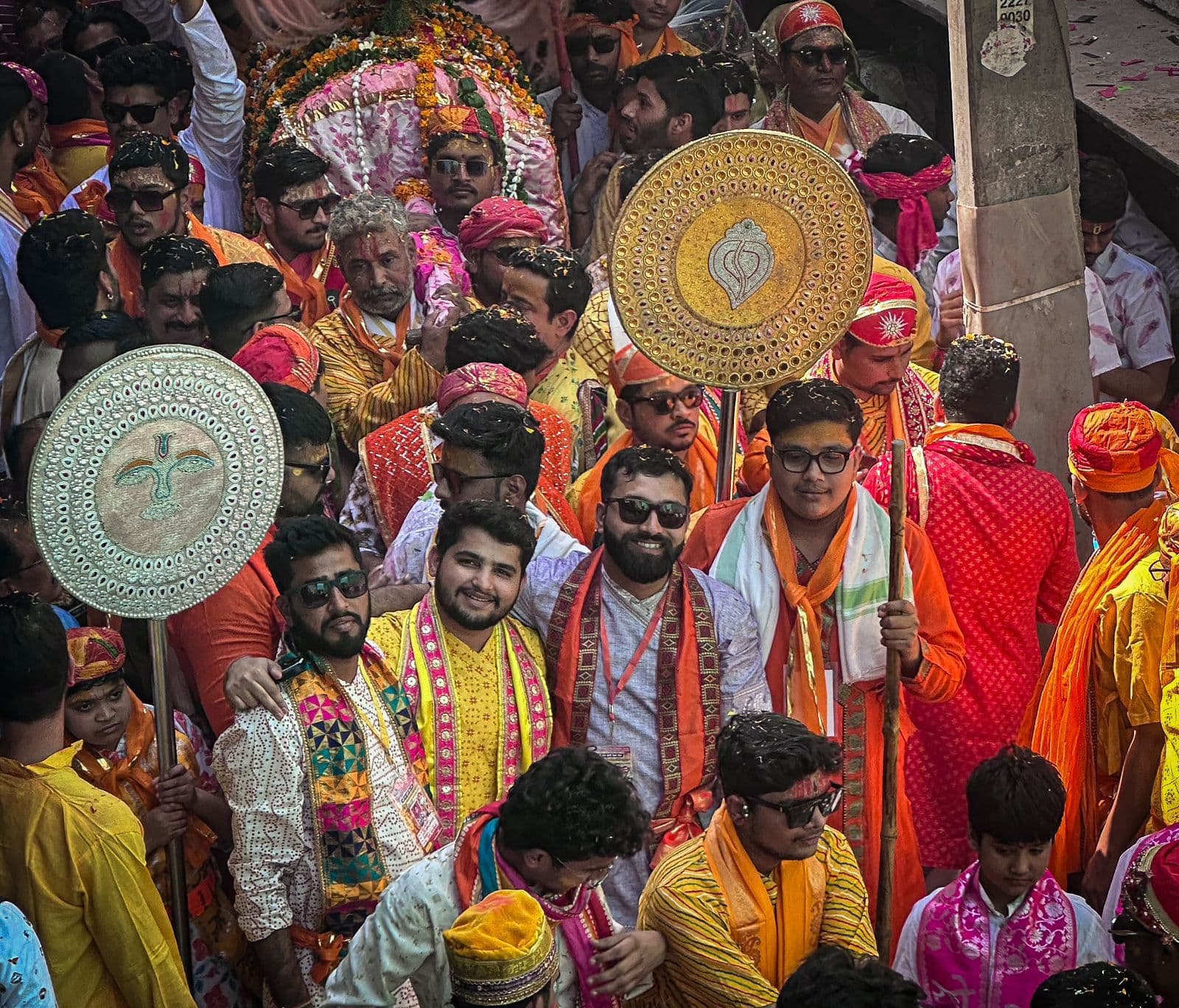
Born and raised in Braj Bhoomi. I have been guiding pilgrims through Mathura Vrindavan since 2018 — that is more than a decade of yatras, every week, through every season. Experience My India was built on one belief: a well-planned yatra is a deeply felt one. 50,000+ pilgrims have trusted us with their most sacred journeys.
Jai Shri Krishna 🙏
Watch What Our Pilgrims Truly Feel
दिल्ली से गुजरात तक — हर यात्री की कहानी, उन्हीं के शब्दों में

Real Braj Experience

Mathura Darshan Journey

Temple Darshan Review

Vrindavan Yatra Review

Braj Pilgrimage Story

Govardhan Parikrama Tale

Banke Bihari Darshan

Yamuna Aarti Experience

Iskcon Temple Review

Mathura Holi Memories

Nidhuvan Night Story

Prem Mandir Darshan

Radha Kund Holy Dip

Vrindavan Parikrama Walk

Gokul Janmabhoomi Visit

Seva Kunj Evening Darshan

Barsana Dham Journey