
Rangji (Ranganatha) Mandir, Vrindavan: Timings and Complete Guide
Rangji Mandir, dedicated to Bhagwan Ranganatha, is the largest temple in Vrindavan, built in the grand South-Indian Dravidian style with a tall gopuram, unusual in the north. Its spring Brahmotsav, when the deity is drawn on a massive wooden chariot, is a major fair. Entry is free. Reconfirm darshan timings, which shift by season.
Read full guide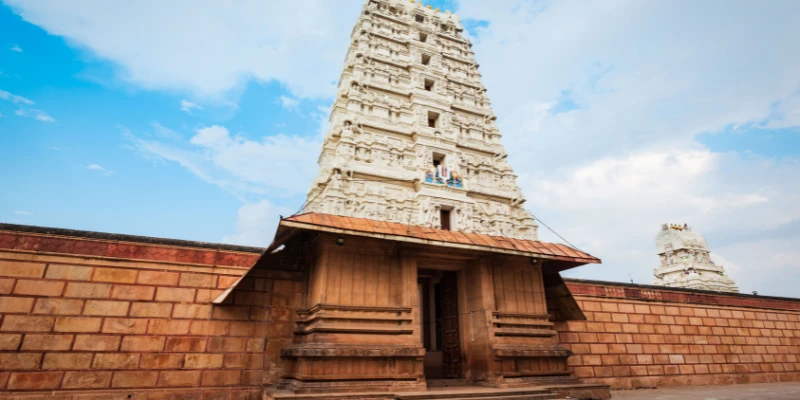
Quick answer
Rangji Mandir, dedicated to Bhagwan Ranganatha, is the largest temple in Vrindavan, built in the grand South-Indian Dravidian style with a tall gopuram, unusual in the north. Its spring Brahmotsav, when the deity is drawn on a massive wooden chariot, is a major fair. Entry is free. Reconfirm darshan timings, which shift by season.
At a glance
| Dedicated to | Bhagwan Ranganatha (the reclining form of Vishnu) |
|---|---|
| Also called | Sri Ranganath Mandir; Rangaji Temple |
| Location | Rangji Mandir area, Vrindavan, Uttar Pradesh 281121 |
| Style | South-Indian Dravidian, fortress-like, with a tall gopuram |
| Distinction | The largest temple in Vrindavan |
| Signature festival | Brahmotsav (spring, around March), with the deity on a giant wooden rath |
| Gopuram | Illuminated in the evening, around 6:30 PM |
| Darshan | Morning and evening sessions (reconfirm; shifts by season) |
| Entry fee | Free |
| Nearest railway | Mathura Junction (12-13 km) |
| Best time | Evening for the lit gopuram; Brahmotsav in spring; October to March |
What is Rangji Mandir and why is it special?
Rangji Mandir, dedicated to Bhagwan Ranganatha, the reclining form of Vishnu, is the largest temple in Vrindavan and one of its most surprising. Where almost every Braj temple follows northern forms, Rangji is built in the grand South-Indian Dravidian style, fortress-like, with a soaring gopuram gateway and long pillared corridors that feel like a slice of Tamil Nadu set down in Braj. It is a major centre of South-Indian Vaishnava worship in the north and a striking architectural contrast to the rest of Vrindavan.
If the old kunj-gali temples are intimate and the marble temples are modern, Rangji is monumental and it rewards a slow walk as much as a darshan.
The architecture and the gopuram
Rangji's Dravidian design sets it apart: a tall, tiered gopuram rises over the gateway and within are spacious corridors, pillared halls and tanks in the southern temple manner. The gopuram is lit in the evening, around 6:30 PM and seeing it glow is one of the quiet pleasures of a Vrindavan evening. The deity, Ranganatha, reclines in the southern fashion and the whole complex is built on a scale unmatched by any other temple in the town.
A tip from Gurudutt: Come in the late afternoon and give the corridors time before darshan, Rangji is the one temple in Vrindavan where the building itself is half the experience. Then stay until the gopuram lights up around 6:30 PM. Most visitors rush through; the people who linger remember it as the most distinctive temple in Braj. |
The Brahmotsav and festivals
Rangji's signature is the Brahmotsav, a grand spring fair, usually around March, that runs over several days and culminates with the deity drawn through the streets on a massive wooden chariot, a rath, in the southern temple tradition. It is one of the great fairs of Vrindavan and draws large crowds. As the dates follow the calendar and shift each year, confirm the year's dates before planning around them.
What are the darshan timings?
Rangji keeps morning and evening darshan with a midday break, in the southern temple manner and the exact hours shift by season, so reconfirm them on the day. The gopuram illumination in the evening, around 6:30 PM, is worth timing your visit for.
How do you reach Rangji Mandir?
Rangji is in Vrindavan, reachable by car, auto or e-rickshaw and easy to pair with the other Vrindavan temples.
From | Distance | Time |
Vrindavan town | Central | 5-15 min |
Mathura Junction | 12-13 km | 30-45 min |
Delhi (Yamuna Expressway) | 150 km | 3-3.5 hrs |
Agra | 70 km | 1.5 hrs |
Entry, dress and tips
Entry is free, with donations optional. Wear modest, traditional dress and leave footwear at the racks. The complex is large and airy, with room to walk, which makes it comfortable even when busy. The best season is October to March and the evening, for the lit gopuram, is the loveliest time.
What is nearby?
Rangji sits among Vrindavan's temples. ISKCON and the marble Prem Mandir are close by and the old-town Banke Bihari is a short ride away. To plan a full Vrindavan day, see our ISKCON Vrindavan guide, our Prem Mandir guide and our roundup of the best places to visit in Mathura and Vrindavan.
Meet Gurudutt — Your Mathura
Vrindavan Guide
Not just a tour operator — Gurudutt was born and raised in Braj Bhoomi. 8+ years, every week, through every sacred lane of Mathura & Vrindavan.
- 🛕Born in Braj Bhoomi
- 🙏50,000+ Pilgrims Guided
- 📅Guiding Since 2018
- ⭐4.5 Google Rating
Gurudutt
Founder · Experience My India
Frequently asked questions
What is Rangji Mandir famous for?
Rangji Mandir is famous as the largest temple in Vrindavan and for its grand South-Indian Dravidian architecture, with a tall gopuram unusual in the north. It is dedicated to Bhagwan Ranganatha and known for its spring Brahmotsav fair.
Where is Rangji Mandir located?
Rangji Mandir is in Vrindavan, Uttar Pradesh 281121, central within the town and about 12 to 13 km from Mathura Junction.
Which deity is worshipped at Rangji Mandir?
The temple is dedicated to Bhagwan Ranganatha, the reclining form of Vishnu worshipped widely in South India, here enshrined in a grand southern-style complex in the heart of Braj.
Why is Rangji built in South Indian style?
Rangji is a major centre of South-Indian Vaishnava worship in the north, so it follows the Dravidian temple form, fortress-like with a tall gopuram, corridors and tanks, making it a striking contrast to Vrindavan's northern temples.
Is Rangji the largest temple in Vrindavan?
Yes, Rangji is the largest temple in Vrindavan, built on a monumental scale with long corridors and a towering gopuram, quite unlike the intimate old-town temples.
What is a gopuram?
A gopuram is the tall, tiered gateway tower characteristic of South-Indian Dravidian temples. Rangji's gopuram rises over its entrance and is illuminated in the evening, a rare sight in northern Braj.
Is Rangji Mandir worth visiting?
Yes, especially for the architecture. It is the one temple in Vrindavan where the building itself is half the experience, monumental and southern in feel. Experience My India includes it in fuller Vrindavan itineraries.
What is Rangji Mandir also called?
Rangji is also called the Sri Ranganath Mandir or Rangaji Temple, after its deity Ranganatha. Locals simply say Rangji.
Is Rangji the same as the other Vrindavan temples?
No, it stands apart. While most Vrindavan temples are northern in form and tied to Krishna's leelas, Rangji is a grand Dravidian temple to Ranganatha, the reclining Vishnu, making it unique in Braj.
What does Ranganatha mean?
Ranganatha is the reclining form of Vishnu, resting on the serpent Shesha, worshipped as the lord of the sanctum. The Rangji temple brings this great South-Indian form of worship into the land of Braj.
What are the Rangji Mandir timings?
Rangji keeps morning and evening darshan with a midday break, in the southern temple manner and the exact hours shift by season. Reconfirm on the day and time your visit for the gopuram illumination in the evening.
What time is the gopuram lit at Rangji?
The gopuram is illuminated in the evening, generally around 6:30 PM and seeing it glow against the sky is one of the loveliest sights of a Vrindavan evening. Reconfirm the time, as it shifts seasonally.
What are the morning timings at Rangji?
Morning darshan runs through the morning before the midday break and is the calmer time to walk the long corridors and see the deity. Confirm the exact opening locally.
What are the evening timings at Rangji?
Evening darshan resumes in the late afternoon and runs into the evening, when the gopuram is lit around 6:30 PM. It is the most atmospheric time to visit.
What is the Brahmotsav at Rangji?
The Brahmotsav is Rangji's signature spring fair, usually around March, running several days and ending with the deity drawn through the streets on a giant wooden chariot, a rath, in the southern tradition. It is one of Vrindavan's great fairs.
When is the Brahmotsav at Rangji?
The Brahmotsav usually falls in spring, around March, though the exact dates follow the calendar and shift each year. Confirm the year's dates before planning around the chariot festival.
What is the chariot festival at Rangji?
During the Brahmotsav the deity of Ranganatha is placed on a massive wooden chariot, a rath and drawn through the streets in a grand procession, a southern temple custom rarely seen in the north. It draws large crowds.
How long do you need at Rangji Mandir?
Allow about an hour to an hour and a half to walk the corridors, see the deity and take in the architecture, longer in the evening if you wait for the lit gopuram. It rewards an unhurried visit.
What is the best time to visit Rangji?
Late afternoon into the evening, so you can walk the corridors in daylight and see the gopuram lit around 6:30 PM. The Brahmotsav in spring is the most spectacular time. October to March is the most pleasant season.
Do Rangji timings change on festivals?
Yes, during the Brahmotsav and other festivals the schedule and crowds change, often with special programmes and processions. Confirm the current timings before festival visits.
What is special about Rangji's architecture?
Rangji is built in the South-Indian Dravidian style, fortress-like, with a tall tiered gopuram, long pillared corridors and tanks, all on a monumental scale. It is unlike any other temple in Vrindavan and feels like a southern temple set in the north.
How tall is the gopuram at Rangji?
Rangji's gopuram is a tall, tiered tower rising over the gateway in the Dravidian manner, the dominant feature of the complex and a rare sight in northern Braj. It is illuminated in the evening.
Why is Rangji built like a fortress?
The Dravidian temple form encloses the sanctum within high walls, gateways and corridors, which gives Rangji its fortress-like feel. It reflects the southern Sri Vaishnava temple tradition transplanted into Vrindavan.
What is the deity posture at Rangji?
Ranganatha is worshipped in the reclining posture, resting on the serpent Shesha, as in the great southern Ranganatha temples. This reclining Vishnu is the focus of the sanctum.
Who worships at Rangji Mandir?
Rangji is a centre of South-Indian Vaishnava worship in the north and draws devotees of Vishnu and Ranganatha alongside the wider Vrindavan pilgrim flow. It reflects the southern tradition's deep roots in Braj.
Why is there a South Indian temple in Vrindavan?
Vrindavan has long drawn devotees and patrons from across India, including the south and Rangji was built to bring the great Ranganatha worship and Dravidian temple form into Krishna's land. It stands as a meeting of north and south.
How do you reach Rangji Mandir?
Rangji is in Vrindavan, reachable by car, auto or e-rickshaw. Reach Vrindavan by road from Delhi or by train to Mathura Junction. Experience My India arranges door-to-door transport and pairs it with the other temples.
How far is Rangji from Mathura?
Rangji is about 12 to 13 km from Mathura Junction, roughly a 30 to 45 minute drive and central within Vrindavan town.
How far is Rangji from Delhi?
It is about 150 km from Delhi, around 3 to 3.5 hours by road via the Yamuna Expressway, an easy part of a one-day Vrindavan trip.
What is the nearest railway station to Rangji?
The nearest major railhead is Mathura Junction, about 12 to 13 km away, with Vrindavan's smaller station closer. From either, autos and e-rickshaws reach the temple.
What is the address of Rangji Mandir?
Rangji Mandir is in the Rangji Mandir area of Vrindavan, Mathura district, Uttar Pradesh 281121, central within the town.
Is parking available at Rangji?
Yes, the temple is on a motorable road with parking nearby, easier to reach by car than the dense old-town temples. Experience My India arranges drop-off close to the gateway.
Can you reach Rangji by car?
Yes, Rangji is on a motorable road in Vrindavan, so cars and taxis reach it directly, which is convenient for families and elderly visitors.
Which temples are near Rangji?
Rangji is close to ISKCON and the marble Prem Mandir, with the old-town Banke Bihari a short ride away. The four together make a varied Vrindavan day, from Dravidian grandeur to kirtan to the light show.
Is there an entry fee for Rangji Mandir?
No, entry to Rangji is free for everyone. There is no ticket for darshan and donations are voluntary.
Is there a dress code at Rangji?
Yes, modest, traditional attire is expected, with shoulders and knees covered. Footwear is left at the racks outside the temple.
Is photography allowed at Rangji?
Photography of the architecture and corridors is often possible, but rules vary and photography at the deity is usually restricted. Always follow posted signs and staff guidance.
How crowded does Rangji get?
Rangji is large and airy, so it handles crowds well outside festivals, with the heaviest footfall during the Brahmotsav and on weekends. Weekday evenings are calm and pleasant.
Is Rangji suitable for senior citizens?
Yes, the spacious, level corridors and car access make it comfortable for seniors, more so than the cramped old-town temples. Experience My India arranges close drop-off and gentle pacing.
What should you carry to Rangji?
Carry minimal belongings and water, wear modest dress and slip-off footwear. The complex is large, so comfortable walking helps you enjoy the corridors and gopuram.
Do you need a guide for Rangji?
A guide is not required, but a Braj-local guide explains the Dravidian architecture, the Ranganatha worship and the Brahmotsav and pairs Rangji with ISKCON and Prem Mandir. Experience My India handles the route.
How does Experience My India help with a Rangji visit?
We time your visit for the evening so you see the corridors in daylight and the gopuram lit, explain the southern architecture and sequence Rangji with the other Vrindavan temples. Our guides are born and raised in Braj.
What is the largest temple in Vrindavan?
Rangji Mandir is the largest temple in Vrindavan, a grand South-Indian Dravidian complex dedicated to Bhagwan Ranganatha, with long corridors and a towering gopuram, monumental compared to the town's other temples.
What is the best time to see the Rangji gopuram lit?
Visit in the evening, around 6:30 PM, when the gopuram is illuminated. Reach a little earlier to walk the corridors in the last daylight, then watch the tower glow. October to March is the most pleasant season.
Can you visit Rangji in one day from Delhi?
Yes, Rangji fits easily into a one-day Vrindavan trip from Delhi, alongside ISKCON, Prem Mandir and Banke Bihari. A same-day Experience My India package sequences them well.
Can you combine Rangji with ISKCON and Prem Mandir?
Yes, all three are in Vrindavan and easy to combine, giving you Dravidian grandeur at Rangji, kirtan at ISKCON and the evening light show at Prem Mandir in one day. Experience My India arranges the order.
What happens at the Rangji Brahmotsav?
During the spring Brahmotsav, around March, the deity is drawn through the streets on a giant wooden chariot over several days of celebration, a rare southern-style chariot festival in the north. It draws large crowds.
Is Rangji Mandir open all year?
Yes, Rangji is open year-round on its daily darshan schedule with the midday break. October to March is the most comfortable season and the Brahmotsav in spring is the highlight.
Who is Ranganatha?
Ranganatha is the reclining form of Vishnu, resting on the serpent Shesha, one of the great deities of South-Indian Vaishnavism. Rangji Mandir brings this worship and its Dravidian temple form into Vrindavan.
What makes Rangji different from other Vrindavan temples?
Rangji is monumental and South-Indian in style, with a towering gopuram, long corridors and the reclining Ranganatha, while most Vrindavan temples are northern and tied to Krishna's leelas. It is the town's great architectural surprise.
Born and raised in Braj Bhoomi. I have been guiding pilgrims through Mathura Vrindavan since 2018 — that is more than a decade of yatras, every week, through every season. Experience My India was built on one belief: a well-planned yatra is a deeply felt one. 50,000+ pilgrims have trusted us with their most sacred journeys.
Jai Shri Krishna 🙏
Watch What Our Pilgrims Truly Feel
दिल्ली से गुजरात तक — हर यात्री की कहानी, उन्हीं के शब्दों में

Real Braj Experience

Mathura Darshan Journey

Temple Darshan Review

Vrindavan Yatra Review

Braj Pilgrimage Story

Govardhan Parikrama Tale

Banke Bihari Darshan

Yamuna Aarti Experience

Iskcon Temple Review

Mathura Holi Memories

Nidhuvan Night Story

Prem Mandir Darshan

Radha Kund Holy Dip

Vrindavan Parikrama Walk

Gokul Janmabhoomi Visit

Seva Kunj Evening Darshan

Barsana Dham Journey