
Which Temples Should I Visit First?
For a first visit, prioritise Banke Bihari Temple and Prem Mandir in Vrindavan, and Krishna Janmabhoomi and Dwarkadhish Temple in Mathura. Almost every temple in Braj is free to enter, but darshan timings, dress code and crowd patterns vary a lot between them — the guides below cover each one in detail.
From a Born Brajwasi
“Most first-time visitors try to cram eight temples into one afternoon and end up exhausted before the one that mattered most. Pick three, go slowly, and let the evening aarti at Banke Bihari or the lights of Prem Mandir actually settle in. That's the difference between sightseeing and a yatra.”
Gurudutt
Born Brajwasi · Guiding pilgrims since 2018
Darshan timings shift with the seasons and on festival days. We keep each temple's guide updated — but always reconfirm timing for same-day visits, especially around Janmashtami and Holi.
Verified Timings
Checked against temple offices
Local Guidance
Born-in-Braj travel team
Free to Visit
Almost every temple, no fee
24/7 Support
WhatsApp us anytime
34 Guides Available
Famous Temples in Mathura Vrindavan
Darshan timings, history and rituals — straight from the priests and pandits we work with.
 Temple
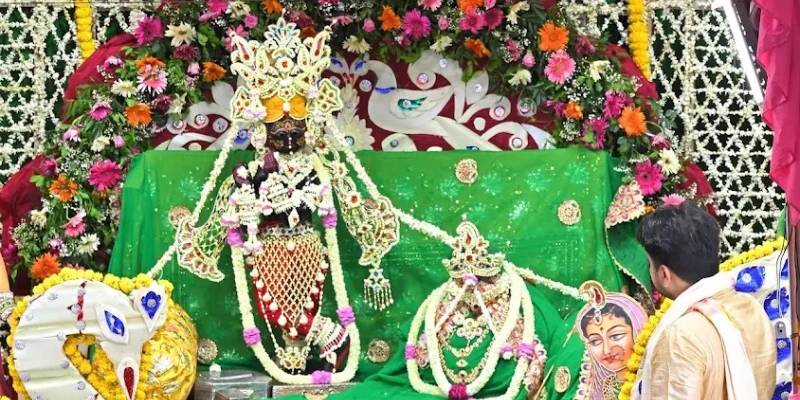
Radha Vallabh Temple Vrindavan: Timings, History & Complete Guide
Radha Vallabh Temple is the principal seat of the Radha Vallabh Sampradaya, founded in the 16th century by Shri Hit Harivansh Mahaprabhu, the tradition that holds Radha as supreme. The old temple ("Hit Mandir") was built in 1585 in a rare Hindu-Mughal red-sandstone style and is a protected monument. There is no separate idol of Radha - a crown beside Krishna marks her presence. The temple opens roughly 5:00 AM–9:00 PM with morning and evening darshan and a midday break. Entry is free.
Read Guide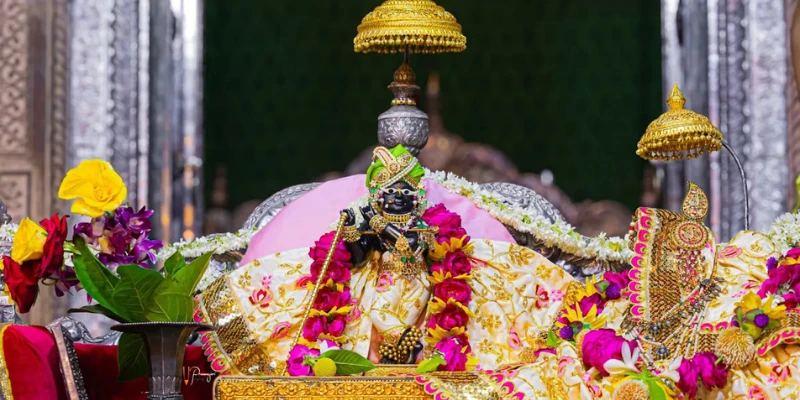 Temple
Radha Raman Temple, Vrindavan: Timings, History and Complete Guide
Radha Raman Temple is one of Vrindavan's seven original Goswami temples, founded by Gopala Bhatta Goswami around 1542. Its deity is self-manifested from a Saligram-shila, over 500 years old and never replaced - and there is no separate idol of Radha; a crown beside Krishna marks her presence. The temple follows the Ashtakala Seva, with a red/green light at the gate showing when darshan is open. Timings are roughly 8:00 AM–12:30 PM and 6:00 PM–8:00 PM, with an early Mangala Aarti. Entry is free.
Read Guide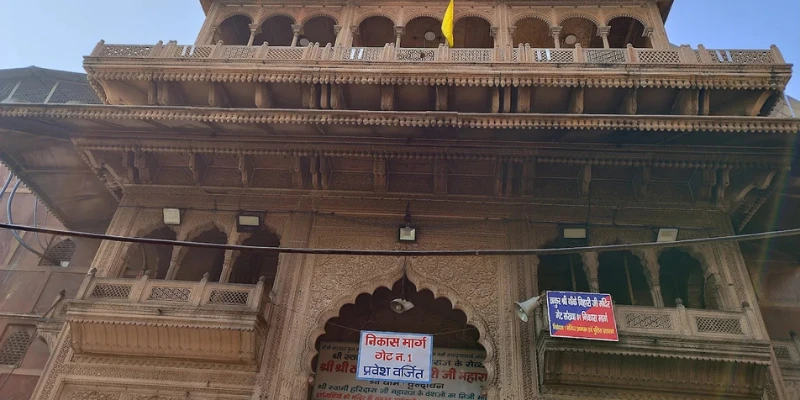 Temple
Banke Bihari Temple, Vrindavan: Timings, Darshan and Complete Guide
Banke Bihari Temple is the most beloved temple in Vrindavan, where Krishna is served in the gentle Haridasi tradition. The deity was manifested by Swami Haridas from Nidhivan; the present temple dates to 1864. There is no bell, no conch and no dawn aarti and the curtain is drawn again and again so no one stares at the deity continuously - the famous jhanki darshan. Entry is free. Honestly: there is no official online VIP darshan pass and no daily Mangala Aarti. Summer timings are about 7:45 AM-12:00 PM and 5:30-9:30 PM; winter about 8:45 AM-1:00 PM and 4:30-8:30 PM.
Read Guide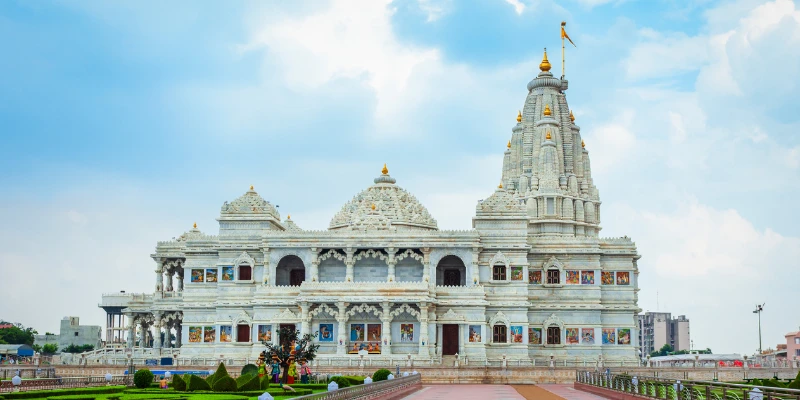 Temple
Prem Mandir Vrindavan: Timings, Light Show & Complete Guide
Prem Mandir is a white Italian-marble temple in Vrindavan, about 12-13 km from Mathura Junction, built by Jagadguru Shri Kripalu Ji Maharaj and inaugurated in February 2012. Darshan timings are 8:30 AM-12:00 PM and 4:30-8:30 PM daily. The free musical-fountain light show runs about 7:30-8:00 PM in summer and 7:00-7:30 PM in winter. Entry is completely free - no ticket, no VIP pass. The temple is best visited in the evening.
Read Guide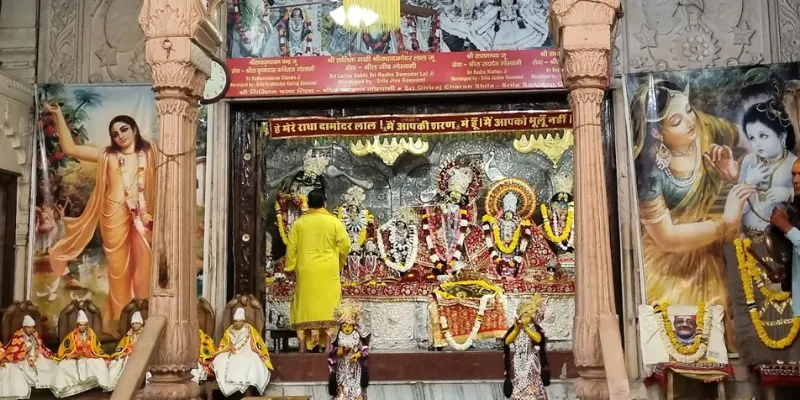 Temple
Radha Damodar Temple, Vrindavan: Timings, History and Complete Guide
Radha Damodar Temple, in Loi Bazaar, Vrindavan, is one of the seven original Goswami temples, founded by Srila Jiva Goswami in 1542. Its most sacred treasure is the Govardhan Shila given by Krishna to Sanatana Goswami - four circuits of this stone are held to equal one full Govardhan parikrama. The complex holds the samadhis of Rupa and Jiva Goswami and the room where Srila Prabhupada wrote before founding ISKCON. Approximate timings are 6:30 AM–12:00 PM and 4:30–8:30 PM. Entry is free.
Read Guide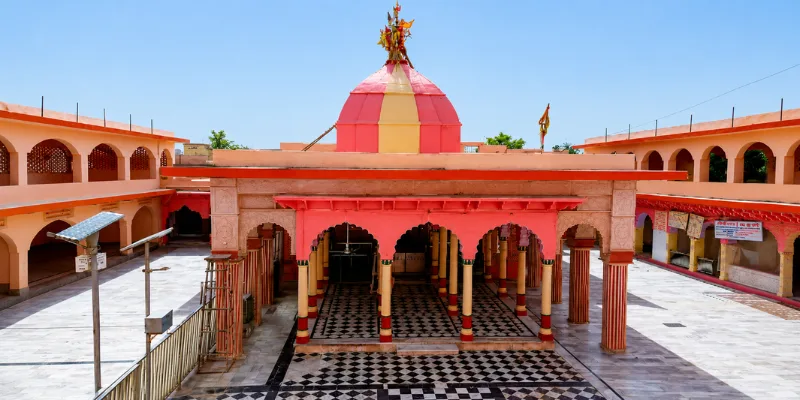 Temple
Dauji Maharaj Temple, Baldeo: Balarama Darshan and Complete Guide
The Dauji Maharaj Temple at Baldeo, about 20 km from Mathura, is the great temple of Balarama, Krishna's elder brother, lovingly called Dauji. Its black stone deity, around seven feet tall, is held to be the largest Balarama idol in Braj. The temple is most famous for the Huranga, a unique colour-play held the day after Holi. Entry is free. Reconfirm darshan timings, which shift by season.
Read Guide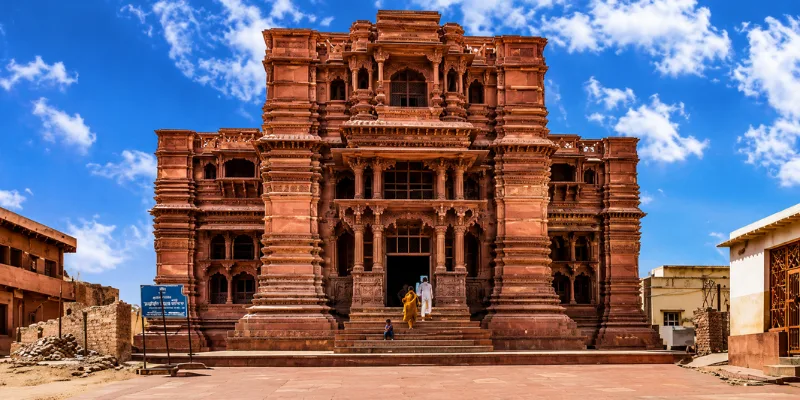 Temple
Govind Dev Ji Temple, Vrindavan: Timings, History and Guide
Govind Dev Ji is Vrindavan's great architectural set-piece, a red-sandstone temple built in 1590 by Raja Man Singh of Amber. Originally seven storeys, it stands at three today after the upper floors were razed under Aurangzeb. The deity is Govind Dev, recovered by Rupa Goswami; the original is now in Jaipur and a pratibhu serves here. Entry is free. Reconfirm timings before you travel.
Read Guide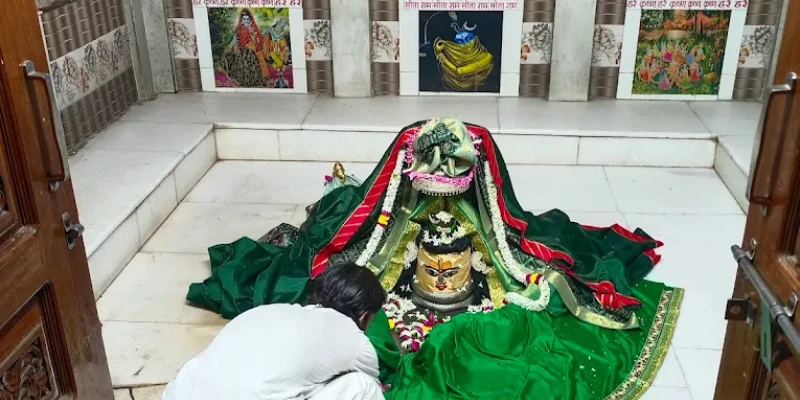 Temple
Gopeshwar Mahadev, Vrindavan: The Gopi-Form Shiva, Explained
Gopeshwar Mahadev is an ancient Shiva temple in Vrindavan with a beloved story: to enter Krishna's Raas, Shiva took the form of a gopi and here he is revered as the only Gopi-form Shiva. On special occasions the deity is adorned in gopi attire. Entry is free, with morning and evening darshan. Reconfirm the day's timings before you go.
Read Guide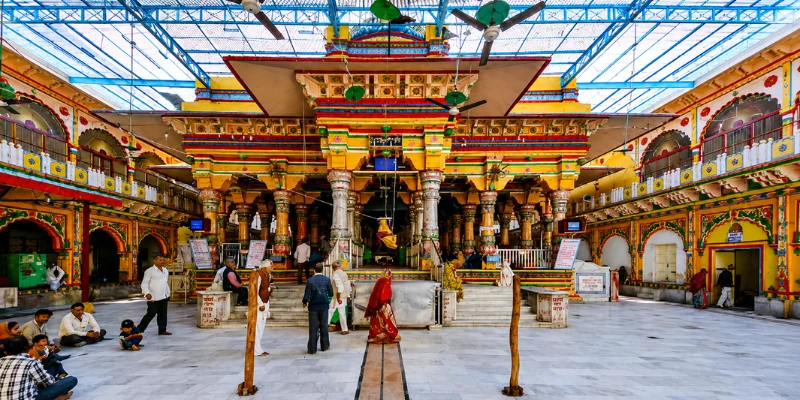 Temple
Dwarkadhish Temple, Mathura: Timings, Darshan and Complete Guide
Dwarkadhish Temple is Mathura's most thronged living temple, built in 1814 by Seth Gokul Das Parikh and run in the Pushtimarg tradition. It enshrines Krishna as Dwarkadhish, the King of Dwarka, in a dark-stone form and is famous for its haveli-style jhanki darshan. It sits beside Vishram Ghat. Entry is free and the jhanki schedule shifts by day, so reconfirm before you go.
Read Guide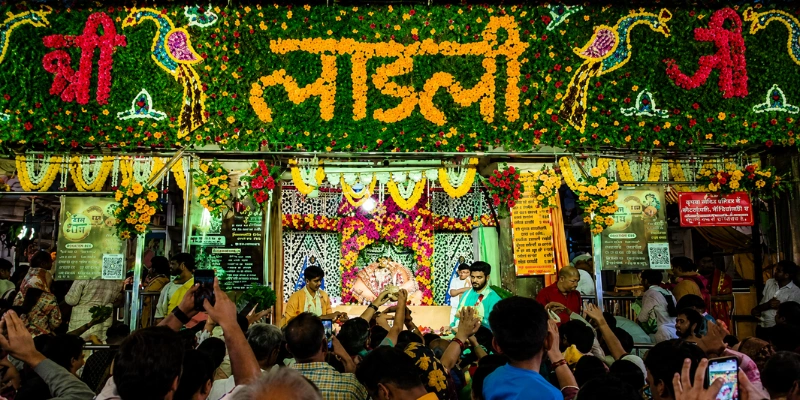 Temple
Radha Rani Temple (Shriji), Barsana: Timings, Climb and Complete Guide
Radha Rani Temple, also called Shriji or Ladli Lal, crowns Bhanugarh hill in Barsana, Radha's town. It is the rare temple where Radha is worshipped as primary. Reaching it means climbing about 200 to 225 steps, with a lift and a car route also available. Entry is free and Radhashtami is its supreme day. Reconfirm timings before you travel.
Read Guide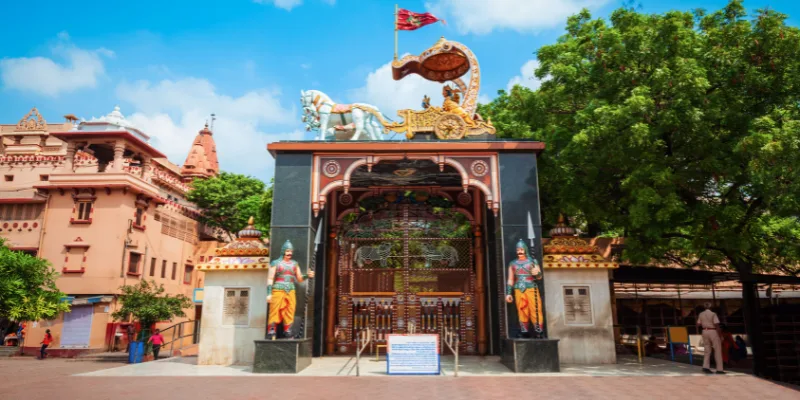 Temple
Krishna Janmabhoomi (Shri Krishna Janmasthan), Mathura: Timings and Guide
Shri Krishna Janmasthan, the Janmabhoomi, marks the prison-cell birthplace of Krishna in Mathura, where the Bhagavata tradition places his birth at midnight to Devaki and Vasudeva. Darshan runs roughly 5:00 AM to noon and 4:00 PM to evening, with strict security: phones, cameras and bags are not allowed inside. Entry is free. Reconfirm timings before you travel.
Read Guide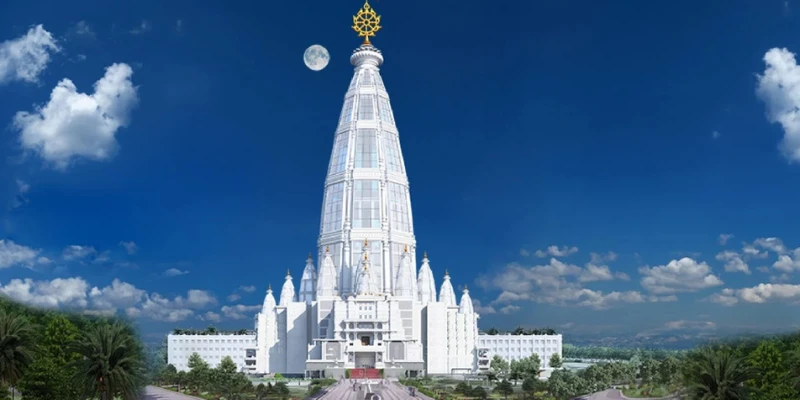 Temple
Vrindavan Chandrodaya Mandir: The Rising Tallest Temple, Explained
Vrindavan Chandrodaya Mandir is an ISKCON Bangalore project planned to be the tallest temple in the world, rising about 700 feet over roughly 70 floors. Its foundation stone was laid in 2014 and it is still under construction, opening in phases. Dedicated to Radha and Krishna, it is set in gardens recreating the twelve forests of Braj. Always check the official status before visiting.
Read Guide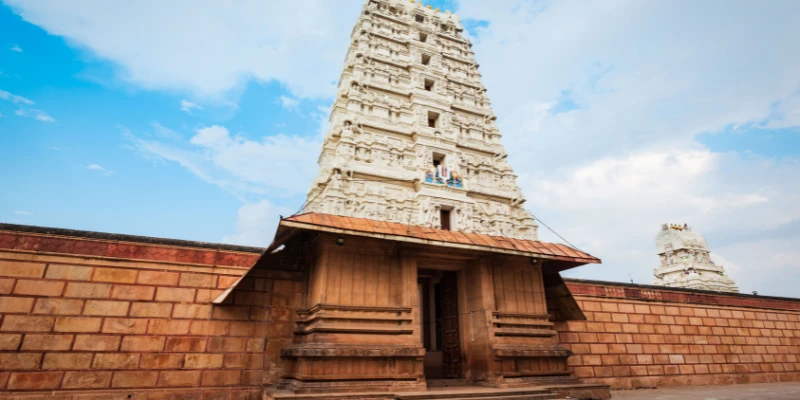 Temple
Rangji (Ranganatha) Mandir, Vrindavan: Timings and Complete Guide
Rangji Mandir, dedicated to Bhagwan Ranganatha, is the largest temple in Vrindavan, built in the grand South-Indian Dravidian style with a tall gopuram, unusual in the north. Its spring Brahmotsav, when the deity is drawn on a massive wooden chariot, is a major fair. Entry is free. Reconfirm darshan timings, which shift by season.
Read Guide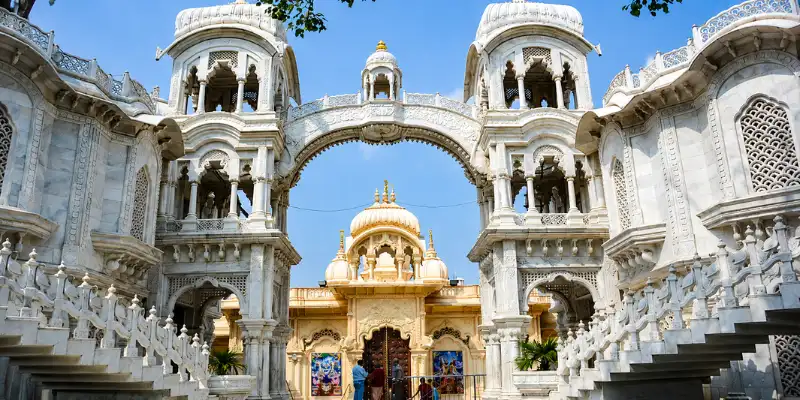 Temple
ISKCON Vrindavan (Krishna Balaram Mandir): Timings, Aarti and Guide
ISKCON Vrindavan, the Krishna Balaram Mandir, was established in 1975 by Srila Prabhupada, founder of ISKCON. It is famous for its continuous kirtan, white-marble shrine and Prabhupada's samadhi. Darshan runs from about 4:30 AM, with a 4:30 AM Mangala Aarti, an afternoon break, and an evening session to around 8:30 PM. Entry is free.
Read Guide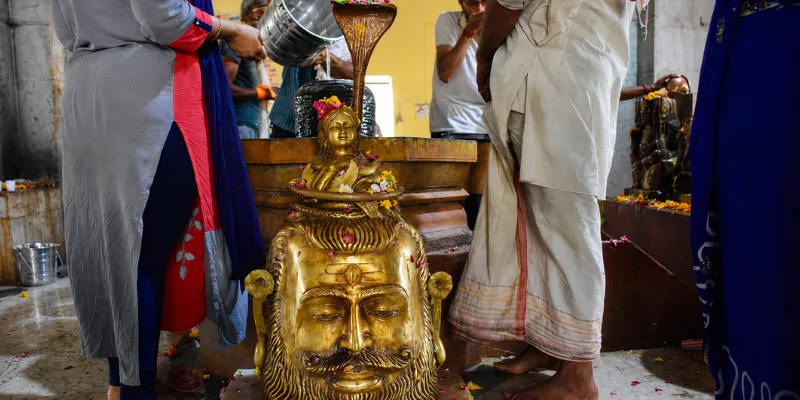 Temple
Chintaharan Mahadev, Gokul: The Shiva Who Removes Worry
Chintaharan Mahadev, on the Yamuna in Gokul, is the Shiva temple where, in the tradition, the anxious Yashoda found peace. After she saw the whole universe within infant Krishna's mouth and was filled with worry about who her child truly was, she prayed and Lord Shiva appeared as Chintaharan, the remover of worry, to calm her heart. It is a loved Shiva shrine of the infant-Krishna country. Entry is free; reconfirm timings.
Read Guide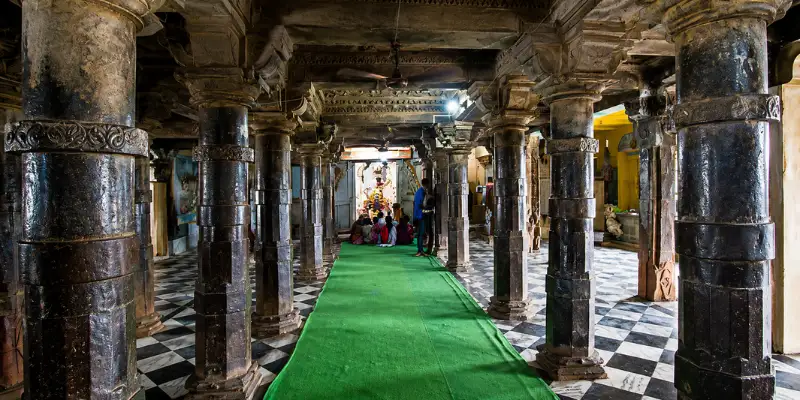 Temple
Chaurasi Khamba, Mahavan: Nanda's Home, Where Krishna Was Raised
Chaurasi Khamba, also called Nand Bhavan, in Mahavan or old Gokul, is revered as the home of Nanda Maharaja where Krishna and Balarama were raised through infancy, until Krishna was about three. It is named for its 84 ancient pillars, the chaurasi khamba, said in tradition to recall the 84 lakh species of life. Here many early leelas unfolded, from Putana to the naming ceremony. Entry is free; reconfirm timings.
Read Guide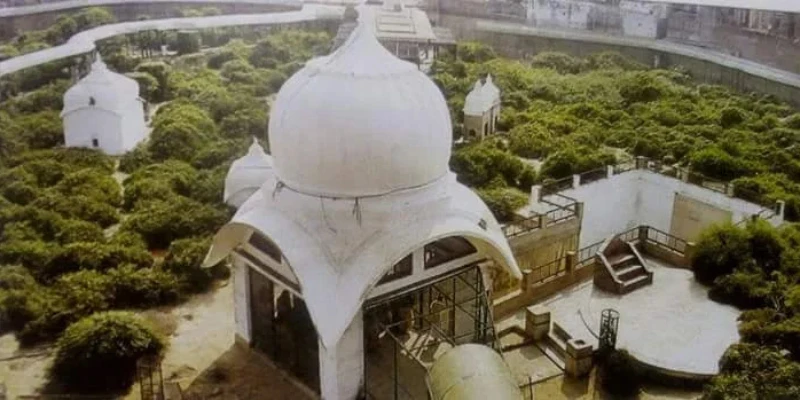 Temple
Nidhivan and Seva Kunj, Vrindavan: Timings, Story and Guide
Nidhivan is a dense sacred grove in Vrindavan where Swami Haridas meditated and where Banke Bihari first appeared. In living belief, Radha and Krishna perform the Raas here each night, so the grove is cleared and locked after the evening aarti and no one remains after dark. Entry is free. Reconfirm the day's timings, which shift with the season.
Read Guide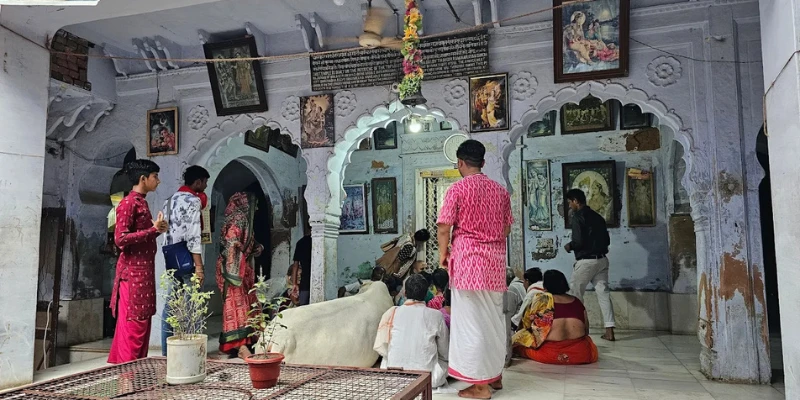 Temple
Meera Bai Temple, Vrindavan: The Saint-Poetess of Krishna
Meera Bai Temple, near Nidhivan in Vrindavan, honours Meerabai, the Rajput princess who became one of the greatest saint-poets of Krishna. In the tradition she spent years in Vrindavan, lost in devotion to her Giridhar Gopal and the temple preserves relics linked to her. It is a tender shrine to a love that gave up a kingdom for Krishna. Entry is free; reconfirm timings.
Read Guide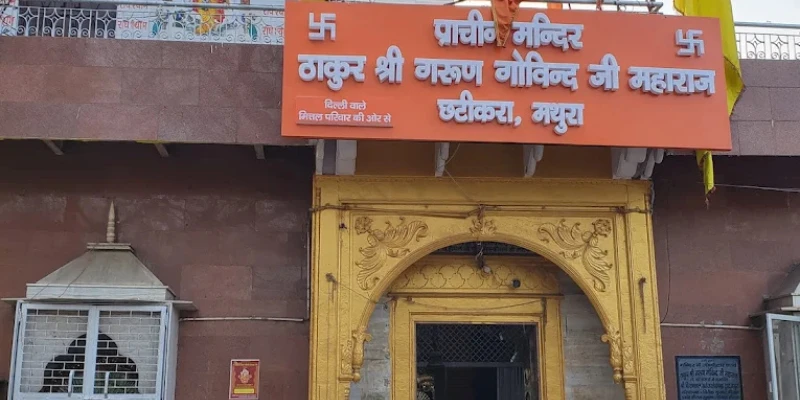 Temple
Garud Govind Temple, Vrindavan: The Shrine of Garuda
Garud Govind Temple, in Chhatikara village at the Vrindavan turn off the highway, is one of Braj's ancient temples, traced in tradition to Vajranabha. It is a rare shrine of Garuda, the eagle-carrier of Vishnu, shown bearing Govinda and is famed across India for the Kalsarp puja and for the belief that it protects from serpents and snakebite. Entry is free; reconfirm timings.
Read Guide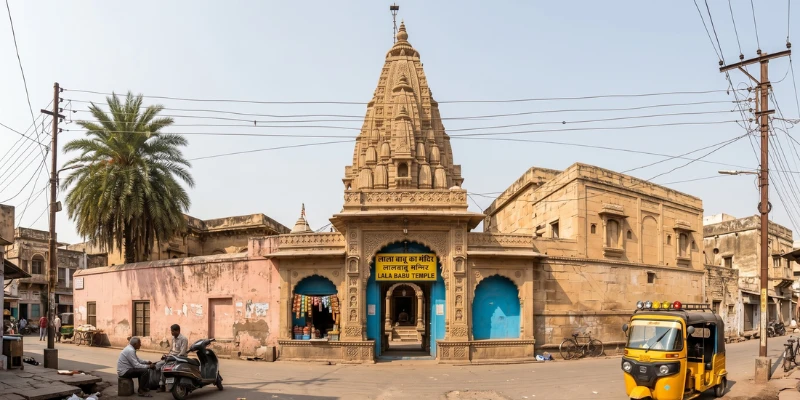 Temple
Lala Babu Temple, Vrindavan: A Rich Man's Renunciation
Lala Babu Temple, in Vrindavan, was raised in the nineteenth century by Krishna Chandra Singha, a wealthy trader and landlord of Kolkata known as Lala Babu, who renounced his great fortune to live as a devotee in Vrindavan. Its deities of Radha and Krishna are worshipped as Kishori Raman. The temple stands as a moving witness to one man's turning from riches to devotion. Entry is free; reconfirm timings.
Read Guide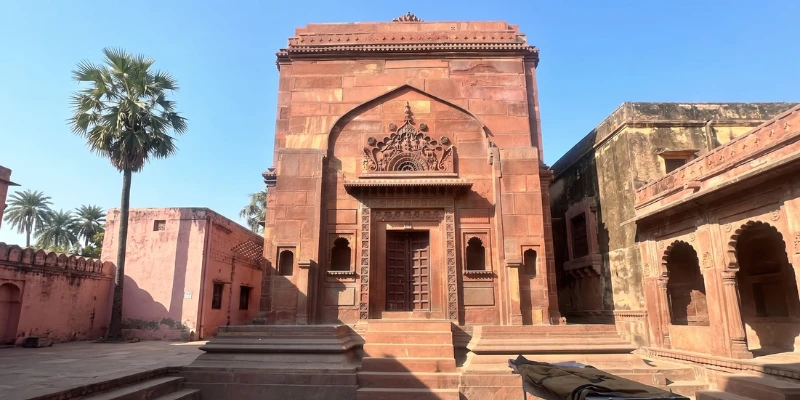 Temple
Jugal Kishore Temple, Vrindavan: One of the Four Oldest
Jugal Kishore Temple, beside Kesi Ghat in Vrindavan, is one of the four oldest temples of the town, built in 1627. Raised in red sandstone in the same noble style as the Madan Mohan and Govind Dev temples, it stands tall by the Yamuna, where Krishna slew the horse-demon Keshi. It honours Radha and Krishna together as Jugal Kishore, the divine couple. Entry is free; reconfirm timings.
Read Guide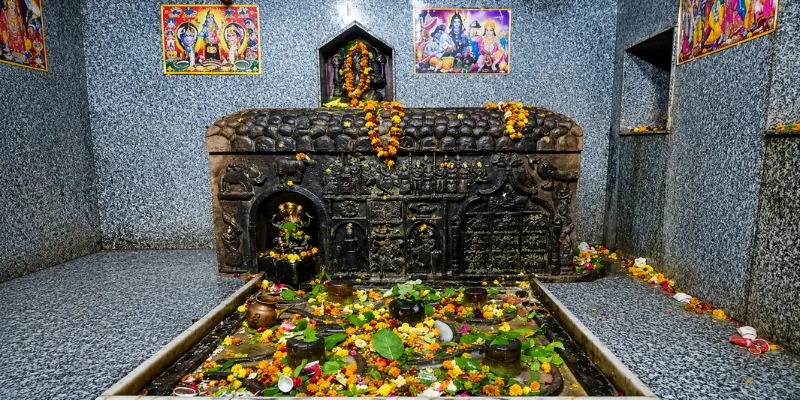 Temple
Chakleshwar Mahadev, Govardhan: The Guardian Shiva of the Hill
Chakleshwar Mahadev, on the north bank of Mansi Ganga in Govardhan, is the guardian Shiva of the Govardhan region, one of the protector Shivas of Braj. Tradition traces it to Vajranabha and beside it is the bhajan kutir of Sanatana Goswami, with its loved legend of Shiva begging the saint not to leave over the mosquitoes. Entry is free; reconfirm timings.
Read Guide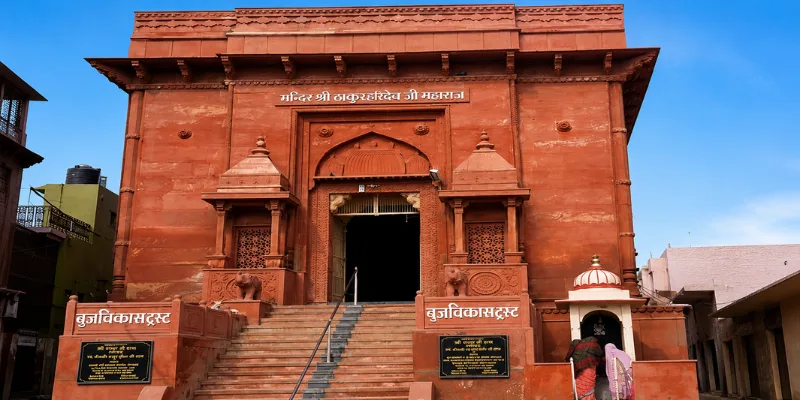 Temple
Haridev Temple, Govardhan: An Ancient Temple of Braj
The Haridev temple, on the bank of Mansi Ganga in Govardhan, is one of the four great temples whose origin tradition traces to Vajranabha, Krishna's great-grandson, alongside Govind Dev at Vrindavan, Baladev near Mahavan and Keshavadev at Mathura. The deity Haridev is the worshipful form of Govardhan. The present temple was rebuilt in the sixteenth century by Raja Bhagwan Das of Amer. Entry is free; reconfirm timings.
Read Guide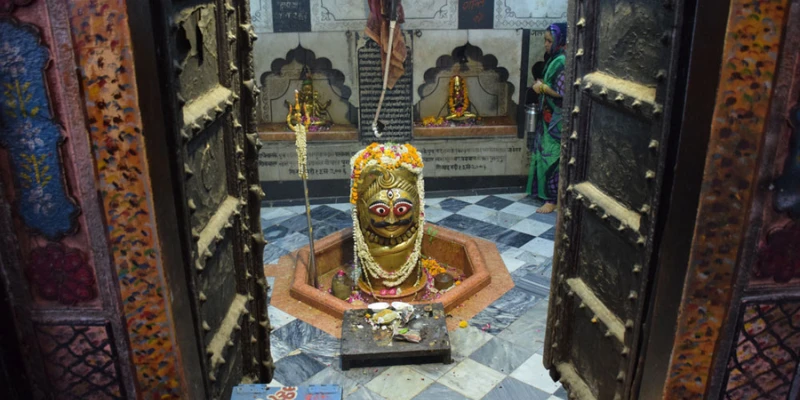 Temple
Rangeshwar Mahadev, Mathura: A Guardian Shiva of the City
Rangeshwar Mahadev, in the southern part of Mathura, is a revered Shiva temple, one of the guardian Shivas of the holy city. In the tradition, King Kansa, a devotee of Shiva, worshipped here, and it stood near the arena, the Rangbhoomi, where Krishna slew Kansa and freed Mathura. Its name recalls that arena. It is counted among the prominent Shiva temples of Braj. Entry is free; Mondays and Shivratri are special.
Read Guide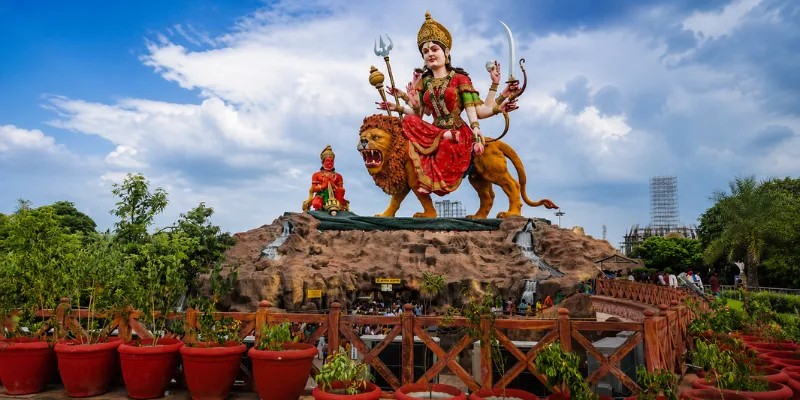 Temple
Vaishno Devi Dham, Vrindavan: The Recreated Shrine, Explained
Vaishno Devi Dham, on Chhatikara Road on the edge of Vrindavan, is a modern temple complex that recreates the famous Vaishno Devi shrine of Jammu, with artificial hills, a darshan cave of the nine forms of the Goddess and a towering Devi statue visible from the highway. It lets devotees who cannot travel to Katra experience the pilgrimage in Braj and is especially popular with families. Entry is free; reconfirm timings.
Read Guide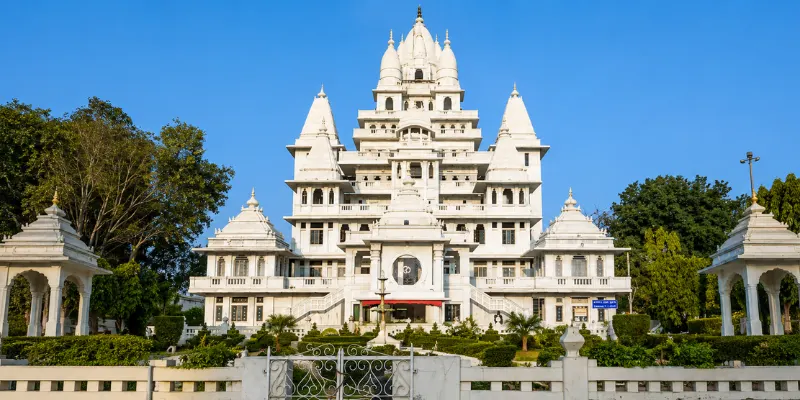 Temple
Pagal Baba Temple, Vrindavan: The Nine-Storey Tower, Explained
Pagal Baba Temple, on the Mathura-Vrindavan road, is a striking nine-storey white-marble tower built in 1969 by the saint affectionately called Pagal Baba. Dedicated to Krishna, each floor honours different deities, and the ground floor is famous for puppet and electronic shows of the Ramayana and Mahabharata. The top floor gives a panoramic view of Vrindavan. It is a popular, family-friendly stop. Entry is free; reconfirm timings.
Read Guide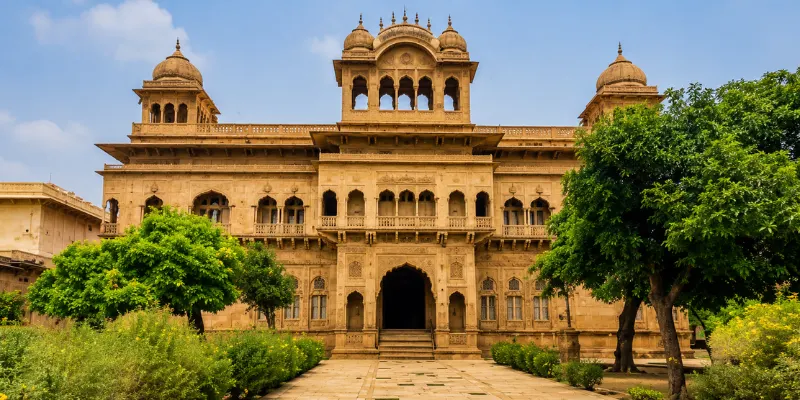 Temple
Jaipur Temple, Vrindavan: The Radha Madhava Temple, Explained
The Jaipur Temple, dedicated to Sri Radha Madhava, is one of Vrindavan's grandest temples, built by Maharaja Sawai Madho Singh II of Jaipur and completed in 1917 over about three decades. It is famous for its carved red sandstone, single-rock pillars and spacious carved courtyard, in a Rajasthani and Mughal style. Calmer than the marquee temples, it is a serene, majestic darshan. Entry is free; reconfirm timings.
Read Guide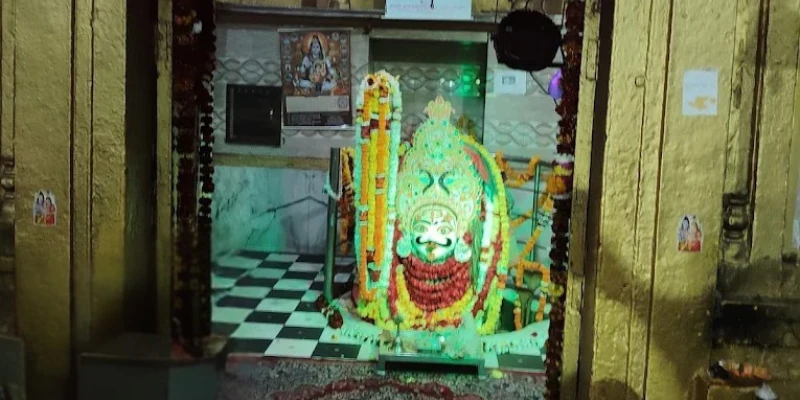 Temple
Bhuteshwar Mahadev, Mathura: The Guardian Shiva of the City
Bhuteshwar Mahadev, near Krishna Janmabhoomi in Mathura, is revered as the guardian Shiva, the kshetrapal, of the holy city. It is one of the principal guardian Shivas of Braj, alongside Gopeshwar at Vrindavan and Chakleshwar at Govardhan. It is also linked, in the Shakti tradition, to the Mathura Shakti Peeth, where the ringlets of Sati's hair are said to have fallen. Entry is free; Mondays and Shivratri are special.
Read Guide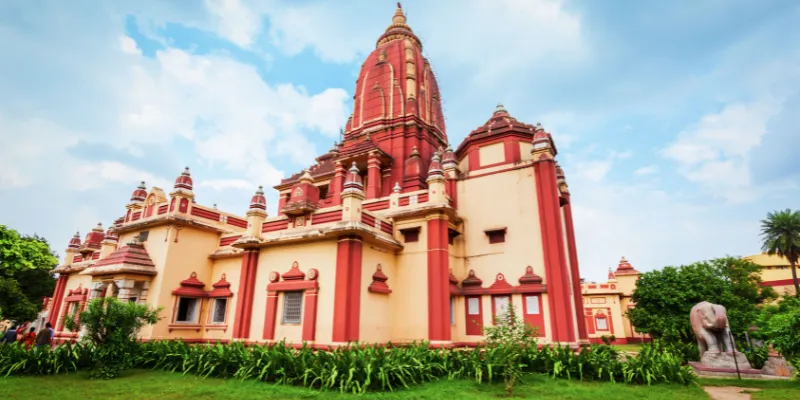 Temple
Gita Mandir (Birla Mandir), Mathura: The Temple of the Gita
Gita Mandir, also called Birla Mandir, on the Mathura-Vrindavan road, is a serene modern temple built by the industrialist Seth Jugal Kishore Birla in memory of his parents, in the mid-twentieth century. Its most famous feature is the Gita Stambh, a tall red-sandstone pillar inscribed with all 700 verses of the Bhagavad Gita. The sanctum holds Lakshmi Narayan with Radha Krishna and Sita Ram. Entry is free; usual hours are a morning and an afternoon-to-evening slot.
Read Guide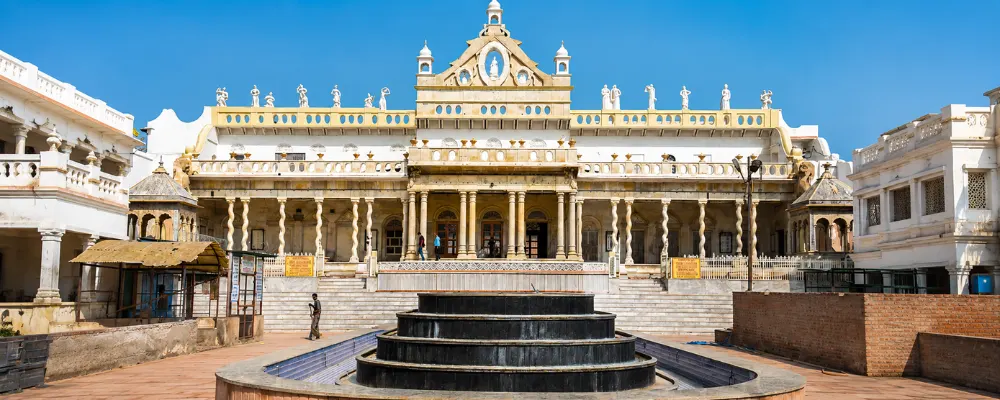 Temple
Shahji Temple, Vrindavan: The Temple of Twisted Pillars
Shahji Temple, near Nidhivan in Vrindavan, is an ornate marble temple built in 1876 by the Lucknow jeweller brothers Shah Kundan Lal and Shah Phundan Lal. It is famous for its twelve spiral marble pillars, which give it the name the temple of twisted pillars, and for the Basanti Kamra, a darbar hall of Belgian glass chandeliers opened just twice a year. The deity is Radha-Krishna, worshipped as Chhote Radha Raman. Entry is free; reconfirm timings.
Read Guide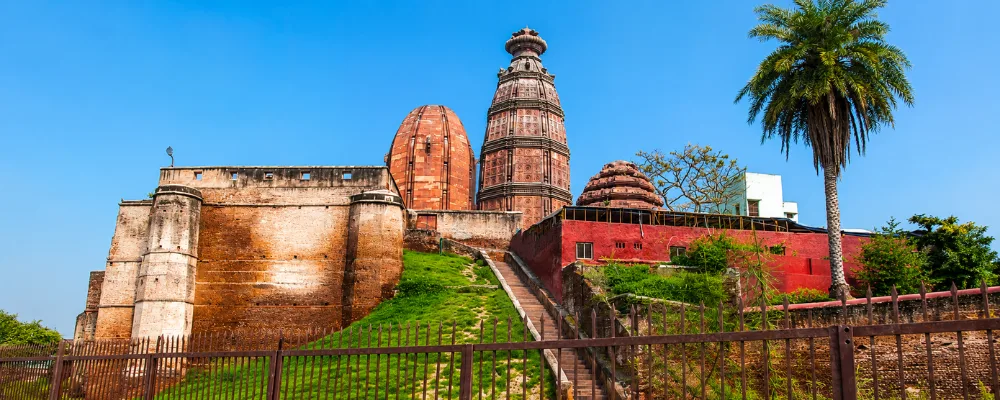 Temple
Madan Mohan Temple, Vrindavan: The Town's Oldest Temple
Madan Mohan, atop the Dwadashaditya Tila hill by the Yamuna near Kaliya Ghat, is the oldest temple in Vrindavan, built around 1580 under Sanatana Goswami by the merchant Ram Das Kapur. It is one of the seven Goswami temples and is dedicated to Krishna as Madan Mohan, the one who enchants even Cupid, with Radha and Lalita. The original deity is now in Karauli; a pratibhu-murti is worshipped here. Entry is free; reconfirm darshan timings.
Read Guide Temple
Kokilavan Shani Dev Dham: The Shani Temple of Braj, Explained
Kokilavan Shani Dev Dham, near Nandgaon at Kosi Kalan, is the great Shani Dev temple of Braj, marking where Krishna gave Shani Dev darshan in the form of a koel, a cuckoo, after Shani's penance. Devotees come for relief from Shani Dosha and Sade Sati, especially on Saturdays and Shani Amavasya, when the dham is busiest. There is a parikrama of the van, a Surya Kund to bathe in, and free community meals. Entry is free; timings vary by day.
Read Guide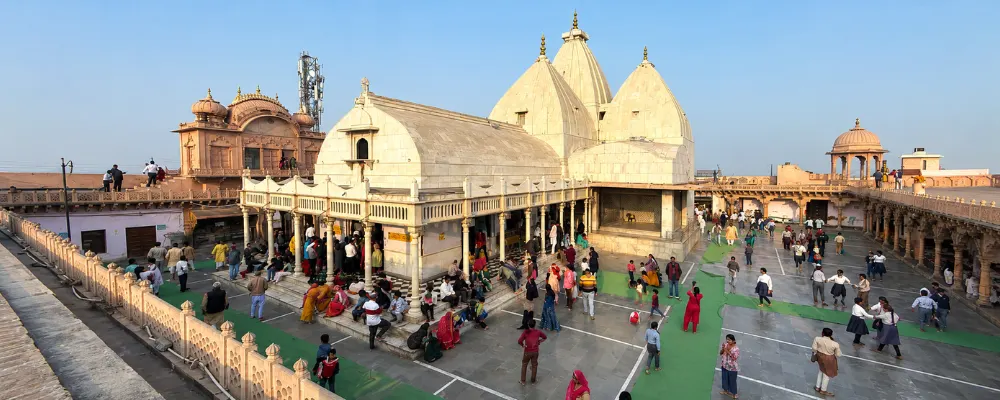 Temple
Nand Bhavan, Nandgaon: Krishna's Village Home, Explained
Nand Bhavan in Nandgaon, atop Nandishwar hill about 9 km from Barsana, is the home of Nanda Maharaj, where Krishna spent his boyhood after the family moved from Gokul. It is the only temple where the foster parents Nanda and Yashoda are worshipped alongside Krishna and Balaram. Built in the 19th century by Raja Rupa Singh, it is free and reached by a short climb. Reconfirm darshan timings, which shift by season.
Read Guide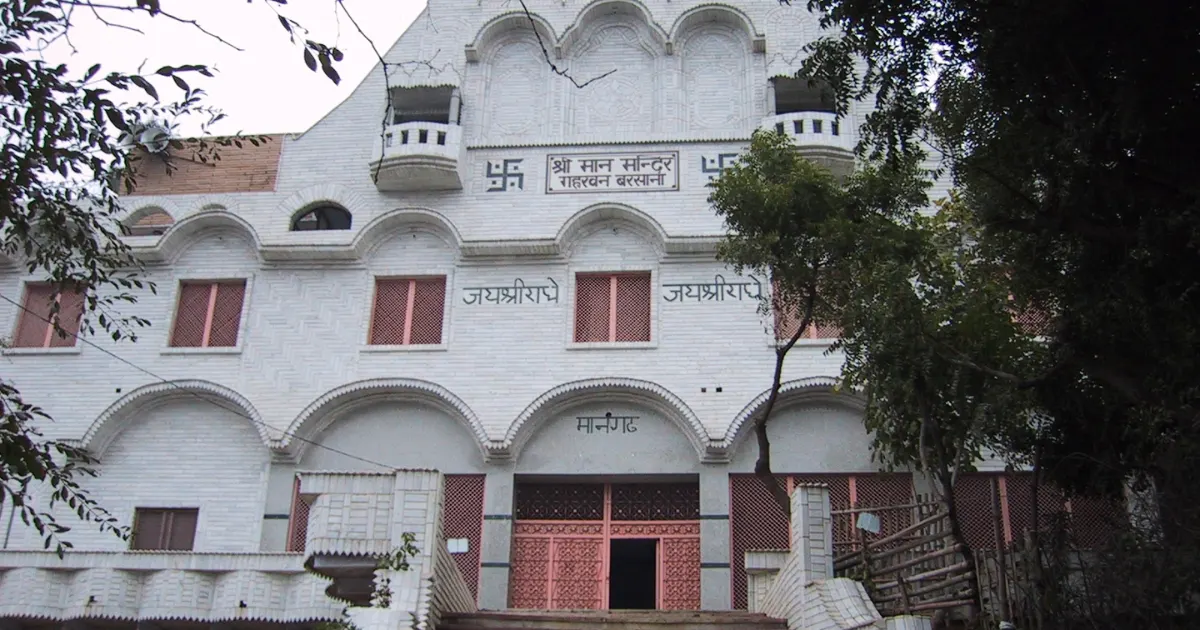 Temple
Maan Mandir (Maan Garh), Barsana: Radha's Hill of Maan
Maan Mandir, or Maan Garh, is a hilltop shrine in Barsana marking the leela in which Radha withdrew in maan, her loving divine sulk, until Krishna came to win her back. It is one of Barsana's most contemplative spots, with sweeping views over the town and a calm, meditative air. It is free and reached by a short climb. Reconfirm darshan timings, which shift by season.
Read Guide32 Guides Available
Sacred Ghats & Places
The riverbanks, kunds and parikrama paths every pilgrim should know before they go.
 Ghat / Place
Radha Kund & Shyam Kund: Significance, Snan & Complete Guide
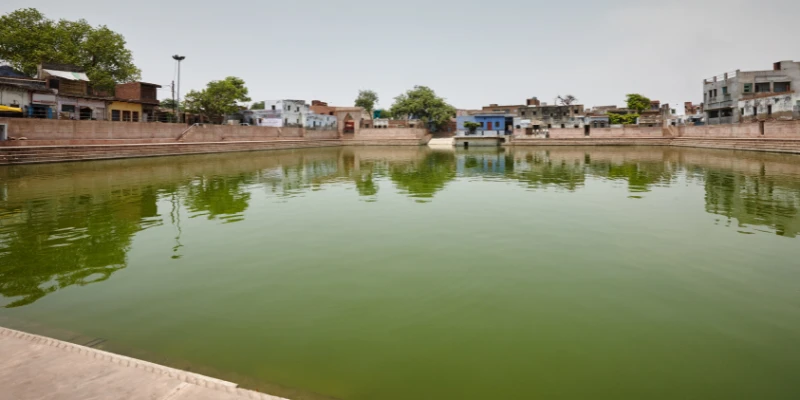
Radha Kund and the adjoining Shyam Kund are the holiest twin sacred ponds in Braj, near Govardhan, deeply associated with the love of Radha and Krishna. They sit on the Govardhan parikrama route, are open 24 hours and are free to visit. The most revered occasion is the Ahoi Ashtami midnight snan, observed traditionally by couples; on ordinary days a respectful darshan and parikrama of the kunds is enough. About 25 km from Mathura.
Read Guide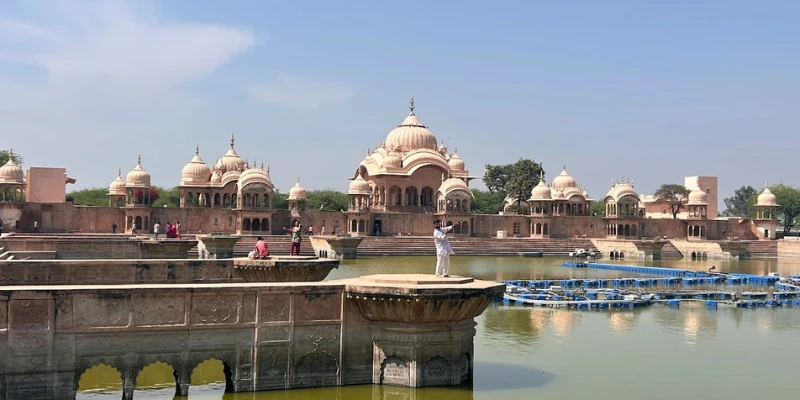 Ghat / Place
Kusum Sarovar Govardhan: Timings, Sunset & Complete Guide
Kusum Sarovar is a beautiful sandstone reservoir between Govardhan and Radha Kund, ringed by carved ghats and pavilions. By tradition it's where Radha came to gather flowers (kusum) and met Krishna. It's a calm, scenic stop on the Govardhan parikrama, especially at sunset, when the honey-coloured sandstone glows. Open through the day, free to enter. About 25 km from Mathura.
Read Guide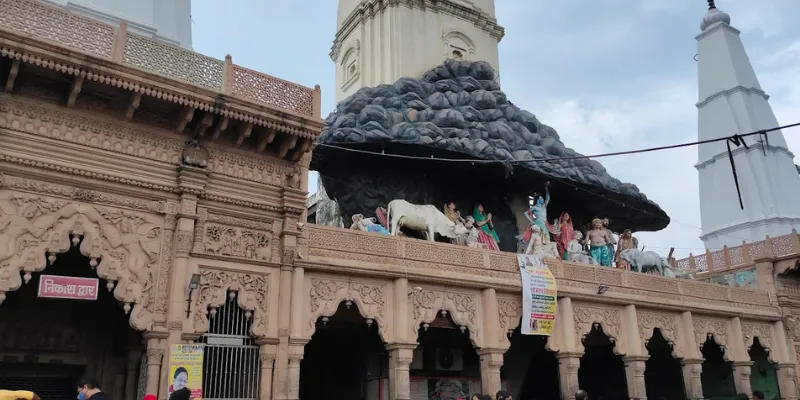 Ghat / Place
Giriraj Govardhan: Parikrama, Darshan & Complete Guide
Giriraj Govardhan is the sacred hill Krishna is believed to have lifted on his finger to shelter Braj from Indra's storm. The hill itself is the deity - pilgrims do not climb it; they walk the 21 km parikrama around it. Key stops include Daan Ghati, Mukharvind (Jatipura), Mansi Ganga, Radha Kund and Kusum Sarovar. The route is open 24 hours, with a vehicle parikrama option for elders and darshan is free. About 22-26 km from Mathura.
Read Guide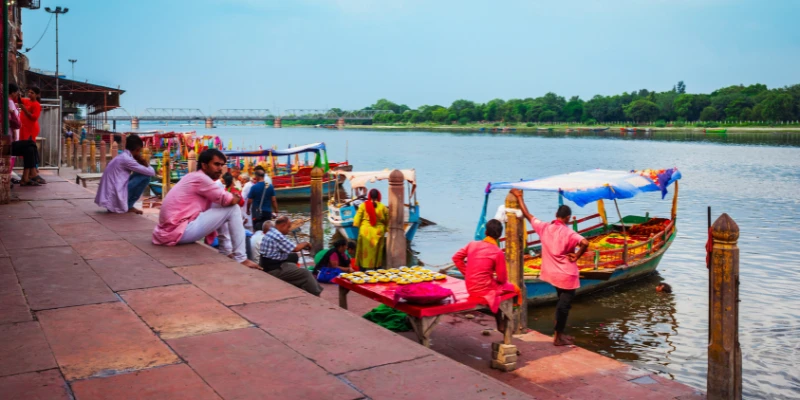 Ghat / Place
Vishram Ghat, Mathura: Yamuna Aarti, Parikrama and Complete Guide
Vishram Ghat is the holiest and most central of Mathura's ghats, where Krishna is said to have rested after slaying the tyrant Kansa, which gives it its name, vishram meaning rest. It is the traditional start and end of the Mathura parikrama, and its evening Yamuna aarti is one of the most moving in Braj. The ghat is open around the clock and free to visit. Reconfirm the aarti time, which shifts by season.
Read Guide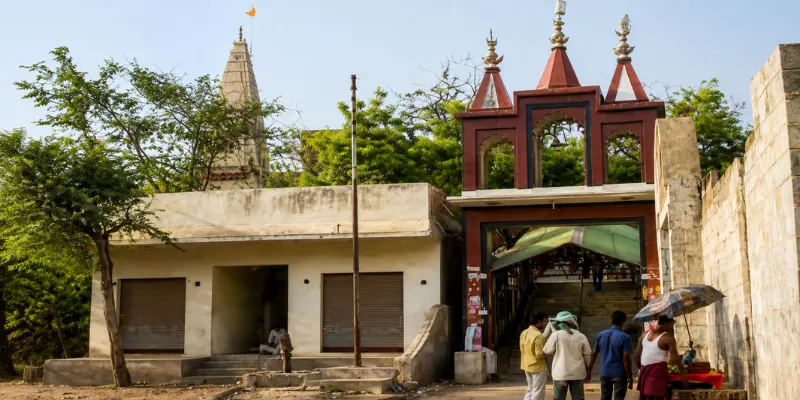 Ghat / Place
Gokul: Krishna's Infancy Dham, Its Temples and Complete Guide
Gokul, on the Yamuna about 15 km southeast of Mathura, is where the infant Krishna was secretly raised by Yashoda and Nanda after being carried across the river from Kansa's prison. Its heart is the Gokulnath Temple of the Pushtimarg tradition, while nearby Mahavan holds Nand Bhavan, the 84-pillar Chaurasi Khamba and the sacred sands of Raman Reti. It is the land of Krishna's baby leelas. Reconfirm temple timings before you go.
Read Guide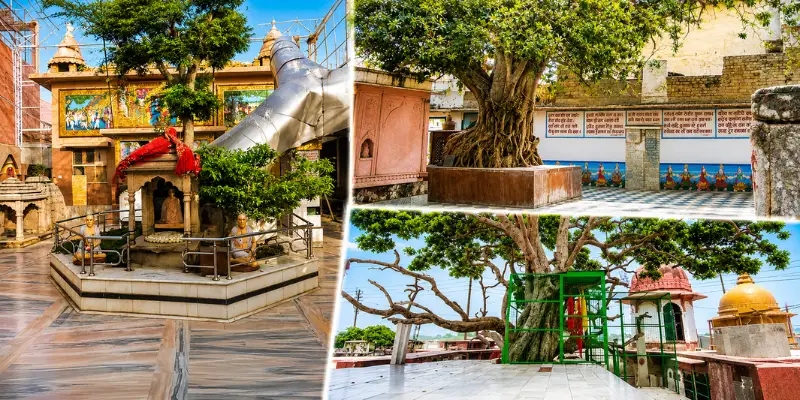 Ghat / Place
Imli Tala, Vamsi Vat and Chir Ghat: Vrindavan's Yamuna-Front Leela Spots
Imli Tala, Vamsi Vat and Chir Ghat are three small, deeply loved leela-spots along the Yamuna front of old-town Vrindavan, near Kesi Ghat on the Parikrama Marg. Imli Tala is the tamarind of Radha and Krishna's separation and of Chaitanya Mahaprabhu; Vamsi Vat is the tree where the flute called the gopis to the Raas; Chir Ghat is where the cheer-haran took place. All three are free, open through the day, and best walked together as part of the Vrindavan parikrama.
Read Guide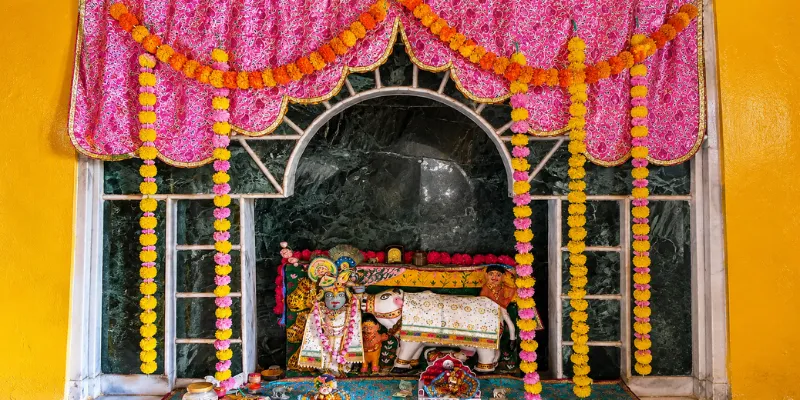 Ghat / Place
Bahulavan, Braj: The Forest of Bahula the Cow
Bahulavan, a forest of Braj now known as the village of Bati, is one of the twelve forests where Krishna and Balarama grazed their cows. It is famed for the story of Bahula, a cow whose truthfulness the Lord tested and rewarded. Its sites are the Bahula Devi temple, Bahula Kund and Sankarshan Kund. It is a quiet van of the Chaurasi Kos Yatra, loved by Chaitanya Mahaprabhu. Sites are free; reconfirm timings.
Read Guide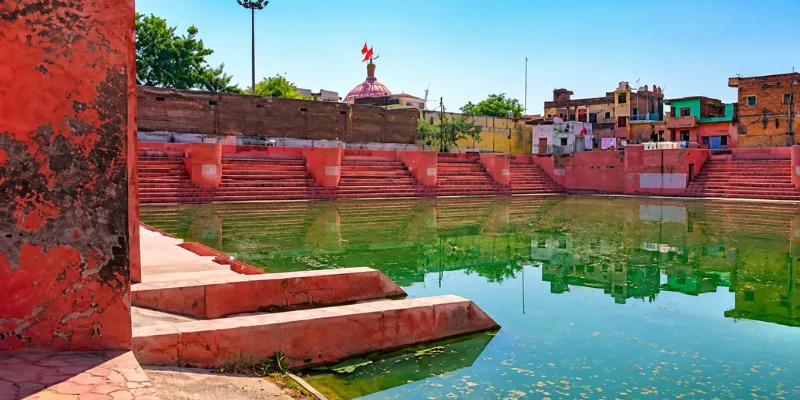 Ghat / Place
Lohvan, Braj: The Forest of the Lohjangha Leela
Lohvan, a forest of Braj across the Yamuna near Mahavan, is one of the twelve forests where Krishna grazed his cows. In the tradition it is named for his slaying of the demon Lohjangha (Lohasura). Its sites are Krishna Kund, where he is said to have rowed the gopis by boat and the Radha Gopinath temple on its bank. It is a quiet, lesser-visited van of the Chaurasi Kos Yatra. Sites are free; reconfirm timings.
Read Guide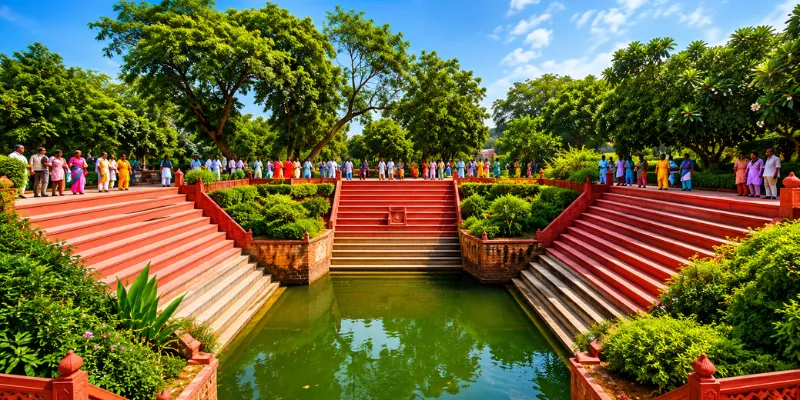 Ghat / Place
Bhadravan, Braj: A Quiet Forest of Balarama
Bhadravan is one of the twelve forests of Braj, a quiet rural grazing-ground where, in the tradition, Krishna and Balarama brought their cows. Its name comes from Balabhadra, another name for Balarama. Its sites are Bhadra Sarovar, a sacred lake and the shrines of Bhadrishwar Mahadev and Radha Bhadra Bihari. It is a peaceful, lesser-visited van of the Chaurasi Kos Yatra. Sites are free; reconfirm any timings.
Read Guide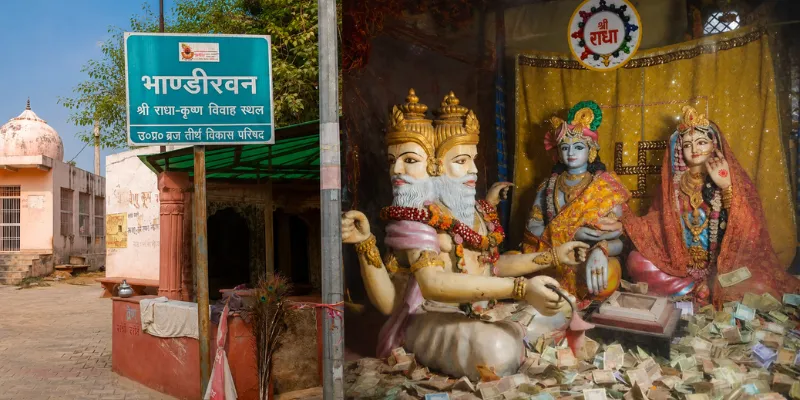 Ghat / Place
Bhandirvan, Braj: The Forest of Radha and Krishna's Marriage
Bhandirvan, a forest of Braj in Mant tehsil near the Yamuna, about 10 to 20 km from Vrindavan, is revered as the Radha Krishna Vivah Sthali. In the Brahma Vaivarta Purana and Garga Samhita tradition, Brahma himself performed the divine marriage of Radha and Krishna under its ancient Bhandir Vat banyan. It is also where Balarama slew the demon Pralamba. Most sites are free; reconfirm timings.
Read Guide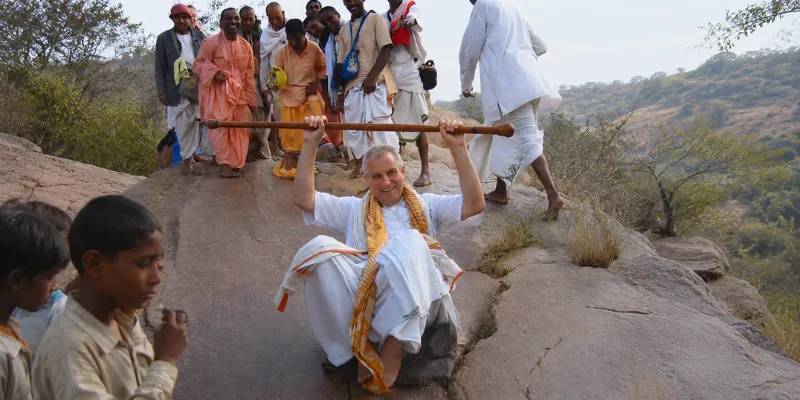 Ghat / Place
Kamavan (Kamyavan), Braj: The Adi Vrindavan and the Land of 84
Kamavan, the town of Kaman in Rajasthan's Bharatpur district, is one of the twelve forests of Braj and a major stop on the Chaurasi Kos Yatra. Loved as the Adi Vrindavan, the original Vrindavan, it is famed as the land of 84: 84 kunds, tirthas and temples. Its great sites are Vimal Kund, the guardian Shiva Kameshwar Mahadev, Charan Pahari and the Bhojan Thali. Most sites are free; reconfirm any timings.
Read Guide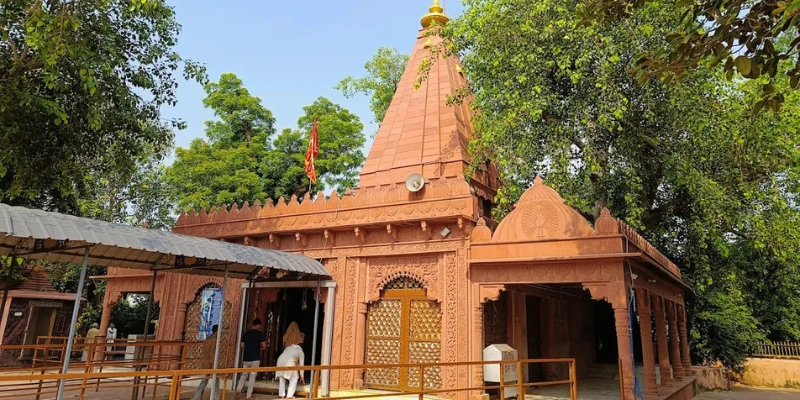 Ghat / Place
Belvan (Bilvavan): The Forest Where Lakshmi Waits
Belvan or Bilvavan, across the Yamuna from Vrindavan, is one of the twelve forests of Braj, named for its bael or wood-apple trees. It is loved above all as Lakshmivan, the forest where, in the tradition, Lakshmi Devi performs penance longing to enter Krishna's rasa-leela. A Mahalakshmi temple stands here. Mostly free; reconfirm timings.
Read Guide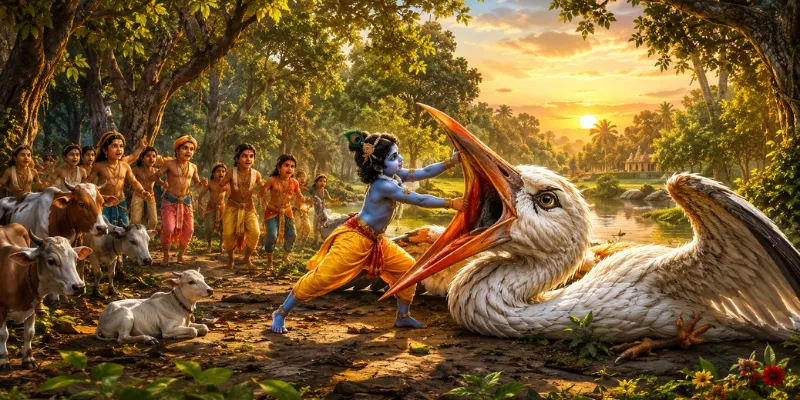 Ghat / Place
Khadiravan: The Forest of the Bakasura Leela
Khadiravan, now the village of Khayro, is one of the twelve forests of Braj, named for the khadira or acacia tree. In the tradition Krishna, herding his calves here, slew the crane-demon Bakasura, sent by Kansa, who tried to swallow him. The texts promise that to visit Khadiravan is to attain the abode of Vishnu. Mostly free; reconfirm timings.
Read Guide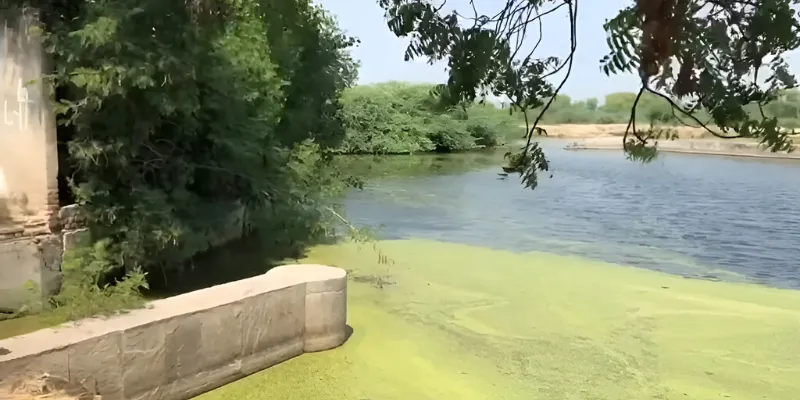 Ghat / Place
Kumudvan: The Lily Forest, Smallest of the Twelve
Kumudvan, now Kudaravan near Talvan, is the smallest of the twelve forests of Braj, named for the kumud, the water-lily that once filled its kund. In the tradition Krishna and the cowherd boys played here and made garlands of lily flowers and the sage Kapila did austerities by the kund. A small Kapila shrine stands here. Mostly free; reconfirm timings.
Read Guide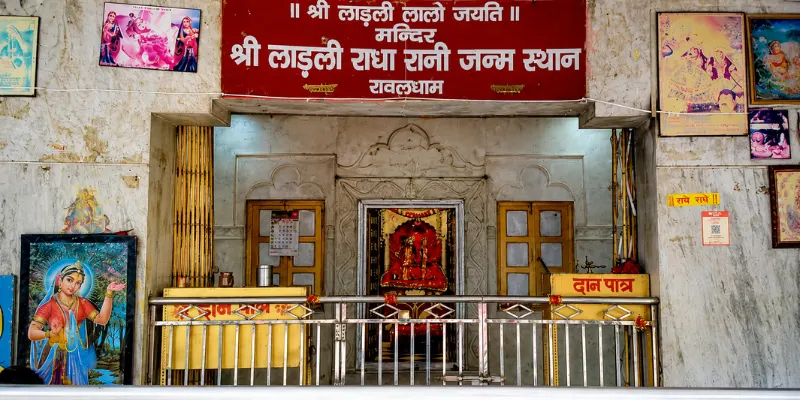 Ghat / Place
Raval: The Birthplace of Radha Rani, Explained
Raval is a small, quiet village on the bank of the Yamuna near Gokul, revered in tradition as the birthplace of Srimati Radha Rani, daughter of Vrishabhanu and Kirtida, who later grew up at Barsana. Its temple, the Larily Lal Mandir, holds childhood-form deities of Radha and Krishna. The tradition tells how the infant Krishna first opened Radha's eyes here. Entry is free; reconfirm timings.
Read Guide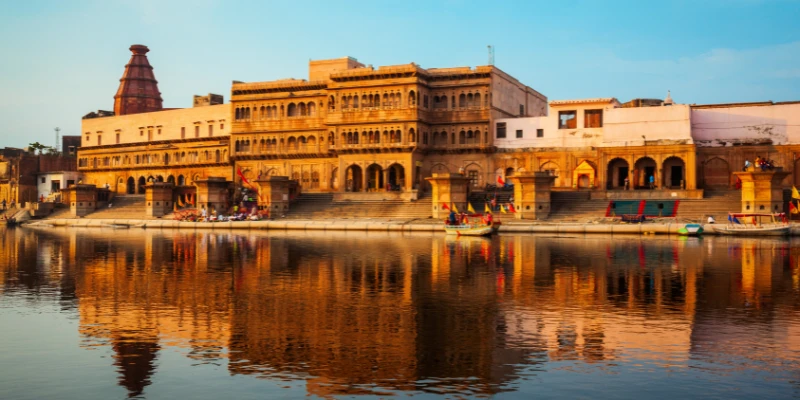 Ghat / Place
Kesi Ghat, Vrindavan: Yamuna Aarti, Boat Rides and Guide
Kesi Ghat is the most beautiful ghat in Vrindavan, where Krishna slew the horse-demon Keshi, set beneath a skyline of painted havelis on the Yamuna. Its evening Yamuna aarti, with floating lamps and a boat-ride view, is the loveliest in Braj. It is free to visit and open through the day. Reconfirm the aarti time, which shifts by season.
Read Guide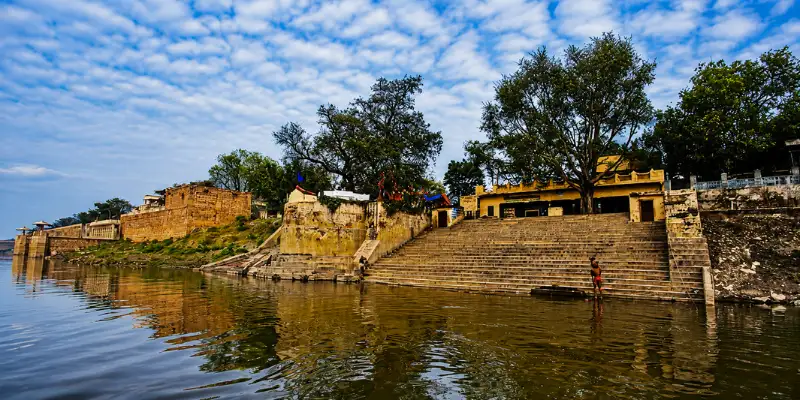 Ghat / Place
Brahmand Ghat, Gokul: Where Yashoda Saw the Universe
Brahmand Ghat, on the Yamuna in Gokul, is where, in the tradition, the infant Krishna ate a little clay at play and when Yashoda asked him to open his mouth she saw the whole universe, brahmand, within it, his divinity revealed in an instant. The name means the universe. Pilgrims take the sacred soil, perform sankalp puja for their children and join the Yamuna aarti. Entry is free; the ghat is open through the day.
Read Guide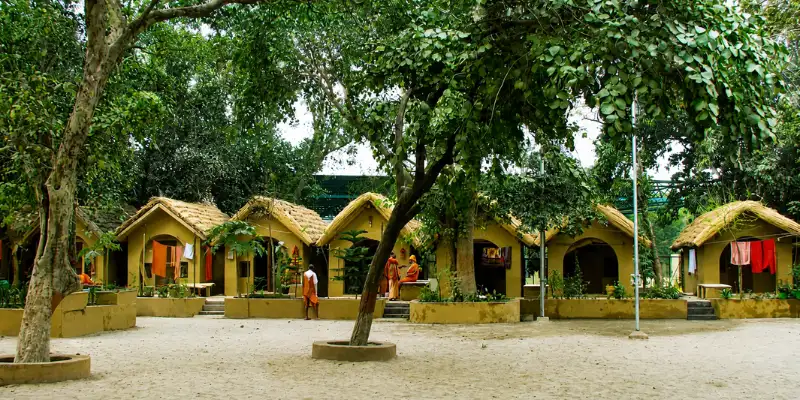 Ghat / Place
Raman Reti, Gokul: The Sacred Sands of Krishna's Childhood
Raman Reti is the stretch of soft, golden sand in Gokul where, in the tradition, infant Krishna and Balarama crawled, played and wrestled with their cowherd friends. The name means the sand of play, and devotees still roll in or touch the sacred dust for blessings. There is a peaceful Krishna shrine and ashram, with a quiet meditation area. Entry is free; reconfirm timings, usually a morning and an evening slot.
Read Guide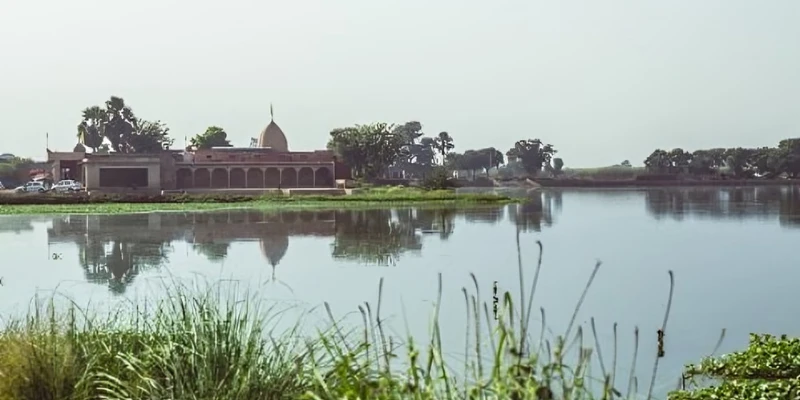 Ghat / Place
Talvan: The Palm Forest of the Dhenukasura Leela
Talvan, now the village of Tarsi near Mathura, is one of the twelve forests of Braj, named for its tala or palmyra palms. In the tradition Balarama slew the ass-demon Dhenukasura here, who had seized the forest and its sweet fruit, freeing it for the cowherd boys. Sites include Sankarshan Kund and a Balarama temple. Mostly free; reconfirm timings.
Read Guide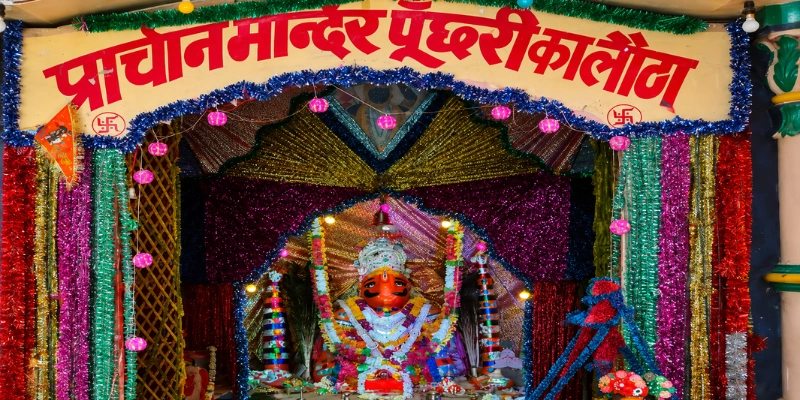 Ghat / Place
Punchhari ka Lota: The Tail of Govardhan, Explained
Punchhari ka Lota is the tail end of Govardhan hill, which seen from above is shaped like a peacock and it marks the far point of the parikrama. In the living tradition, Krishna's cowherd friend Lota Baba still sits beneath a tree here, awaiting Krishna's return from Mathura. Nearby are the Apsara and Punchari kunds. It is a beloved, atmospheric darshan and rest point. Entry is free; reconfirm timings.
Read Guide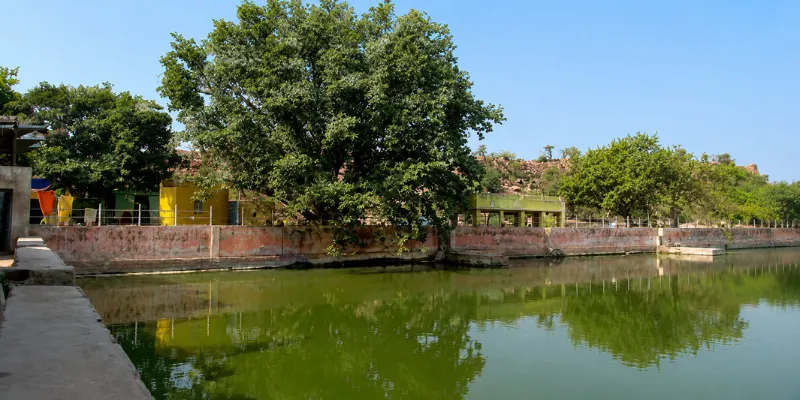 Ghat / Place
Govind Kund, Govardhan: Where Krishna Was Named Govinda
Govind Kund, on the Govardhan parikrama, is where Indra, his pride humbled after Krishna lifted the hill, came down from his elephant, laid his crown at Krishna's feet and with the celestial cow Surabhi bathed Krishna and named him Govinda, the one who gives joy to the cows and to Braj. The kund formed from that abhishek. Entry is free; reconfirm timings.
Read Guide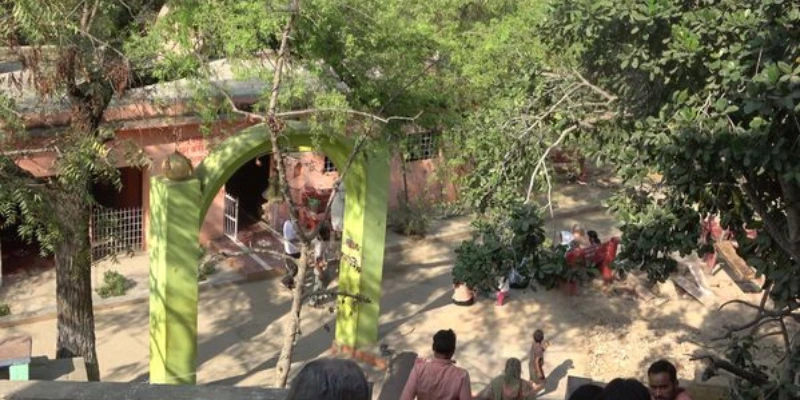 Ghat / Place
Madhuvan (Maholi): The First of Braj's Twelve Forests
Madhuvan, now the village of Maholi just southwest of Mathura, is counted as the first of the twelve forests of Braj, the Dwadasha Vana. In the tradition the Lord slew the demon Madhu here, becoming Madhusudana, and at Dhruva Tila the child-sage Dhruva did such penance that the Lord appeared to him. Sites include Dhruva Tila, Krishna Kund and a Shatrughna temple. Mostly free; reconfirm timings.
Read Guide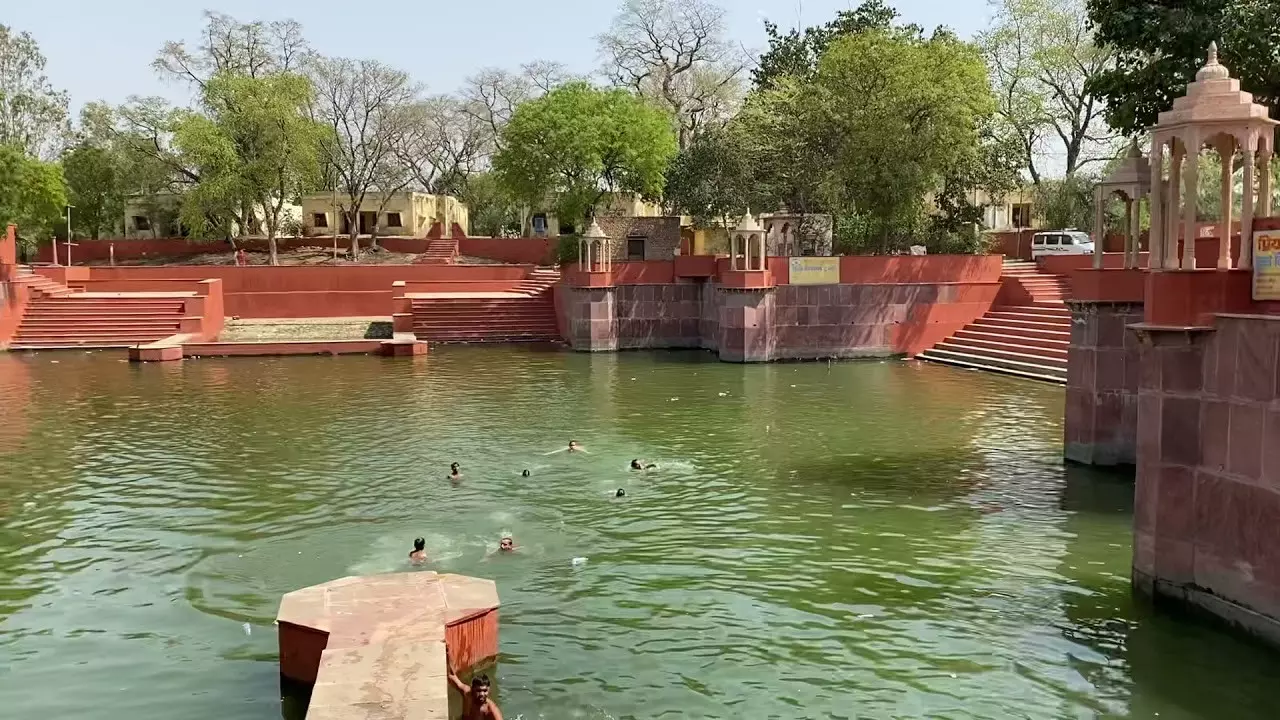 Ghat / Place
Pili Pokhar: The Yellow Pond of Barsana
Pili Pokhar, the yellow pond, lies in Barsana across the road from the Radha Rani temple. In the tradition its water turned golden when Radha, shy after Yashoda applied bridal turmeric to her hands wishing her as a daughter-in-law, washed her hands here. It is also called Priya Kunda. Pilgrims bathe here. Mostly free; reconfirm timings.
Read Guide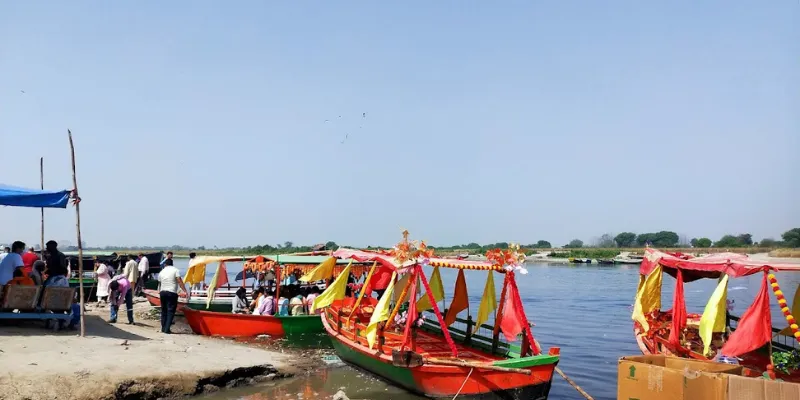 Ghat / Place
Kaliya Ghat, Vrindavan: Where Krishna Subdued the Serpent
Kaliya Ghat, also called Kali Deh, on the Vrindavan parikrama path, is where, in the tradition, the boy Krishna performed Kaliya Daman: he leapt from a Kadamba tree into the Yamuna, was coiled by the venomous thousand-hooded serpent Kaliya, then danced upon his hoods until the serpent surrendered, and so purified the poisoned river. A Kadamba tree and a temple of Kaliya Mardana Krishna mark the spot. Entry is free; it is always open.
Read Guide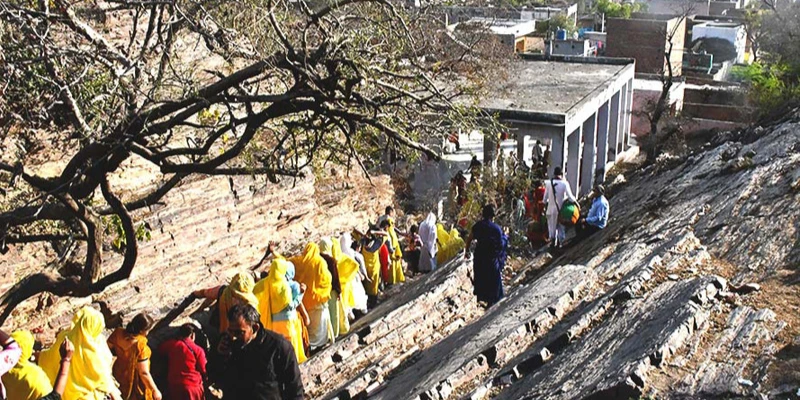 Ghat / Place
Sankari Khor: The Narrow Pass of the Dana Leela
Sankari Khor is a very narrow passage between two hills at Barsana, at the junction of the hills called Brahma and Vishnu. In the tradition, Krishna and his cowherd boys, playing at being toll-collectors, would block this narrow pass and demand butter, yogurt and ghee from Radha and the gopis carrying their pots, the loved dana-leela. Mostly free; reconfirm timings.
Read Guide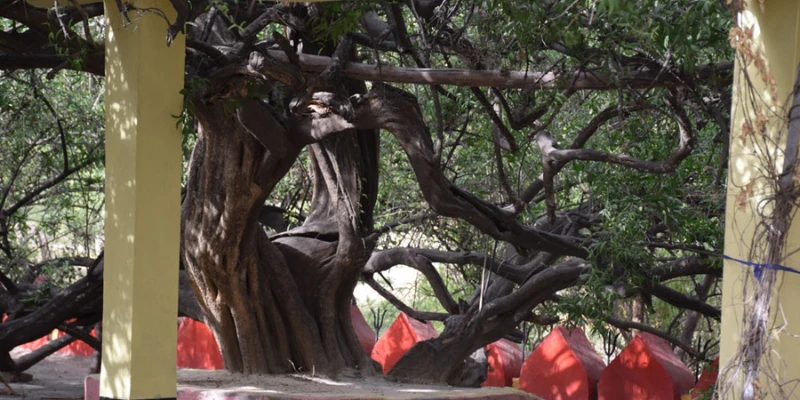 Ghat / Place
Ter Kadamba: Where Krishna Called the Cows and Rupa Goswami Wrote
Ter Kadamba is a quiet grove a little past Nandgaon, off the main road. In the tradition Krishna would climb a kadamba tree here and call his cows home with his flute and centuries later Srila Rupa Goswami did his bhajan beneath a kadamba tree and wrote his books on Radha and Krishna. It is a deeply loved, secluded bhajan sthali. Mostly free; reconfirm timings.
Read Guide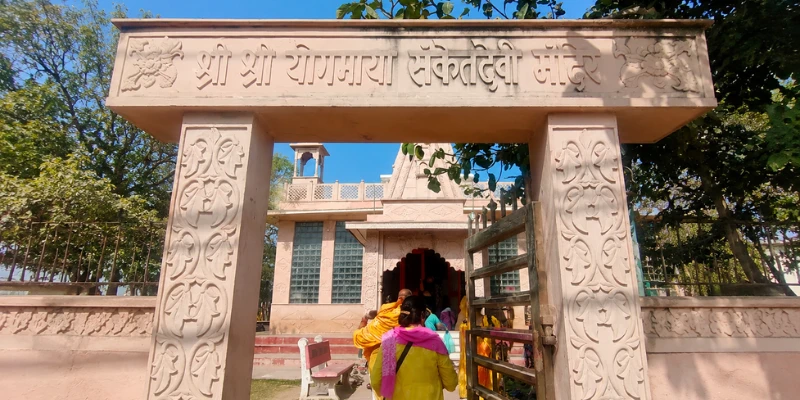 Ghat / Place
Sanket: The Appointed Meeting Place of Radha and Krishna
Sanket is a village exactly midway between Barsana and Nandgaon, on the parikrama path. Its name means an appointed meeting place and in the tradition it is where Radha, coming to pick flowers and Krishna, coming to herd his cows, would meet and swing together. A temple of Sanket Bihari stands here and a grand fair is held at Radhashtami. Mostly free; reconfirm timings.
Read Guide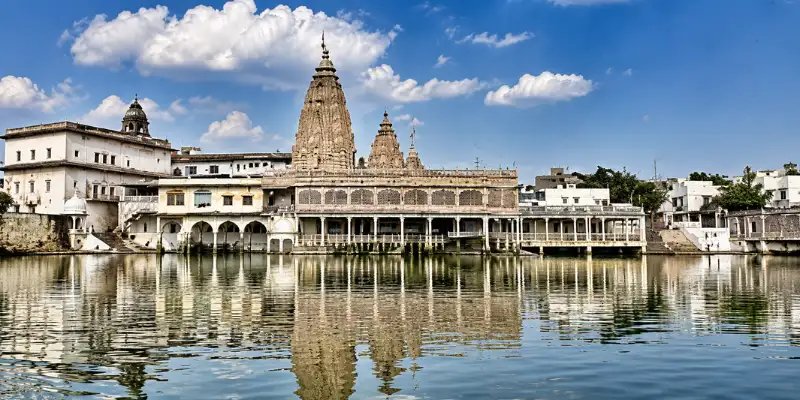 Ghat / Place
Mansi Ganga, Govardhan: The Lake Krishna Drew From His Mind
Mansi Ganga is the great sacred lake at the heart of Govardhan town, which in the tradition Krishna drew from his own mind, manas, so the Brajwasis could bathe in Ganga water without leaving Braj. The Govardhan parikrama traditionally begins and ends with a dip or sprinkling here. Its banks hold Chakleshwar Mahadev, the Haridev temple and the Mukut Mukharvind temple. Entry is free; reconfirm timings, and note bathing advice given recent water quality.
Read Guide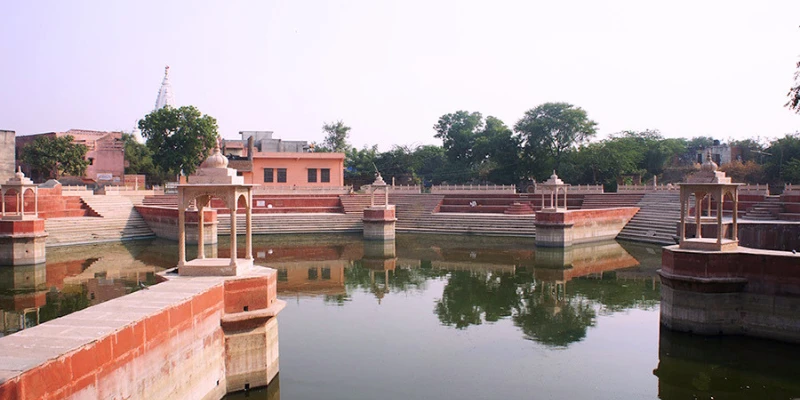 Ghat / Place
Prem Sarovar: The Lake of Radha and Krishna's Love
Prem Sarovar, the lake of love, lies between Barsana and Nandgaon, about a kilometre from Barsana on the way to Nandgaon. In the tradition it is where Radha and Krishna first beheld each other, and the sarovar is said to have formed from the tears of their love. Its banks hold several small shrines, and the Donga Leela boat festival is held here. Mostly free; reconfirm timings.
Read Guide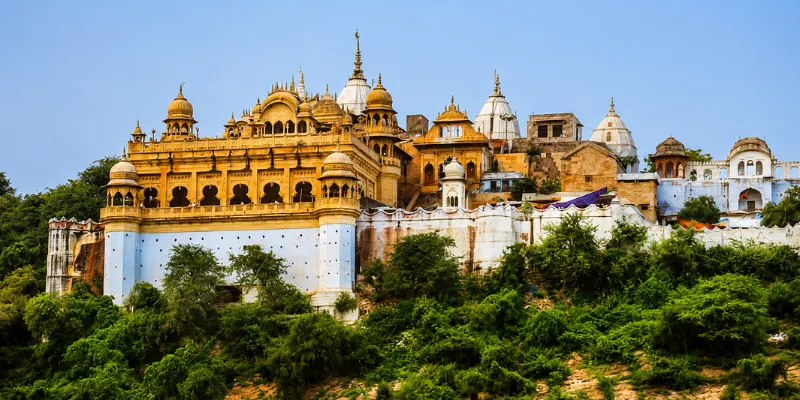 Ghat / Place
Barsana: Radha's Birthplace, Its Temples and Complete Guide
Barsana, about 42 km from Mathura, is the birthplace of Radha and the crown of Braj, a hill-town built across four peaks said to represent the four heads of Brahma. Its summit holds the Radha Rani (Shriji) temple, with Maan Mandir, Kirti Mandir and the Sankari Khor lanes below, and it is world-famous for the Lathmar Holi. It is best visited October to March, and the temples are free.
Read Guide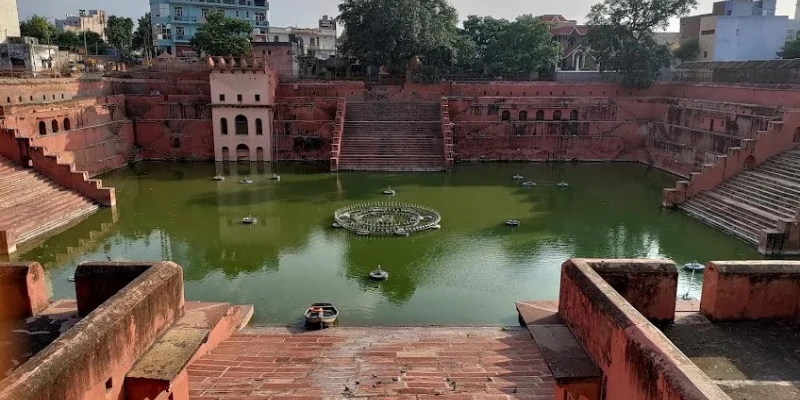 Ghat / Place
Potara Kund, Mathura: Where Krishna's Baby Clothes Were Washed
Potara Kund is an ancient stepped sacred tank beside Krishna Janmabhoomi in Mathura, revered in tradition as the place where the baby clothes, the potra, of the infant Krishna were washed. Built in red sandstone with steps descending to the water, it is held very holy, its water used in auspicious rites. Standing right by the birthplace, it is a tender, intimate part of the Janmabhoomi visit. Entry is free.
Read Guide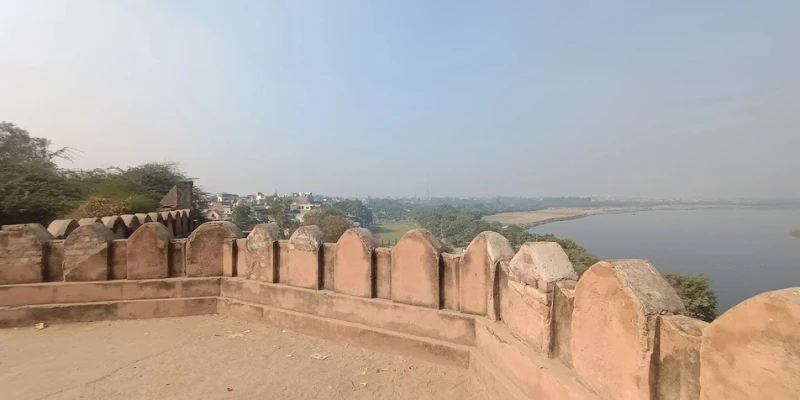 Ghat / Place
Kans Qila, Mathura: The Fort of Kansa, Explained
Kans Qila is an old fort on the bank of the Yamuna in Mathura, linked in tradition to Kansa, the tyrant king and maternal uncle of Krishna whom Krishna came to slay. The fort now stands largely in ruins. The visible structure is a much later one, rebuilt in red sandstone by Raja Man Singh of Amer in the sixteenth century, with a vanished observatory once added by Sawai Jai Singh of Jaipur. Entry is generally free; it is a quiet, historical site.
Read GuideYour Questions Answered
Frequently Asked Questions — Temples of Braj
Which are the most important temples to visit in Mathura and Vrindavan?
For a first visit, prioritise Banke Bihari Temple and Prem Mandir in Vrindavan, and Krishna Janmabhoomi and Dwarkadhish Temple in Mathura. Together these four cover Krishna's birthplace, his most beloved deity form, and the region's grandest architecture — most pilgrims comfortably cover all four in two days.
Is there an entry fee for temples in Mathura Vrindavan?
No. Almost every temple in Braj — including Banke Bihari, Prem Mandir, Dwarkadhish and Krishna Janmabhoomi — is free to enter. Krishna Janmabhoomi requires you to deposit phones and bags at a free locker counter before entering the inner sanctum due to security protocols.
What is the dress code for temples in Braj?
Modest, traditional clothing is expected — shoulders and knees covered for both men and women. Many temples, especially ISKCON and Radha Raman, are stricter about this than they look. Carrying a light dupatta or shawl is the easiest way to stay covered without packing extra clothes.
What are the typical darshan timings at Vrindavan temples?
Most major temples open around 5:30–6 AM for Mangala Aarti, close for a few hours at midday (roughly 12 PM–4 PM), and reopen in the evening until 8:30–9:30 PM. Banke Bihari is unusual in opening only for limited darshan slots through the day — always check the current temple-specific timing before you go, as it shifts seasonally.
Why is the curtain drawn repeatedly at Banke Bihari Temple?
Tradition holds that Banke Bihari's gaze is so powerful that prolonged, unbroken darshan could overwhelm a devotee — so the curtain is drawn and reopened every few minutes throughout the day. It is unique to this temple and is one of the most-asked questions from first-time visitors.
How many days do I need to cover the major temples of Braj?
Two full days covers the core circuit comfortably — Vrindavan's temples (Banke Bihari, Prem Mandir, Radha Raman, ISKCON) on day one, and Mathura's sites (Krishna Janmabhoomi, Dwarkadhish, Vishram Ghat) plus the Mathura Parikrama on day two. Add a third day if you want to include Govardhan or Barsana.
Plan Your Temple Yatra
Want Help Planning Your Temple Circuit?
Tell us how many days you have and we'll plan the right temple circuit, reliable transport between Mathura and Vrindavan, and the best darshan timings to avoid the crowds.
Explore more travel guides
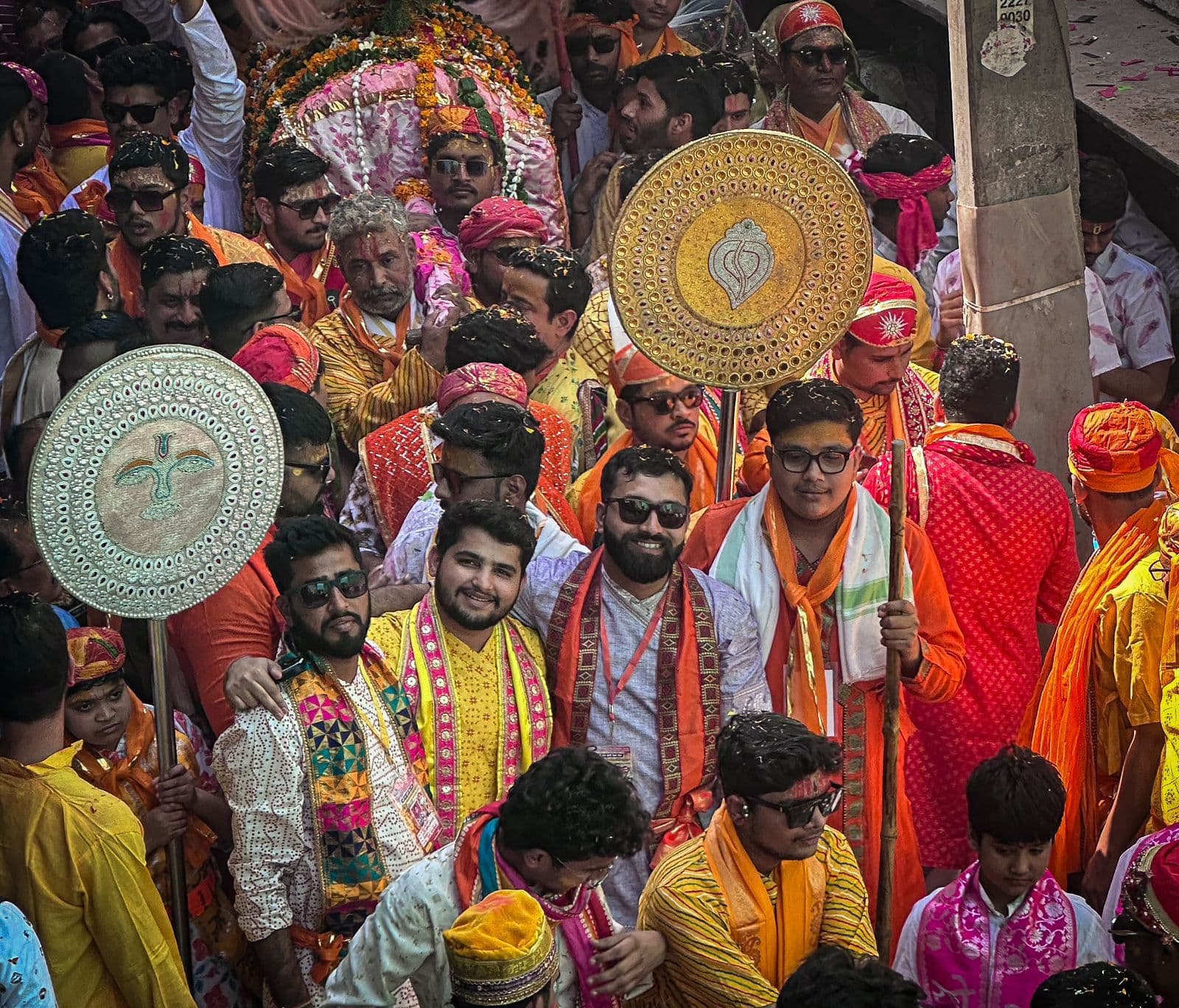
Born and raised in Braj Bhoomi. I have been guiding pilgrims through Mathura Vrindavan since 2018 — that is more than a decade of yatras, every week, through every season. Experience My India was built on one belief: a well-planned yatra is a deeply felt one. 50,000+ pilgrims have trusted us with their most sacred journeys.
Jai Shri Krishna 🙏