
Mansi Ganga, Govardhan: The Lake Krishna Drew From His Mind
Mansi Ganga is the great sacred lake at the heart of Govardhan town, which in the tradition Krishna drew from his own mind, manas, so the Brajwasis could bathe in Ganga water without leaving Braj. The Govardhan parikrama traditionally begins and ends with a dip or sprinkling here. Its banks hold Chakleshwar Mahadev, the Haridev temple and the Mukut Mukharvind temple. Entry is free; reconfirm timings, and note bathing advice given recent water quality.
Read full guide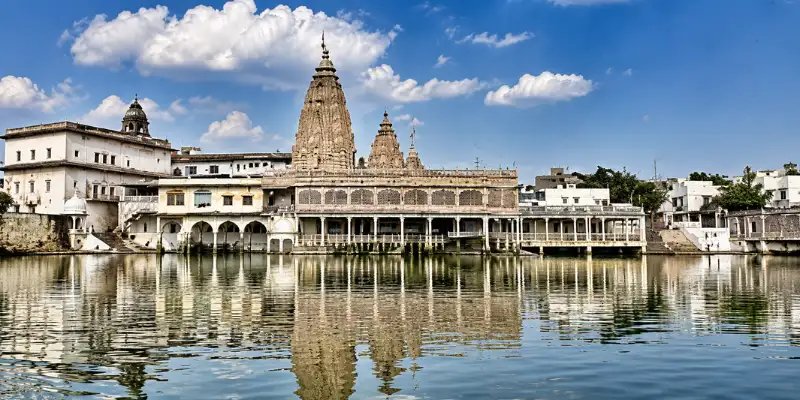
Quick answer
Mansi Ganga is the great sacred lake at the heart of Govardhan town, which in the tradition Krishna drew from his own mind, manas, so the Brajwasis could bathe in Ganga water without leaving Braj. The Govardhan parikrama traditionally begins and ends with a dip or sprinkling here. Its banks hold Chakleshwar Mahadev, the Haridev temple and the Mukut Mukharvind temple. Entry is free; reconfirm timings, and note bathing advice given recent water quality.
At a glance
| What it is | Govardhan's largest sacred lake, drawn by Krishna from his mind |
|---|---|
| Name means | Manasi: born of the mind (manas) |
| Role | The traditional start and end of the Govardhan parikrama |
| On its banks | Chakleshwar Mahadev, Haridev temple, Mukut Mukharvind, Mansa Devi |
| Ghats built by | Raja Bhagwan Das of Amer (1600s), extended by Raja Man Singh |
| Where | Govardhan town, Mathura district |
| Entry fee | Free |
| Distance | 22 km from Mathura; 26 km from Vrindavan |
| Best time | October to March; Kartik for Deepdan |
| Bathing note | Sprinkle for ceremonial cleansing if water quality is poor |
| Big festivals | Govardhan Puja, Kartik Purnima (Deepdan), Guru Purnima |
What is Mansi Ganga and why does it matter?
Mansi Ganga is the largest and most sacred body of water in Govardhan town and the spiritual hinge of the whole Govardhan pilgrimage. Its name means born of the mind, for in the living tradition of Braj, when the Brajwasis longed to bathe in the Ganga but did not wish to leave the holy land, Krishna drew the Ganga here from his own mind, manas, so that the river came to them. To this day the Govardhan parikrama traditionally begins and ends with a bath, or at least a sprinkling, in Mansi Ganga.
Around its banks stand some of Govardhan's most important shrines, so a visit here is also the gateway to the temples of the town.
The story and the significance
In the Bhagavata tradition, the gopas urged Krishna to purify himself in the Ganga after subduing a demon and rather than leave Braj, he summoned the sacred river by his will, manifesting Mansi Ganga. When the Brajwasis themselves wished to make the long pilgrimage to Mother Ganga, Krishna gently turned them instead to Mansi Ganga, telling them the river was present here. For the Gaudiya tradition, Rupa Goswami recommended a cleansing bath in Mansi Ganga before the Govardhan parikrama and that custom is followed still. A dip here, it is believed, awakens love for Krishna.
A tip from Gurudutt: Begin and end your Govardhan parikrama at Mansi Ganga, it is the traditional way, and it frames the whole circuit beautifully. The most loved spot to step into the water is by the Mukut Mukharvind temple, where there are spouts to make the snan easier. One honest word: in recent years the water quality has at times been poor and the lake's colour has changed, so if it does not look clean on the day, simply sprinkle a few drops on your head for the ceremonial cleansing rather than taking a full bath. The devotion is in the gesture. |
The temples on its banks
Mansi Ganga is ringed by shrines. To its north stands Chakleshwar Mahadev, one of the guardian Shivas of Braj, with Sanatana Goswami's bhajan kutir nearby. On its banks are the ancient Haridev temple, one of the four great temples traced to Vajranabha and the Mukut Mukharvind temple, the favoured place to enter the water, along with the Mansa Devi shrine. So Mansi Ganga is not only a lake but the devotional centre of Govardhan town. See our Chakleshwar Mahadev guide and our Haridev temple guide.
How do you reach Mansi Ganga?
Mansi Ganga is in the centre of Govardhan town, on the parikrama route.
From | Distance | Time |
Mathura | 22 km | 45 min |
Vrindavan | 26 km | 50 min |
Daan Ghati temple | Close by | Short walk/ride |
Radha Kund | 8 km | 20 min |
Delhi | 150 km | 3-3.5 hrs |
Tips for your visit
Mansi Ganga is free and open through the day; reconfirm temple hours on its banks. Use it as the start and end of the parikrama, sprinkle rather than bathe if the water looks poor and visit the surrounding shrines. Wear comfortable shoes for the town's lanes, dress modestly for the temples and come in October to March, or in Kartik for the beautiful Deepdan festival of floating lamps.
What is nearby?
Mansi Ganga is the hub of Govardhan town, surrounded by its temples and on the parikrama. To plan your visit, see our Govardhan Parikrama guide, our Giriraj Govardhan guide, our Chakleshwar Mahadev guide and our Haridev temple guide.
Meet Gurudutt — Your Mathura
Vrindavan Guide
Not just a tour operator — Gurudutt was born and raised in Braj Bhoomi. 8+ years, every week, through every sacred lane of Mathura & Vrindavan.
- 🛕Born in Braj Bhoomi
- 🙏50,000+ Pilgrims Guided
- 📅Guiding Since 2018
- ⭐4.5 Google Rating
Gurudutt
Founder · Experience My India
Frequently asked questions
What is Mansi Ganga?
Mansi Ganga is the great sacred lake at the heart of Govardhan town, which in the tradition Krishna drew from his own mind so the Brajwasis could bathe in Ganga water without leaving Braj. The Govardhan parikrama begins and ends here.
What does Mansi Ganga mean?
Mansi, or Manasi, means born of the mind, manas. The lake is so named because Krishna is said to have summoned the Ganga here by his will, his mind, rather than leaving Braj to reach the river.
Where is Mansi Ganga?
Mansi Ganga is in the centre of Govardhan town, in Mathura district, about 22 km from Mathura and 26 km from Vrindavan, on the Govardhan parikrama route.
Why is Mansi Ganga important?
Because Krishna drew it from his mind and because the Govardhan parikrama traditionally begins and ends with a bath here, Mansi Ganga is the spiritual centre of the Govardhan pilgrimage, ringed by the town's great temples.
Is Mansi Ganga worth visiting?
Yes, it is the devotional hub of Govardhan, where the parikrama starts and ends and the town's temples gather on its banks. Experience My India begins the Govardhan day here.
What is the story of Mansi Ganga?
In the Bhagavata tradition, when the gopas urged Krishna to bathe in the Ganga, or when the Brajwasis wished to make the pilgrimage to the river, Krishna summoned the Ganga to Braj by his mind, manifesting Mansi Ganga so the river came to them.
Does the Govardhan parikrama start at Mansi Ganga?
Yes, by tradition the Govardhan parikrama begins and ends with a bath or sprinkling at Mansi Ganga, a custom recommended by Rupa Goswami. Most pilgrims include a stop here at the start of the circuit.
Can you bathe in Mansi Ganga?
Traditionally yes and a dip is believed to awaken love for Krishna. In recent years, however, water quality has at times been poor, so many pilgrims now sprinkle a few drops for ceremonial cleansing instead of a full bath. Check on the day.
What temples are on the banks of Mansi Ganga?
On its banks stand Chakleshwar Mahadev, the Haridev temple, the Mukut Mukharvind temple and the Mansa Devi shrine, making Mansi Ganga the devotional centre of Govardhan town.
Who built the ghats of Mansi Ganga?
The stone ghats and steps of Mansi Ganga were built by Raja Bhagwan Das of Amer in the early seventeenth century and later extended and beautified by Raja Man Singh, giving the lake its present form.
Why did Krishna create Mansi Ganga?
In the tradition, Krishna created Mansi Ganga so the Brajwasis could bathe in the sacred Ganga without leaving the holy land of Braj, drawing the river to them by his mind rather than letting them journey away.
Is a bath in Mansi Ganga auspicious?
Yes, in the living belief of Braj a dip in Mansi Ganga awakens love for Krishna and purifies the pilgrim, which is why the parikrama begins here. Where water quality is poor, a ceremonial sprinkling carries the same devotion.
What did Rupa Goswami say about Mansi Ganga?
For the Gaudiya tradition, Rupa Goswami recommended in his writings on Mathura that pilgrims take a cleansing bath in Mansi Ganga before beginning the Govardhan parikrama, a custom devotees still follow today.
Did Radha and Krishna come to Mansi Ganga?
In the living tradition, Radha and Krishna are said to have boated on Mansi Ganga and Krishna would graze his cows near its banks. The lake is woven through the Govardhan leelas of the divine couple.
What is the Deepdan festival at Mansi Ganga?
During Kartik, especially on Kartik Purnima, devotees float countless oil lamps on Mansi Ganga in the beautiful Deepdan festival, an offering of light. It is one of the loveliest times to see the lake.
Why is Mansi Ganga called the holiest kund?
Because Krishna drew it from his own mind and because it anchors the Govardhan parikrama, Mansi Ganga is revered as the holiest of Govardhan's many kunds, the spiritual centre of the pilgrimage town.
Is Mansi Ganga linked to the Govardhan lifting?
Mansi Ganga is part of the wider Govardhan landscape sanctified by Krishna's pastimes, including the lifting of the hill. It is most directly tied to the leela of Krishna summoning the Ganga to Braj by his mind.
What is the Mukut Mukharvind temple at Mansi Ganga?
The Mukut Mukharvind temple, on the bank of Mansi Ganga, is the favoured place to step into the lake for snan, with spouts to make bathing easier. It is one of the shrines that ring the sacred lake. See our Daan Ghati and Mukharvind guide.
What are the Mansi Ganga timings?
Mansi Ganga is an open lake, accessible through the day, with the temples on its banks keeping morning and evening darshan. Reconfirm temple hours on the day. Early morning is calm and beautiful for the parikrama start.
What is the best time to visit Mansi Ganga?
October to March for pleasant weather and Kartik, especially Kartik Purnima, for the Deepdan festival of floating lamps. Early morning is loveliest for beginning the parikrama. Govardhan Puja after Diwali is also a great occasion.
Is there an entry fee at Mansi Ganga?
No, Mansi Ganga is free to visit, with voluntary donations at the temples on its banks. It is an open sacred lake at the heart of Govardhan town.
How long do you need at Mansi Ganga?
Allow about 30 to 45 minutes for the snan or sprinkling, the lakeside shrines and the start of the parikrama, or longer if you visit Chakleshwar Mahadev and Haridev nearby. Experience My India sequences the Govardhan day.
Is Mansi Ganga crowded?
It is busy with parikrama pilgrims, especially on weekends, festival days and during Kartik, but the large lake and its banks absorb the numbers. Early morning is calmer. Festival days are very crowded.
Is the water at Mansi Ganga clean?
Water quality varies and has at times been poor in recent years, with the colour changing. Many pilgrims now sprinkle a few drops for ceremonial cleansing rather than taking a full bath. Check the condition on the day.
Is Mansi Ganga suitable for elderly visitors?
Yes, the lakeside is fairly accessible, though the ghats have steps. Experience My India arranges assistance and the closest approach for elderly pilgrims and plans how much of the parikrama to attempt from here.
What is the dress code at Mansi Ganga?
Modest, traditional attire is expected at the temples on its banks. If you take a dip, dress and change with care for privacy. Comfortable shoes help with the town's lanes and the ghat steps.
How do you reach Mansi Ganga?
Mansi Ganga is in the centre of Govardhan town, about 22 km from Mathura, reached by taxi, bus or auto. Reach Mathura by road or train, then drive to Govardhan. Experience My India arranges transport.
How far is Mansi Ganga from Mathura?
Mansi Ganga is about 22 km from Mathura, roughly a 45 minute drive, in the centre of Govardhan town.
How far is Mansi Ganga from Radha Kund?
Mansi Ganga is about 8 km from Radha Kund along the Govardhan area, roughly a 20 minute drive or part of the parikrama on foot. Experience My India sequences the Govardhan sites.
What is the nearest railway station to Mansi Ganga?
The nearest major railhead is Mathura Junction, about 22 km away. From there, taxis and buses reach Govardhan. Experience My India arranges the transfer.
Can you reach Mansi Ganga by car?
Yes, Govardhan town is on motorable roads about 22 km from Mathura, reachable by car or taxi, with parking near the centre and a short walk to the lake. Experience My India handles the drive and drop-off.
Where does the Govardhan parikrama start?
By tradition the Govardhan parikrama starts and ends at Mansi Ganga, with a bath or sprinkling, though many also begin at the nearby Daan Ghati temple. Experience My India sequences the circuit from here. See our Govardhan Parikrama guide.
Can you combine Mansi Ganga with the parikrama?
Yes, Mansi Ganga is the traditional start and end of the roughly 21 km Govardhan parikrama and the town's temples cluster around it. Experience My India plans the full Govardhan day from here.
Can you visit Mansi Ganga in one day from Delhi?
Yes, Mansi Ganga and Govardhan fit a long one-day trip from Delhi, about 3 to 3.5 hours each way, though Govardhan rewards an overnight to walk the parikrama. Experience My India plans the day.
Do you need a guide for Mansi Ganga?
A guide is not essential, but a Braj-local guide tells the leela of the lake, leads the snan rightly and links Mansi Ganga to Chakleshwar Mahadev, Haridev and the parikrama. Experience My India provides Braj-born guides.
How does Experience My India help with a Mansi Ganga visit?
We begin the Govardhan day at Mansi Ganga, tell its leela, guide the ceremonial snan, advise honestly on the water and link it to the lakeside temples and the parikrama. Our guides are born and raised in Braj.
Is Mansi Ganga good for families?
Yes, the lake, its lamps in Kartik and the surrounding temples are lovely for families, though the ghat steps and parikrama need care with children and elders. Experience My India tailors the pace.
What makes Mansi Ganga special?
That Krishna drew it from his own mind and that it anchors the Govardhan parikrama, makes Mansi Ganga special, the devotional heart of Govardhan town where the pilgrimage begins and ends.
What festivals are best at Mansi Ganga?
Kartik Purnima with its Deepdan of floating lamps, Govardhan Puja after Diwali and Guru Purnima are the great occasions at Mansi Ganga, when the lake and the town are at their most vibrant. Confirm the year's dates.
What is near Mansi Ganga?
Around Mansi Ganga are Chakleshwar Mahadev, the Haridev temple, the Mukut Mukharvind temple and the Daan Ghati temple, with the Govardhan hill, Radha Kund and Kusum Sarovar a little further. Experience My India sequences them.
Which lake did Krishna create from his mind?
Mansi Ganga, in Govardhan, is the lake Krishna is said to have drawn from his own mind, manas, so the Brajwasis could bathe in the Ganga without leaving Braj. The Govardhan parikrama begins and ends here.
Where do you take a bath before the Govardhan parikrama?
Pilgrims traditionally bathe, or sprinkle water, at Mansi Ganga in Govardhan town before beginning the parikrama, a custom recommended by Rupa Goswami. The Mukut Mukharvind temple is the favoured spot to enter the lake.
What is the holiest lake in Govardhan?
Mansi Ganga is revered as the holiest lake in Govardhan, drawn by Krishna from his mind and anchoring the parikrama, ringed by the town's great temples. A dip here is believed to awaken love for Krishna.
What is the best time to visit Mansi Ganga?
October to March for pleasant weather and Kartik Purnima for the Deepdan festival of floating lamps. Early morning is loveliest for beginning the parikrama. Govardhan Puja is another great occasion.
Is Mansi Ganga open all year?
Yes, Mansi Ganga is an open sacred lake, accessible year-round and free, with the temples on its banks keeping daily schedules. October to March is the most pleasant season and Kartik the most beautiful.
Why do pilgrims visit Mansi Ganga?
Pilgrims visit to bathe or sprinkle its sacred water at the start and end of the Govardhan parikrama, to take darshan at the temples on its banks and to honour the lake Krishna drew from his mind. It is Govardhan's devotional heart.
Born and raised in Braj Bhoomi. I have been guiding pilgrims through Mathura Vrindavan since 2018 — that is more than a decade of yatras, every week, through every season. Experience My India was built on one belief: a well-planned yatra is a deeply felt one. 50,000+ pilgrims have trusted us with their most sacred journeys.
Jai Shri Krishna 🙏
Watch What Our Pilgrims Truly Feel
दिल्ली से गुजरात तक — हर यात्री की कहानी, उन्हीं के शब्दों में

Real Braj Experience

Mathura Darshan Journey

Temple Darshan Review

Vrindavan Yatra Review

Braj Pilgrimage Story

Govardhan Parikrama Tale

Banke Bihari Darshan

Yamuna Aarti Experience

Iskcon Temple Review

Mathura Holi Memories

Nidhuvan Night Story

Prem Mandir Darshan

Radha Kund Holy Dip

Vrindavan Parikrama Walk

Gokul Janmabhoomi Visit

Seva Kunj Evening Darshan

Barsana Dham Journey