📌 QUICK ANSWER
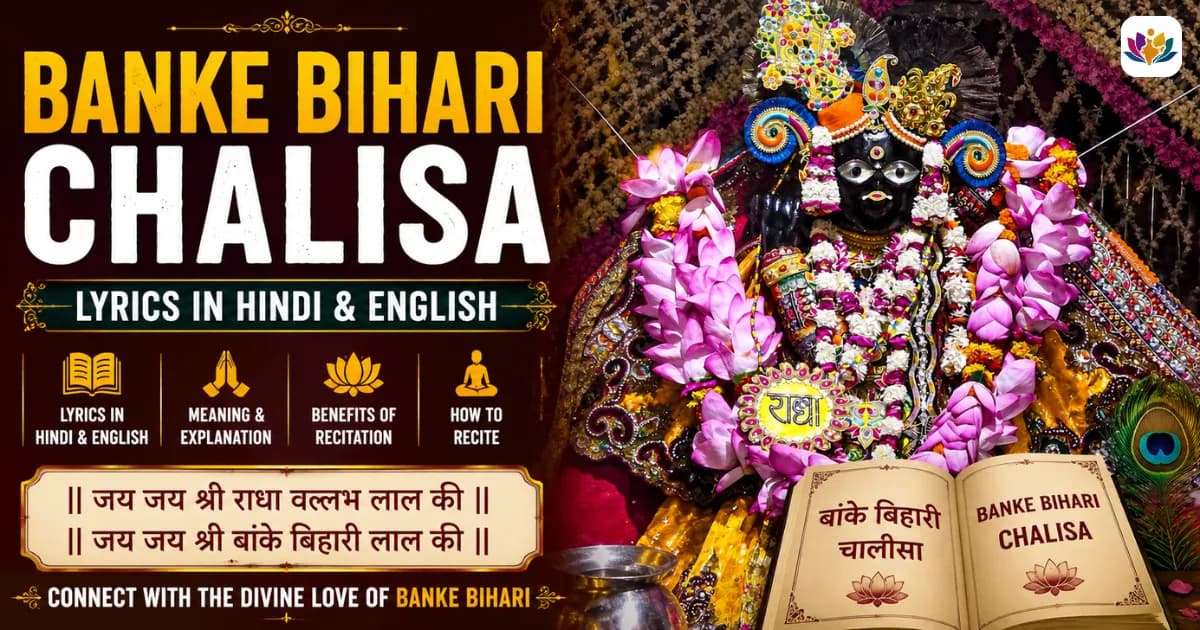
The Banke Bihari Chalisa is a devotional hymn of forty verses in praise of Shri Banke Bihari, the beloved form of Krishna worshipped at the Banke Bihari temple in Vrindavan, revealed by the saint Swami Haridas. Reciting it with love is held to bring the Lord’s grace and to drive away sorrow, want and trouble. Its full lyrics in Hindi and English are below, with the meaning and how to recite it. To visit the Banke Bihari temple and Vrindavan with a Braj-born guide, call or WhatsApp +91 7302265809.
Key takeaways
The Banke Bihari Chalisa is a hymn of forty verses praising Banke Bihari.
Banke Bihari is the beloved form of Krishna at Vrindavan.
The deity was revealed by the great saint Swami Haridas.
Reciting the Chalisa with devotion is held to bring the Lord’s grace.
It is believed to remove sorrow, want and trouble.
The full lyrics in Hindi and English are given below.
I am Gurudutt, born in Gokul in the Mathura district, guiding pilgrims through Braj since 2018: more than 50,000 of them. Of all the deities of Vrindavan, none is more beloved than Shri Banke Bihari, the enchanting form of Krishna at whose feet the whole of Braj bows and the Banke Bihari Chalisa is the devotee’s song of love to him, forty sweet verses that praise his beauty, his adornment, his festivals and his grace. Here I give you the complete Chalisa, in both Hindi and English, with its meaning, the blessings it is held to bring and how and when to recite it, together with the story of Banke Bihari himself, so that you may sing it with understanding and love. To plan your darshan with our Mathura Vrindavan Tour Package, message on WhatsApp at +91 7302265809, any day from 8 AM to 9 PM.
Banke Bihari Chalisa: Lyrics in Hindi
Here is the complete Banke Bihari Chalisa in Hindi, beginning with the opening doha and then the forty chaupai verses and closing with the final doha and the jaikara.
दोहा
बांकी चितवन कटि लचक, बांके चरन रसाल ।
स्वामी श्री हरिदास के बांके बिहारी लाल ।।
चौपाई
जै जै जै श्री बाँकेबिहारी । हम आये हैं शरण तिहारी ।।
स्वामी श्री हरिदास के प्यारे । भक्तजनन के नित रखवारे ।।
श्याम स्वरूप मधुर मुसिकाते । बड़े-बड़े नैन नेह बरसाते ।।
पटका पाग पीताम्बर शोभा । सिर सिरपेच देख मन लोभा ।।
तिरछी पाग मोती लर बाँकी । सीस टिपारे सुन्दर झाँकी ।।
मोर पाँख की लटक निराली । कानन कुण्डल लट घुँघराली ।।
नथ बुलाक पै तन-मन वारी । मंद हसन लागै अति प्यारी ।।
तिरछी ग्रीव कण्ठ मनि माला । उर पै गुंजा हार रसाला ।।
काँधे साजे सुन्दर पटका । गोटा किरन मोतिन के लटका ।।
भुज में पहिर अँगरखा झीनौ । कटि काछनी अंग ढक लीनौ ।।
कमर-बांध की लटकन न्यारी । चरन छुपाये श्री बाँकेबिहारी ।।
इकलाई पीछे ते आई । दूनी शोभा दई बढाई ।।
गद्दी सेवा पास बिराजै । श्री हरिदास छवी अतिराजै ।।
घंटी बाजे बजत न आगै । झाँकी परदा पुनि-पुनि लागै ।।
सोने-चाँदी के सिंहासन । छत्र लगी मोती की लटकन ।।
बांके तिरछे सुधर पुजारी । तिनकी हू छवि लागे प्यारी ।।
अतर फुलेल लगाय सिहावैं । गुलाब जल केशर बरसावै ।।
दूध-भात नित भोग लगावैं । छप्पन-भोग भोग में आवैं ।।
मगसिर सुदी पंचमी आई । सो बिहार पंचमी कहाई ।।
आई बिहार पंचमी जबते । आनन्द उत्सव होवैं तबते ।।
बसन्त पाँचे साज बसन्ती । लगै गुलाल पोशाक बसन्ती ।।
होली उत्सव रंग बरसावै । उड़त गुलाल कुमकुमा लावैं ।।
फूल डोल बैठे पिय प्यारी । कुंज विहारिन कुंज बिहारी ।।
जुगल सरूप एक मूरत में । लखौ बिहारी जी मूरत में ।।
श्याम सरूप हैं बाँकेबिहारी । अंग चमक श्री राधा प्यारी ।।
डोल-एकादशी डोल सजावैं । फूल फल छवी चमकावैं ।।
अखैतीज पै चरन दिखावैं । दूर-दूर के प्रेमी आवैं ।।
गर्मिन भर फूलन के बँगला । पटका हार फुलन के झँगला ।।
शीतल भोग , फुहारें चलते । गोटा के पंखा नित झूलते ।।
हरियाली तीजन का झूला । बड़ी भीड़ प्रेमी मन फूला ।।
जन्माष्टमी मंगला आरती । सखी मुदित निज तन-मन वारति ।।
नन्द महोत्सव भीड़ अटूट । सवा प्रहार कंचन की लूट ।।
ललिता छठ उत्सव सुखकारी । राधा अष्टमी की चाव सवारी ।।
शरद चाँदनी मुकट धरावैं । मुरलीधर के दर्शन पावैं ।।
दीप दीवारी हटरी दर्शन । निरखत सुख पावै प्रेमी मन ।।
मन्दिर होते उत्सव नित-नित । जीवन सफल करें प्रेमी चित ।।
जो कोई तुम्हें प्रेम ते ध्यावें । सोई सुख वांछित फल पावैं ।।
तुम हो दिनबन्धु ब्रज-नायक । मैं हूँ दीन सुनो सुखदायक ।।
मैं आया तेरे द्वार भिखारी । कृपा करो श्री बाँकेबिहारी ।।
दिन दुःखी संकट हरते । भक्तन पै अनुकम्पा करते ।।
मैं हूँ सेवक नाथ तुम्हारो । बालक के अपराध बिसारो ।।
मोकूँ जग संकट ने घेरौ । तुम बिन कौन हरै दुख मेरौ ।।
विपदा ते प्रभु आप बचाओ । कृपा करो मोकूँ अपनाओ ।।
श्री अज्ञान मंद-मति भारि । दया करो श्रीबाँकेबिहारी ।।
बाँकेबिहारी विनय पचासा । नित्य पढ़ै पावे निज आसा ।।
पढ़ै भाव ते नित प्रति गावैं । दुख दरिद्रता निकट नही आवैं ।।
धन परिवार बढैं व्यापारा । सहज होय भव सागर पारा ।।
कलयुग के ठाकुर रंग राते । दूर-दूर के प्रेमी आते ।।
दर्शन कर निज हृदय सिहाते । अष्ट-सिध्दि नव निधि सुख पाते ।।
मेरे सब दुख हरो दयाला । दूर करो माया जंजाल ।।
दया करो मोकूँ अपनाओ । कृपा बिन्दु मन में बरसाओ ।।
दोहा
ऐसी मन कर देउ मैं , निरखूँ श्याम-श्याम ।
प्रेम बिन्दु दृग ते झरें, वृन्दावन विश्राम ।।
जय श्री बाँकेबिहारी जी महाराज की जय । जय श्री राधिका रानी महारानी की जय । जय श्री हरिदास जी महाराज की जय ।
Banke Bihari Chalisa: Lyrics in English
Here is the complete Banke Bihari Chalisa in Roman English transliteration, for those who cannot read the Hindi, so that all may recite it.
Doha
Baanki chitvan kati lachak, baanke charan rasaal.
Swami Shri Haridas ke baanke bihari laal.
Chaupai
Jai jai jai Shri Baanke Bihari, hum aaye hain sharan tihari.
Swami Shri Haridas ke pyaare, bhakt janan ke nit rakhvaare.
Shyaam swaroop madhur muskaate, bade bade nain neha barsaate.
Patka pag peetambar shobha, sir sirpech dekh man lobha.
Tirchi pag moti lar baanki, sees tipare sundar jhaanki.
Mor pankh ki latak niraali, kaanan kundal lat ghunghraali.
Nath bulak pai tan-man waari, mand hasan lagai ati pyaari.
Tirchi greev kanth mani maala, ur pai gunja haar rasaala.
Kaandhe saaje sundar patka, gota kiran motin ke latka.
Bhuja mein pahiran angarakha jeena, kati kachani ang dhak leena.
Kamar-band ki latkan nyaari, charan chhupaaye Shri Baanke Bihari.
Ikkalai peeche te aaye, dooni shobha dai badaaye.
Gaddi seva paas biraajai, Shri Haridas chhavi atiraajai.
Ghanti baje bajat na aagai, jhaanki parda puni-puni laagai.
Sone-chandi ke singhasan, chhatar lagi moti ki latkan.
Baanke tirche sundar pujari, tinki hoo chhavi lage pyaari.
Atar phulel lagaye sihaavein, gulab jal kesar barasaavein.
Doodh-bhaat nit bhog lagaavein, chhappan-bhog bhog mein aavein.
Maghsar sudi panchmi aaye, so Bihar Panchmi kahaaye.
Aayi Bihar Panchmi jabte, anand utsav hovein tabte.
Basant panchhe saaj basanti, lagai gulaal poshaak basanti.
Holi utsav rang barsaavein, udat gulaal kumkuma laavein.
Phool dol baithe piy pyaari, kunj vihaarin kunj bihaari.
Jugal swaroop ek murat mein, lakho Bihari ji murt mein.
Shyaam swaroop hain Baanke Bihari, ang chamak Shri Radha pyaari.
Dol-ekadashi dol sajaavein, phool phal chhavi chamkhaavein.
Akshay Teej pe charan dikhaavein, door-door ke premi aavein.
Garmi bhar phoolan ke bangla, patka haar phoolan ke jhangla.
Sheetal bhog fuharein chalate, gota ke pankha nit jhoolte.
Hariyali teej ka jhoola, badi bheed premi man phoola.
Janmashtami mangla aarti, sakhi mudit nij tan-man waarati.
Nand Mahotsav bheed atoot, sawa prahar kanchan ki loot.
Lalita chhath utsav sukhkari, Radha Ashtami ki chhav savaari.
Sharad chandani mukut dharavein, Murlidhar ke darshan paavein.
Deep Diwali hatri darshan, nirakhat sukh paave premi man.
Mandir mein hote utsav nit-nit, jeevan safal kare premi chit.
Jo koi tumhe prem te dhyaave, soi sukh vanchhit phal paave.
Tum ho deen bandhu Braj-nayak, main hoon deen suno sukhdayak.
Main aaya tere dwar bhikhari, kripa karo Shri Baanke Bihari.
Din dukhi sankat harte, bhaktan par anukampa karte.
Main hoon sevak naath tumhaaro, baalak ke aparadh bisaaro.
Moko jag sankat ne ghero, tum bin kaun harai dukh mero.
Vipada te Prabhu aap bachaao, kripa karo moko apnaao.
Shri agyaan mand-mati bhaari, daya karo Shri Baanke Bihari.
Baanke Bihari Vinay Pachasa, nit padhe paave nij aasha.
Padhe bhaav se nit pratidin gaave, dukh daridrata nikat na aave.
Dhan parivaar badhe vyaapaara, sahaj hoye bhav saagar paara.
Kaliyug ke Thakur rang rate, door-door ke premi aate.
Darshan kar nij hriday sihaate, ashta-siddhi nav nidhi sukh paate.
Mere sab dukh haro dayala, door karo maya janjaal.
Daya karo moko apnaao, kripa bindu man mein barasaao.
Doha
Aisi man kar deu main, nirakhu Shyaam-Shyaam.
Prem bindu drig te jharein, Vrindavan vishraam.
Jai Shri Baanke Bihari Ji Maharaj Ki Jai! Jai Shri Radha Rani Maharani Ki Jai! Jai Shri Haridas Ji Maharaj Ki Jai!
What is the Banke Bihari Chalisa?
A chalisa is a devotional hymn of forty verses, the word chalisa coming from chalis, meaning forty, sung in praise of a deity, as the famous Hanuman Chalisa is sung to Hanuman. The Banke Bihari Chalisa is such a hymn in praise of Shri Banke Bihari, the beloved form of Krishna enshrined at the Banke Bihari temple in Vrindavan. Its verses lovingly describe the enchanting beauty of Bihari ji, his dark and smiling form, his crown and peacock feather, his jewels and yellow garments, the seva and the singing before him and the round of his beautiful festivals through the year and then they pour out the devotee’s prayer, that the Lord, the friend of the poor and the lord of Braj, may take away sorrow and trouble and grant his grace. It is a hymn both of praise and of prayer and it is dear to the countless devotees of Banke Bihari, who recite it for his blessing. Below is the complete Chalisa, first in Hindi and then in English.
Who is Banke Bihari?
To sing the Chalisa with love, it helps to know who Banke Bihari is. Banke Bihari is a supremely beautiful form of Krishna, whose name means the one who enjoys pastimes, the bihari, in a threefold bending pose, banke, the classic tribhanga stance of Krishna bent in three places. The deity was revealed, it is told, by the great saint and musician Swami Haridas, the guru of the legendary Tansen, who lived in the Nidhivan of Vrindavan in the sixteenth century; through his devotion and his divine singing the combined form of Radha and Krishna appeared to him and at his prayer remained as the single deity of Banke Bihari, whom he enshrined. The Banke Bihari temple that now holds him is the most beloved and most visited temple of Vrindavan and his darshan, with its curtain drawn again and again across his enchanting form, is the heart of a Vrindavan pilgrimage. The Chalisa names Swami Haridas with love, for it is by his grace that the world has Banke Bihari. Our places to visit in Vrindavan guide covers his temple and the holy town.
The meaning of the Banke Bihari Chalisa
The Chalisa may be understood in three loving movements. It opens with the doha, saluting the bewitching sidelong glance and the swaying grace and the tender feet of Banke Bihari, the beloved of Swami Haridas. Then the first part of the forty verses lovingly describes the beauty of Bihari ji himself: his dark and sweetly smiling form, his large love raining eyes, his crown and turban and peacock feather, his earrings and curls, his jewelled necklaces and the gunja garland, his yellow garments and jewelled sash and the way his feet are kept hidden and it praises Swami Haridas seated beside him and the golden throne and the curtain drawn again and again across the darshan. The middle verses sing of the round of his beautiful festivals through the year: Bihar Panchami, Basant Panchami, Holi, the flower bungalows and cooling bhog of the summer, the Hariyali Teej swing, the Janmashtami and Nand Mahotsav, Radha Ashtami, Sharad Purnima, Diwali and the rest. And the last verses are the devotee’s prayer, that the Lord, the friend of the poor and lord of Braj, forgive the faults of his child, save him from the troubles of the world and grant his grace; and they promise that whoever recites this Vinay Pachasa daily with love will find sorrow and poverty kept far away and will cross the ocean of the world. It closes with the doha praying only to gaze forever on Shyam, with tears of love and to rest in Vrindavan.
The benefits of reciting the Chalisa
The Chalisa itself, in its closing verses, tells the fruits, the phal, that the devout believe come from reciting it with faith and love. It is held that whoever reads the Banke Bihari Chalisa daily, with devotion, gains the grace of the Lord and the fulfilment of the heart’s true wishes; that sorrow, poverty and want are kept far from such a one; that wealth and family and livelihood prosper; and that the soul crosses easily the great ocean of birth and death. Above all, the reciter draws near to Banke Bihari himself and is filled with love for him, which the tradition holds the highest fruit of all, beyond any worldly gain. As with every such devotion, these are the fruits held out by faith and the words of the hymn, to be received in a spirit of love and trust rather than as a bargain; the true reward, the saints say, is love for the Lord and the sweetness of his remembrance. The table gives the fruits the Chalisa names.
The fruits the Banke Bihari Chalisa names for the devout reciter.
The fruit named | What it means |
The Lord’s grace | The kripa of Banke Bihari upon the devotee |
Wishes fulfilled | The heart’s true desires granted |
Sorrow kept away | Grief and trouble held far off |
Poverty kept away | Want and hardship kept at bay |
Prosperity | Wealth, family and livelihood flourish |
Crossing the ocean | Easy passage across birth and death |
Love for the Lord | Nearness to Bihari ji, the highest fruit |
How and when to recite the Chalisa
There is no hard rule for reciting the Chalisa, for the Lord looks to the love of the heart and not to ceremony, but the devout keep some loving customs that you may follow. Many recite it daily, in the morning after bathing, before an image or picture of Banke Bihari, having lit a lamp or a stick of incense and this daily reading is the practice the Chalisa itself commends. Others read it in the evening or on special days: on the Panchami, the fifth day held dear to Bihari ji, on festivals or on any day of need or of thanksgiving. It may be read once or in some vow eleven or a hundred and eight times over some days. Read it slowly and with understanding and love, dwelling on the beauty and the grace of the Lord it describes, rather than hurrying through the words; that loving attention is the heart of the matter. Above all it may be sung with devotion, for it is a song and to sing it before Banke Bihari or in his temple at Vrindavan, is the sweetest way of all. The table gives the simple customs.
Simple customs for reciting the Banke Bihari Chalisa. Love matters more than rules.
Custom | How the devout keep it |
When | Daily in the morning or on Panchami and festivals |
Before | An image or picture of Banke Bihari |
With | A lit lamp or incense, after bathing |
How | Slowly, with love and understanding or sung |
How many | Once daily or 11 or 108 times in a vow |
The festivals the Chalisa sings
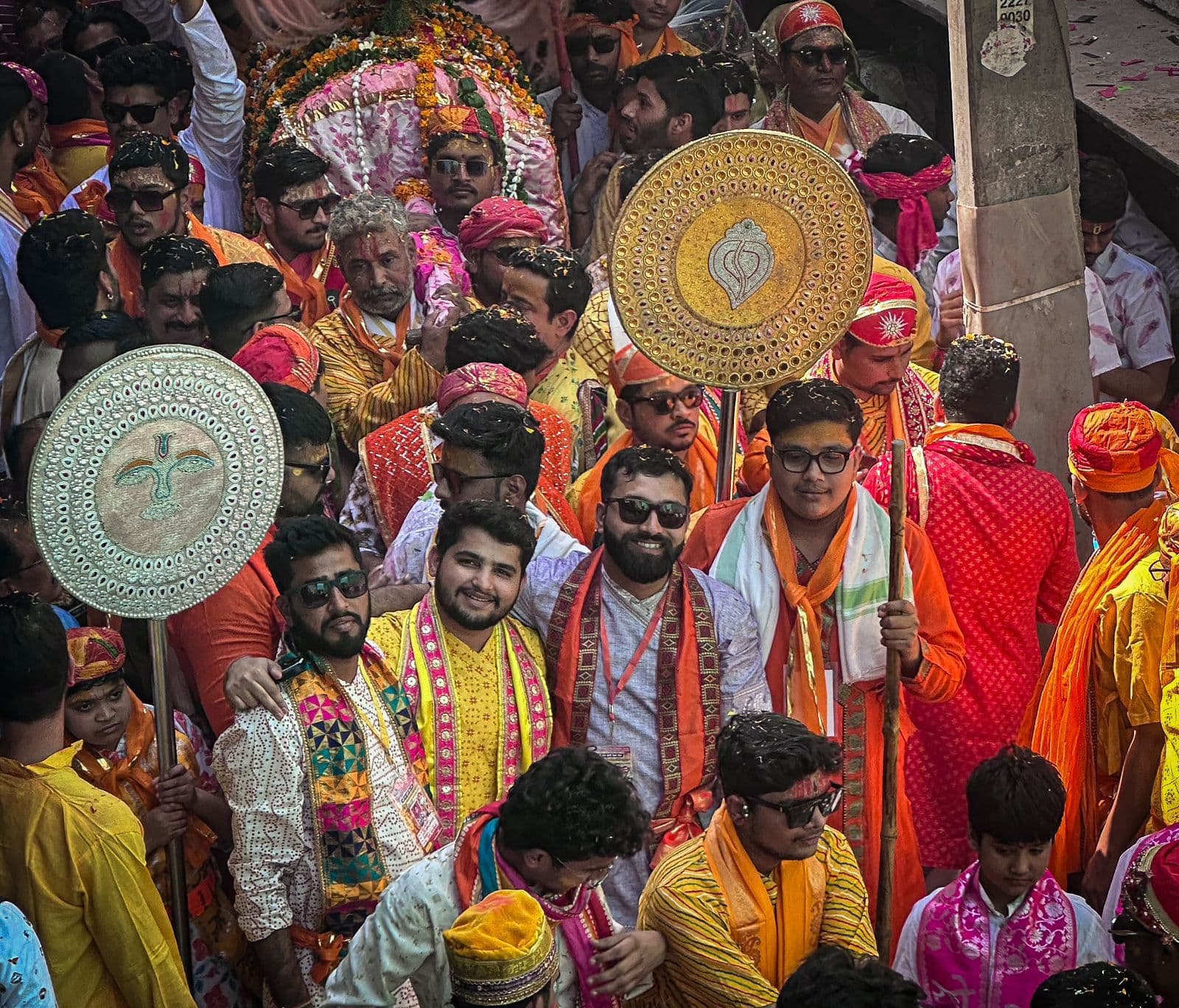
One of the beauties of this Chalisa is that it sings the whole round of the festivals of Banke Bihari through the year and to know them enriches the reading. It names the Bihar Panchami, the appearance day of Bihari ji in the month of Margashirsha; the Basant Panchami of the spring with its yellow garments; the Holi with its clouds of gulaal; the summer with the flower bungalows and the cooling sheetal bhog and the fans; the Hariyali Teej with its swing; the Janmashtami, the birth of Krishna, with its aarti and the Nand Mahotsav that follows; Radha Ashtami and Lalita Shashthi; the Sharad Purnima when the Lord wears his crown; and the Diwali. These are the great days of the temple, when the darshan is at its most beautiful and the crowds are greatest. One of them, the Janmashtami, is the one day in the year when the Banke Bihari temple holds its Mangala Aarti, the dawn aarti, which is not held on ordinary days and the reference in the Chalisa to the Janmashtami Mangala Aarti reflects this truly. Our best time to visit Mathura Vrindavan guide has the festival calendar.
An honest word on Banke Bihari darshan
Since many who love this Chalisa will wish to take the darshan of Banke Bihari at Vrindavan, let me add an honest word as one born in Braj. The darshan at the Banke Bihari temple is free and there is no official VIP darshan pass, whatever touts outside may promise; be wary of anyone who sells one. The temple is very crowded, above all on festivals and weekends and the darshan is by the famous jhanki, the curtain drawn across and open again and again, for Bihari ji is so enchanting that he is never shown for long. Note truly that the Banke Bihari temple does not hold a Mangala Aarti, the dawn aarti, on ordinary days; it is held only on Janmashtami, once in the year, as the Chalisa itself sings, so do not believe anyone who promises you a daily Mangala Aarti here. Come early, hold your belongings close in the crowd and take the darshan in the loving spirit of the Chalisa and Banke Bihari will fill your heart. Our VIP darshan in Vrindavan guide gives the honest truth of the darshan.
Why Experience My India is the right choice
I was born in Gokul Mahaban Bangar and Banke Bihari of Vrindavan is the beloved Lord of my own home ground. Guiding since 2018, more than 50,000 pilgrims, 4.5 stars across 204 Google reviews, WhatsApp first, 8 AM to 9 PM daily. What a local brings to the darshan of Banke Bihari is the timing of your visit to avoid the worst of the crush, the honest truth of the free darshan and the crowds and the festivals, the story of Swami Haridas and the deity told on the ground and the seeing of the temple with the Nidhivan and the other treasures of Vrindavan in the right order. One clear fare and never a charge for free darshan.
Tip from Gurudutt: learn a few verses of this Chalisa by heart before you come for the darshan of Banke Bihari and say them softly in the queue as you wait for the curtain to open on his enchanting form. To stand before Bihari ji with his own praises on your lips, knowing the beauty and the festivals the verses describe, turns a hurried glimpse in a crowd into a moment of real love and meeting. The Lord looks, the saints say, to the heart that comes singing his name. Come with the Chalisa in your heart and Banke Bihari will give you far more than the eyes can see.
Related guides
Plan your Banke Bihari darshan
Tell me your dates and your group and I will build the darshan of Banke Bihari and the treasures of Vrindavan into your Braj trip, the visit timed around the crowds and the festivals, the temple seen with the Nidhivan and the old town in the right order, with a car and a guide born on this soil, for one clear price. WhatsApp +91 7302265809, any day 8 AM to 9 PM. Packages from Rs 5,999 per person, 4.5 stars from 204 Google reviews. Born in Gokul, Mathura.
Book Your Mathura - Vrindavan Trip Today 📞 +91-7302265809 💬 WhatsApp: +91-7302265809 Packages start from ₹1,999/ person | Rated 4.5★ / 204+ Reviews Explore all: Mathura Vrindavan Tour Packages Jai Shri Krishna 🙏 |
Gurudutt — Born & Raised in Braj Bhoomi
Guiding pilgrims through Mathura & Vrindavan since 2018 · 50,000+ pilgrims served