📌 QUICK ANSWER
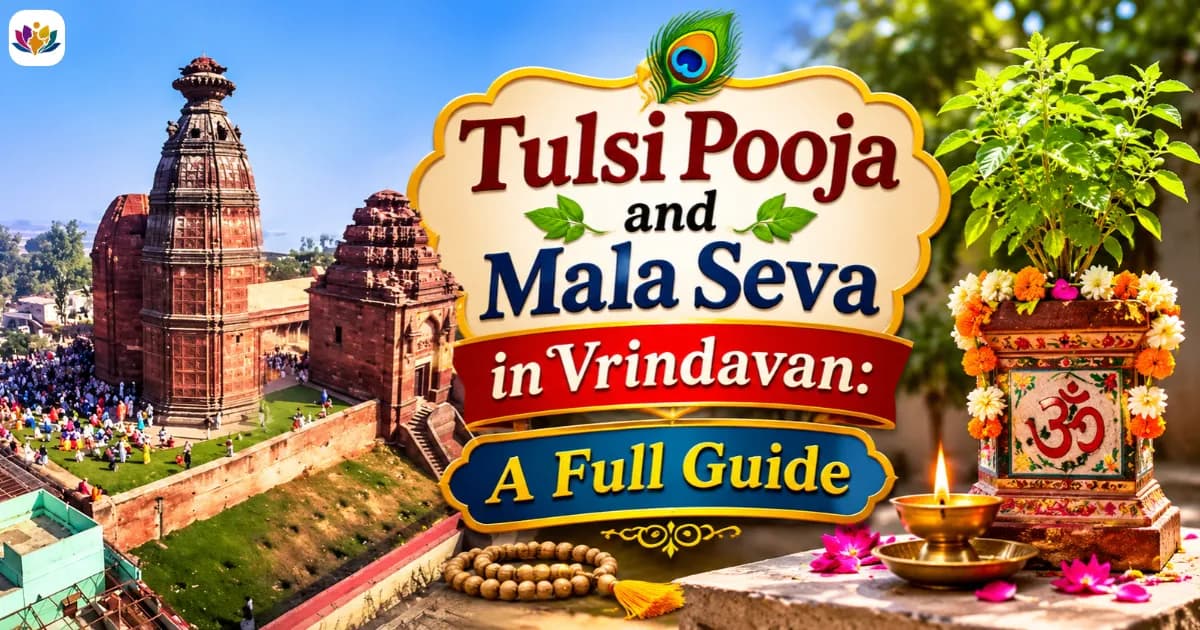
Tulsi Pooja is the worship of the sacred Tulsi plant, revered as Tulsi Devi or Vrinda Devi, the plant most dear to Lord Krishna, after whom Vrindavan itself is named. It is offered daily by watering the plant, lighting a lamp, circumambulating it and offering a tulsi leaf to the deity and is celebrated grandly at Tulsi Vivah in the month of Kartik. Mala Seva has two loving senses: offering fresh flower garlands (phool mala) to the deity as part of shringar and the sacred tulsi mala, the beads worn and used for chanting by Vaishnavas. You can take part at Vrindavan's temples, keep a tulsi plant at home or have an authentic seva and tulsi mala arranged for you. To arrange one, call or WhatsApp +91 7302265809.
The very name Vrindavan comes from Vrinda, another name for the sacred Tulsi, so the holy basil is not just a plant here, it is the soul of the town. Tulsi Pooja, the daily worship of Tulsi Devi and Mala Seva, the loving offering of garlands to the Lord, are among the gentlest and most beautiful sevas a devotee can perform in Braj. People often ask me what these sevas really are and how to take part, so as a Brajwasi I will explain who Tulsi Devi is, how the daily pooja is done, the great festival of Tulsi Vivah, what mala seva means and how you can offer it during your visit. Plan your visit with our Vrindavan tour packages.
How Tulsi Pooja Is Performed
The daily worship of Tulsi Devi is simple and gentle, which is part of its beauty. Here are the traditional elements.
Element | What it means |
Jal (watering) | Offering water to the tulsi plant each morning, often after a bath |
Deepak (lamp) | Lighting a ghee or oil lamp before the plant, especially in the evening |
Parikrama | Circumambulating the tulsi plant with a prayer, often an odd number of times |
Offering tulsi leaf | A tulsi leaf is offered to Krishna; his bhog is considered incomplete without it |
Tulsi Vivah | The ceremonial marriage of Tulsi to Shaligram (Krishna), the year's great tulsi festival |
Tulsi leaves are picked respectfully, never at night or on certain days and the plant is treated as a living goddess, not merely a herb.
Understanding Mala Seva: Flower and Tulsi Malas
Mala Seva covers two kinds of sacred garland and beads, both offered with devotion.
Type of mala | What it is |
Phool mala | A fresh flower garland strung and offered to the deity as part of the daily shringar |
Tulsi kanthi mala | The small neck beads of tulsi wood worn by Vaishnavas as a mark of devotion |
Tulsi japa mala | A string of 108 tulsi beads used for chanting the holy names |
Vaijayanti mala | The traditional garland associated with Krishna, sometimes offered to the deity |
A genuine tulsi mala is carved from tulsi wood and is deeply valued; take care to source one from an authentic, trusted maker rather than a roadside imitation.
Key Takeaways at a Glance
Tulsi is sacred: Vrindavan is named after Vrinda, another name for Tulsi Devi.
Daily pooja is gentle: water the plant, light a lamp, circumambulate and offer a tulsi leaf to Krishna.
Tulsi Vivah in Kartik is the year's great tulsi festival, the marriage of Tulsi to the Lord.
Mala seva means both offering flower garlands to the deity and the sacred tulsi beads for chanting.
You can take part at the temples, at home with a tulsi plant or through an arranged seva.
A Word From Your Guide
I am Gurudutt, born in Gokul and guiding pilgrims through Braj since 2018, more than fifty thousand of them over the years. Of all the sevas here, Tulsi Pooja is the one closest to the everyday life of Braj; almost every home and temple has its tulsi, watered and lit each day. Visitors often want to offer a tulsi pooja or take home a genuine tulsi mala and are unsure how or end up with a cheap imitation sold outside the gates. Let me share how these sevas are truly done, so your offering is sincere and anything you carry home is authentic.
Who Is Tulsi Devi and Why Is She So Sacred?
Tulsi, the holy basil, is revered in the Vaishnava tradition not as a plant but as Tulsi Devi, also called Vrinda Devi, a great devotee of Lord Krishna. Vrindavan itself takes its name from Vrinda, for this was the forest of Tulsi and the Lord is said to love her above all plants. Her leaves are considered so dear to Krishna that no offering of food, no bhog, is complete without a tulsi leaf placed upon it. This is why you will see tulsi growing at the heart of nearly every temple and courtyard in Braj, tended with daily devotion. To feel this living tradition, visit the sacred grove of Nidhivan and Seva Kunj, where the basil of Vrindavan grows thick.
Tulsi Vivah: The Marriage of Tulsi to the Lord
The great annual celebration of Tulsi Devi is Tulsi Vivah, the ceremonial marriage of the Tulsi plant to Shaligram, a sacred form of Lord Vishnu or Krishna. It falls in the holy month of Kartik, around Dev Uthani Ekadashi and marks the beginning of the auspicious wedding season. Homes and temples decorate their tulsi, perform the vivah with full wedding ritual and offer special bhog. It is a joyful, deeply loved festival and Kartik as a whole is one of the most sacred months to be in Braj. For the festival calendar, see our guide to Braj festivals and to plan the season, our guide to the best time to visit Mathura and Vrindavan.
Mala Seva at the Temples
In the temples, mala seva most often means the making and offering of fresh flower garlands for the deity's daily shringar; the garlands you see adorning Thakur Ji are themselves a seva, strung with care and devotion. Devotees can sponsor or offer such garlands as part of their worship. The tulsi mala, meanwhile, is the string of tulsi-wood beads that Vaishnavas wear around the neck as kanthi and use as a japa mala to chant the holy names. Taking initiation and wearing tulsi beads is a cherished step on the devotional path. You will find this living tradition strongest at temples like Radha Raman and ISKCON Vrindavan, where tulsi worship is central to daily life.
How to Take Part in Tulsi and Mala Seva
There are several gentle ways to take part. You can offer a tulsi pooja or a flower garland at the temples during your visit, participate in Tulsi Vivah if you come in Kartik or keep and worship a tulsi plant at your own home, which is a beautiful daily practice. Many devotees also wish to carry home a genuine tulsi mala, received or bought from an authentic source, for their own chanting. If you would like a proper tulsi pooja performed in your family's name or help sourcing a genuine tulsi mala, this is the kind of thing we arrange through our pooja and seva services, with no touts and no imitations. To weave these into a wider temple visit, see our guide to the Mathura and Vrindavan temples.
The Honest Bit
Let me be honest about the one thing that trips visitors up: authenticity. Outside the busy temples you will be offered tulsi malas and garlands by many sellers and not all tulsi beads sold as genuine are truly carved from tulsi wood; cheap imitations in other woods or plastic are common. A real tulsi mala has a particular grain and lightness and is worth sourcing from a trusted maker rather than grabbing the first one pressed into your hand. The same care applies to any paid pooja: offer it through a genuine temple or an accountable arranger and be clear about what is included. None of this should dim the beauty of the seva, tulsi worship is the sweetest and simplest devotion in Braj, but a little care means your mala is real and your pooja is sincere. For a comfortable stay for your visit, see our list of Mathura and Vrindavan hotels.
Why Experience My India Is the Right Choice
I am Gurudutt, born in Gokul, guiding pilgrims through Braj since 2018, more than fifty thousand of them by now. For families who wish to offer a tulsi pooja, take part in Tulsi Vivah or carry home a genuine tulsi mala, we arrange it honestly: a proper pooja in your family's name at a real temple, an authentic tulsi mala from a trusted maker and a visit timed for the beautiful Kartik season if you wish. We plan the whole trip around your devotion, from the Mathura Vrindavan taxi to a thoughtful Mathura Vrindavan itinerary. We are a Ministry of Tourism certified operator with a fleet of more than fifty vehicles, rated 4.5 stars and we answer on WhatsApp from 8 AM to 9 PM.
Tip from Gurudutt: If you take home one thing from Vrindavan, let it be a genuine tulsi mala, but take a moment to make sure it is real. True tulsi beads are light, warm to the touch and carry the faint fragrance of the wood; be wary of heavy, shiny beads sold cheap in a hurry. Better still, start a small tulsi plant at home and offer it water and a lamp each day; it is the simplest devotion in all of Braj and it carries the spirit of Vrindavan to your own doorstep. And if you can, come to Kartik for Tulsi Vivah, when the whole town celebrates the marriage of Tulsi to the Lord. |
Related Guides
Banke Bihari Temple - the beloved heart of Vrindavan.
Krishna Janmabhoomi - the birthplace of Krishna in Mathura.
Prem Mandir - the marble temple of Vrindavan.
Explore More Braj Guides
Vrindavan Tours and Packages - start here to plan your whole pilgrimage.
Tulsi worship pairs naturally with a quiet, devotional Braj journey.
Plan Your Tulsi Pooja and Seva
Tell me your dates and your wishes and I will arrange a sincere tulsi pooja or mala seva in your family's name, source a genuine tulsi mala for you and time your visit for the Kartik season if you would like to see Tulsi Vivah. Build it into a wider darshan with our guide to the places to see in Mathura and Vrindavan. Call or WhatsApp +91 7302265809, daily 8 AM to 9 PM. Packages start from ₹1,999 per person and we are rated 4.5 stars. Born in Gokul, Mathura.
Book Your Mathura - Vrindavan Trip Today 📞 +91-7302265809 💬 WhatsApp: +91-7302265809 Packages start from ₹1,999/ person | Rated 4.5★ / 204+ Reviews Explore all: Mathura Vrindavan Tour Packages Jai Shri Krishna 🙏 |
Gurudutt — Born & Raised in Braj Bhoomi
Guiding pilgrims through Mathura & Vrindavan since 2018 · 50,000+ pilgrims served