📌 QUICK ANSWER
Maha Navami 2026 falls on Monday, 19 October 2026, the ninth day of Sharad Navratri, dedicated to Maa Siddhidatri, the giver of siddhis or spiritual perfections. Sharad Navratri 2026 runs from Sunday, 11 October to Monday, 19 October, culminating in Vijayadashami (Dussehra) on Tuesday, 20 October. Maha Navami is marked by the Navami Havan, the final Kanya Pujan and the completion of the nine-day fast. In Braj, Navratri carries a special beauty, for it was Goddess Katyayani whom the gopis worshipped on the Yamuna to win Krishna's love. To plan a Navratri visit to Braj, call or WhatsApp +91 7302265809.
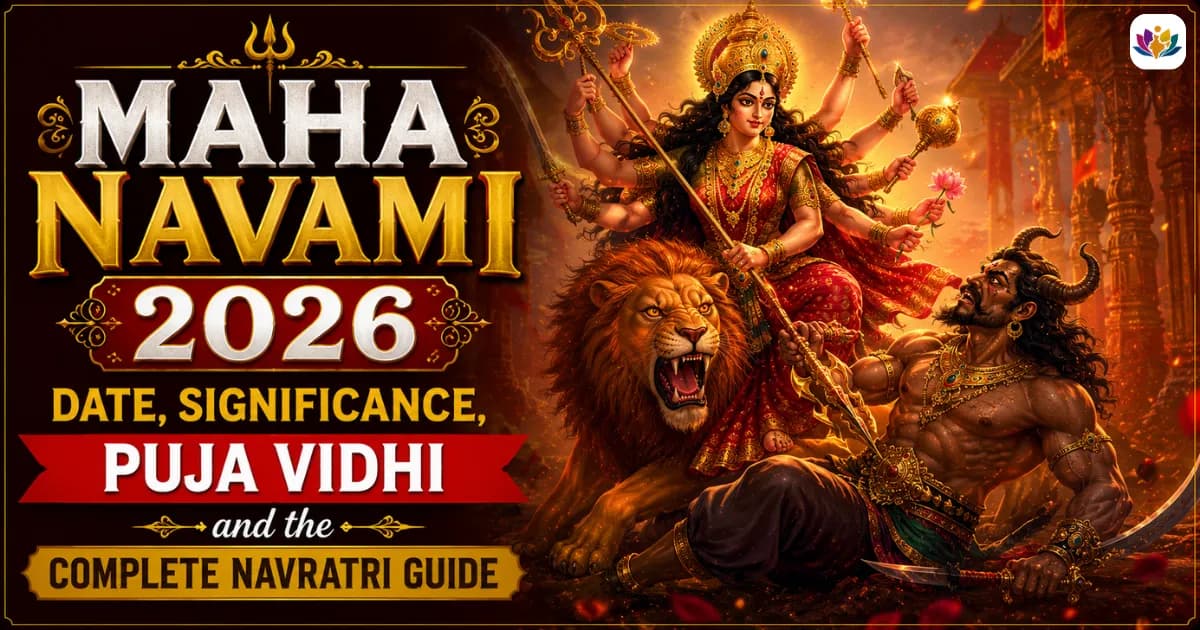
Maha Navami, the ninth and most powerful day of Sharad Navratri, is when the worship of the Goddess reaches its peak, the fierce nine-night battle of Durga against the demon Mahishasura won at last and the devotee's fast and prayer brought to fulfilment. In 2026, Maha Navami falls on Monday, 19 October, the day of Maa Siddhidatri, the giver of all perfections. This complete guide covers the date and significance of Maha Navami, the full nine-day Navratri 2026 calendar with its goddesses, colours and food offerings, a step-by-step puja vidhi you can perform at home and the beautiful, little-known story of Navratri in Krishna's own Braj. Written by one born in the Mathura district, it is everything you need for Maha Navami and Navratri 2026. Plan your visit with our Mathura Vrindavan tour packages.
Key takeaways
Maha Navami 2026 falls on Monday, 19 October 2026, the ninth day of Sharad Navratri.
It is dedicated to Maa Siddhidatri, the giver of siddhis or spiritual perfections.
Sharad Navratri 2026 runs 11 to 19 October, ending with Dussehra on 20 October.
Maha Navami is marked by the Navami Havan, Kanya Pujan and completing the nine-day fast.
Each of the nine days has its own goddess, auspicious colour and traditional bhog.
In Braj, the gopis worshipped Goddess Katyayani on the Yamuna to win Krishna as their husband.
I am Gurudutt, born in Gokul in the Mathura district, guiding pilgrims through Braj since 2018, more than 50,000 of them. Navratri is one of the most joyful and powerful seasons of the year and though Braj is Krishna's land above all, it holds a deep and beautiful connection to the Goddess, from the gopis' Katyayani vrat to the ancient Shakti shrines of Mathura. This long guide gives you everything: the dates, the nine goddesses, the colours and bhogs, the full home puja vidhi and the story of Navratri here in Braj. Here is your complete guide to Maha Navami and Navratri 2026.
When is Maha Navami 2026? Date and Navratri calendar
Maha Navami 2026 falls on Monday, 19 October 2026, the ninth day of the nine-night festival of Sharad Navratri. The festival begins on Sunday, 11 October with Ghatasthapana and each day thereafter honours one of the nine forms of Goddess Durga, before the celebrations culminate in Dussehra. Here are the key dates at a glance.
Detail | Information |
Maha Navami 2026 | Monday, 19 October 2026 |
Goddess of Maha Navami | Maa Siddhidatri, the giver of siddhis |
Sharad Navratri 2026 | Sunday, 11 October to Monday, 19 October 2026 |
Durga Ashtami 2026 | Sunday, 18 October 2026 (Maa Mahagauri) |
Vijayadashami (Dussehra) | Tuesday, 20 October 2026 |
Ghatasthapana muhurat | 6:19 AM to 10:12 AM on 11 October (Delhi) |
Maha Navami and Sharad Navratri 2026 key dates. Tithi and muhurat timings vary by city and can shift; confirm nearer the day.
What is Maha Navami?
Maha Navami, the Great Ninth, is the ninth and final day of Navratri and the climax of the Goddess's worship. It is the day on which, after nine nights of fierce battle, Goddess Durga at last slew the mighty demon Mahishasura, the buffalo-demon who could not be defeated by any god or man, securing the ultimate victory of good over evil that Dussehra celebrates the next day. For the devotee, Maha Navami is the culmination of the whole festival: the nine-day fast is completed, the final Havan or fire offering, is performed and the last Kanya Pujan honours young girls as living forms of the Goddess. It is a day of fulfilment, when the prayers and penance of the nine nights bear fruit and the Goddess, pleased, grants her blessings in full.
Maa Siddhidatri: the goddess of Maha Navami
The presiding goddess of Maha Navami is Maa Siddhidatri, the ninth form of the Navdurga and the giver of siddhis, the supernatural perfections and spiritual attainments. She is depicted seated serenely upon a lotus or a lion, four-armed, radiant and full of grace, bestowing wisdom and fulfilment upon her devotees. It is said that even Lord Shiva attained his powers by worshipping her and that she completes the spiritual journey begun on the first night with Shailputri. Her auspicious colour is peacock green, a hue of individuality and fulfilment and her traditional bhog is til or sesame seeds. To worship Siddhidatri on Maha Navami is to seek not worldly boons alone but the highest spiritual fulfilment, the perfection of the soul, which is why this ninth day is held so precious by the devout.
The complete 9-day Navratri 2026 calendar
Each of the nine nights of Navratri honours a different form of Goddess Durga, the Navdurga and carries its own energy, auspicious colour and traditional food offering. Here is the full calendar of Sharad Navratri 2026, day by day.
Day & Date | Goddess Form | Significance and energy |
Day 1, Oct 11 (Sun) | Maa Shailputri | Goddess of the mountains; raw, grounded strength. Kalash Sthapana today |
Day 2, Oct 12 (Mon) | Maa Brahmacharini | The ascetic goddess; penance, discipline, patience and devotion |
Day 3, Oct 13 (Tue) | Maa Chandraghanta | Bearer of the crescent moon; bravery, justice, fighting negativity |
Day 4, Oct 14 (Wed) | Maa Kushmanda | The cosmic creator; her smile made the universe; abundance and light |
Day 5, Oct 15 (Thu) | Maa Skandamata | Mother of Kartikeya; maternal love, protection and grace |
Day 6, Oct 16 (Fri) | Maa Katyayani | The warrior goddess who slew Mahishasura; the gopis' beloved of Braj |
Day 7, Oct 17 (Sat) | Maa Kalaratri | The fiercest form; destroyer of darkness, ignorance and fear |
Day 8, Oct 18 (Sun) | Maa Mahagauri | Durga Ashtami; spiritual purity, serenity and the washing away of sins |
Day 9, Oct 19 (Mon) | Maa Siddhidatri | Maha Navami; giver of siddhis and spiritual fulfilment |
The complete Sharad Navratri 2026 calendar and the nine forms of Durga (Navdurga).
The nine forms of Durga (Navdurga), explained
The Navdurga are the nine forms in which the Goddess is worshipped through the nine nights, each a facet of the one Divine Mother and together telling the story of the soul's journey from grounded strength to the highest fulfilment. Here is each in a little more depth.
Maa Shailputri (Day 1): the daughter of the mountains, Himavan, embodying raw, foundational strength and the steady ground on which all else is built. The festival opens with her and the Kalash is installed on her day.
Maa Brahmacharini (Day 2): the ascetic who performed severe penance to win Shiva, embodying discipline, patience and unshakeable devotion, the resolve the spiritual path requires.
Maa Chandraghanta (Day 3): who wears the crescent moon like a bell upon her brow, a form of courage and justice, riding into battle against all negativity and fear.
Maa Kushmanda (Day 4): the cosmic creator, whose radiant smile is said to have brought the whole universe into being; she bestows health, abundance and light.
Maa Skandamata (Day 5): the mother of Skanda or Kartikeya, the god of war; she embodies pure maternal love and the fierce, protective grace of a mother.
Maa Katyayani (Day 6): the warrior goddess born of the collective anger of the gods to slay Mahishasura; in Braj, she is the goddess the gopis worshipped to win Krishna.
Maa Kalaratri (Day 7): the fiercest and most fearsome form, dark as the night, destroyer of ignorance, darkness and fear, who ensures the ultimate triumph of justice.
Maa Mahagauri (Day 8): serene and luminously fair, embodying spiritual purity and peace; on her day, Durga Ashtami, sins are said to be washed away.
Maa Siddhidatri (Day 9): the giver of all siddhis and perfections, who completes the journey on Maha Navami with the gift of spiritual fulfilment.
The nine colours and bhogs of Navratri 2026
A beloved tradition of Navratri is to wear the auspicious colour of each day and to offer the goddess her special bhog. Here are the colours and food offerings for each of the nine days in 2026.
Day | Auspicious colour | Traditional bhog |
Day 1, Shailputri | Orange | Pure ghee |
Day 2, Brahmacharini | White | Sugar and fruits |
Day 3, Chandraghanta | Red | Milk or kheer |
Day 4, Kushmanda | Royal blue | Malpua |
Day 5, Skandamata | Yellow | Bananas |
Day 6, Katyayani | Green | Honey |
Day 7, Kalaratri | Grey | Jaggery (gur) |
Day 8, Mahagauri | Purple | Coconut / halwa puri |
Day 9, Siddhidatri | Peacock green | Til (sesame seeds) |
The nine auspicious colours and traditional bhogs of Navratri 2026.
The core traditions and rituals of Navratri
Across its nine days, Navratri weaves together several great traditions, from the first installation of the Kalash to the final worship of young girls. These are the heart of the festival.
Ghatasthapana or Kalash Sthapana (Day 1): the sacred beginning, when a holy urn, the Kalash, is installed and barley seeds are sown in earth beside it, to sprout through the nine days as a sign of the Goddess's blessing and the harvest to come. The morning muhurat on 11 October 2026 runs approximately from 6:19 AM to 10:12 AM.
Fasting or Vrat: many devotees keep a fast through all nine days, maintaining a pure satvik diet. Ordinary grains like wheat and rice are set aside in favour of fasting foods such as buckwheat flour (kuttu), water-chestnut flour (singhara) and sabudana (tapioca) and onion and garlic are wholly avoided. The fast is a discipline of body and mind, purifying the devotee to receive the Goddess's grace; those who cannot fast fully may observe it on the first and last days or simply eat satvik food.
Kanya Pujan (Days 8 and 9): among the most beautiful of all the rituals, when young girls, traditionally under the age of ten, are invited into the home, worshipped as living embodiments of Maa Durga herself and served a feast of chana, halwa and puri. It is a moving expression of the belief that the Divine Mother dwells in every girl and it forms the joyful culmination of the fast on Ashtami or Navami.
Social celebrations: across India the nine nights come alive in different ways. In western India, especially Gujarat, they are danced away in the whirling colour of Garba and Dandiya Raas; in the east, especially Bengal, they are the grand Durga Puja, when magnificent pandals are hopped from Shashthi to Dashami; and in the south they culminate in the royal splendour of Mysuru Dasara.
Maha Navami rituals: the Havan and the culmination
Maha Navami itself carries its own special rites, the crowning observances of the whole festival. Chief among them is the Navami Havan or Homa, the sacred fire offering, in which oblations of ghee, grains and herbs are offered into the consecrated flame with mantras, sending the devotee's prayers to the Goddess and sealing the merit of the nine days' worship. On this day, too, the final and most important Kanya Pujan is held, the young girls honoured and fed as the living Goddess. For those who have fasted, Maha Navami or the following Dashami, is when the vrat is broken, with gratitude, having completed the full nine-night discipline. Many also perform the final aarti with special fervour and offer the ninth bhog of til to Maa Siddhidatri. It is a day of deep fulfilment, the labour of the nine nights brought to its blessed completion.
The complete Navratri puja vidhi you can perform at home
A traditional Navratri puja can be performed beautifully at home and need not be complicated. Below is the full vidhi: the materials to gather, the Day 1 Ghatasthapana setup and the simple daily puja to follow for the remaining days. Perform it with devotion and a clean heart and small imperfections are readily forgiven.
Step 1: Gather your puja samagri. Before you begin, gather these essentials, grouped by purpose.
For | Items to gather |
Altar and deity | An image or idol of Maa Durga, a wooden stool (chowki), a red cloth and a red veil (chunri) |
Kalash Sthapana | A copper, brass or clay Kalash pot, a shallow clay dish, clean soil, barley (jau) seeds, five mango or Ashoka leaves, a whole coconut with husk, red thread (moli), a coin and a betel nut (supari) |
Worship | Kumkum/roli, akshat (unbroken raw rice), flowers (red hibiscus or marigold), incense, camphor, a lamp (diya) and pure ghee |
The Navratri puja samagri, gathered before you begin.
Phase 1: The Day 1 Ghatasthapana (the invocation setup). Perform this during the auspicious morning muhurat on the first day, in these steps:
Purify the space: bathe and put on clean clothes and wipe down the whole puja area with water mixed with a few drops of Ganga jal.
Set up the altar: place the chowki facing east or north-east, spread the red cloth and respectfully install the idol or picture of Maa Durga, with an idol of Lord Ganesha beside her, as he is always worshipped first.
Prepare the barley bed: fill the shallow dish with a layer of soil, scatter the barley seeds evenly, cover with a thin second layer of soil and sprinkle a little water to moisten it.
Assemble the Kalash: tie the moli around its neck; fill it with water and a dash of Ganga jal; drop in a coin, a betel nut and a pinch of akshat; arrange five mango leaves around the rim so the stems dip in and the leaves fan out; wrap the whole coconut in a red chunri tied with moli and set it firmly on the leaves.
Place the Kalash: set the assembled Kalash into the centre of the barley dish and position the whole setup on the altar to the right of Maa Durga's image.
Light the Akhand Jyoti: prepare the large ghee lamp and if you are keeping an unbroken flame, light it now, praying that it burns steadily through all nine days and nights.
Phase 2: The daily five-step puja (Panchopachara Puja). Follow this simple routine each morning and evening, from Day 1 through Day 9:
Dhyana and Aachaman (meditation and purification): sit before the deity, take a spoonful of water in your right hand, chant "Om Durga Devyai Namah" and sip it to cleanse yourself; repeat three times, rinse your hands and sit a moment in silent intention.
Tilak and Akshat (anointing): with your ring finger, apply a tilak of red kumkum to Lord Ganesha, Maa Durga and the front of the Kalash and press a few grains of unbroken rice onto each wet tilak.
Pushpa Samarpan (offering flowers): offer fresh flowers or a garland to the deity and sprinkle a tiny drop of water on the barley soil to keep it moist and sprouting.
Dhoop and Naivedya (incense and food): light an incense stick and place the day's traditional bhog or fresh fruit before the altar, with a small glass of clean water.
Aarti and Kshamapan (prayer and forgiveness): wave the lit camphor or a small diya in a clockwise circle before the deity while ringing a handbell, sing the Durga aarti ("Jai Ambe Gauri"), then bow deeply and ask forgiveness for any unintended mistakes.
Phase 3: The culmination, Kanya Pujan (Ashtami or Navami). On the eighth or ninth day, when the energy peaks, invite nine young girls as living forms of the Goddess: gently wash their feet, tie moli around their wrists, apply a kumkum tilak and serve them a fresh feast of halwa, puri and black chana. Offer them a small gift and your pranam and the puja of the nine nights is complete.
Navratri and Maha Navami in Mathura, Vrindavan and Braj
Braj is the land of Krishna, but it holds one of the most beautiful Navratri stories in all of scripture, for it was Goddess Katyayani, the very form worshipped on the sixth day, whom the young gopis of Vrindavan adored. The Bhagavata Purana tells how, in the cold of early winter, the unmarried gopis rose before dawn each day for a whole month, bathed in the Yamuna at the ghats and fashioned an image of Goddess Katyayani in the sand on the bank, worshipping her with sandalwood, flowers and incense and praying with all their hearts for one boon alone: that Krishna might become their husband. So pleased was the Goddess that she granted their wish. To this day, Vrindavan's ancient Katyayani Peeth, one of the Shakti Peethas, honours this very story and unmarried girls come to pray to Katyayani for a good husband, just as the gopis did.
So Navratri in Braj is doubly sweet: the worship of the Divine Mother, woven together with the love of Krishna. Across Mathura and Vrindavan, the nine nights are kept with devotion at the Shakti shrines, above all the Katyayani Peeth and the ancient Kankali Devi of Mathura, the goddess linked to Krishna's own birth, while the great Krishna temples glow through the season. You may take darshan through Navratri at the Vaishno Devi Dham in Vrindavan, a beloved Devi shrine and at the guardian Bhuteshwar Mahadev, for Shiva and Shakti are ever worshipped together.
And there is a lovely rhythm to the timing: Maha Navami and Dussehra open the golden autumn of Braj, leading on within days to Sharad Purnima, the full-moon night of Krishna's Maha Raas and then to Diwali and Govardhan Puja. To be in Braj for Navratri is to stand at the threshold of the most radiant season of the year. Take darshan too at the Krishna Janmabhoomi, the Dwarkadhish temple and the beloved Banke Bihari and we can arrange your pooja and seva at the Devi shrines.
The significance of Navratri: nine nights of the Divine Mother
Beneath its rituals, Navratri carries a profound meaning. The nine nights celebrate the Divine Feminine, the Shakti that is the creative and protective power of the universe and they retell the eternal victory of that power over the forces of darkness, Durga's slaying of Mahishasura, the triumph of light over ignorance, of courage over fear, of the higher self over the lower. Each of the nine forms is a stage in this inner journey, from the grounded strength of Shailputri to the spiritual fulfilment of Siddhidatri, so that the outward festival mirrors an inward transformation. To keep Navratri fully, with fast and prayer, is to undertake that journey oneself and Maha Navami is its victorious completion.
Tips for observing Maha Navami and Navratri 2026
Perform Ghatasthapana on Day 1 within the morning muhurat (about 6:19 to 10:12 AM on 11 October, Delhi); confirm for your city.
Keep the Akhand Jyoti burning safely and steadily through the nine days if you take that vow.
Follow the daily colours and offer each day's bhog for the fullest observance.
If a full fast is hard, keep it on the first and last days or simply eat satvik food.
Hold Kanya Pujan on Ashtami or Navami and perform the Navami Havan for the culmination.
Confirm the Ashtami and Navami tithi timings, which can overlap and the Sandhi Puja window, nearer the day.
If you can, visit a Shakti shrine and in Braj, the Katyayani Peeth of the gopis.
The honest bit
Honest words from one born in Braj. This guide gives the traditional dates, forms, colours, bhogs and puja vidhi of Navratri as they are widely observed, but Hindu tradition is vast and varies by region, family and lineage, so your own elders' customs always take precedence over any guide. The dates are fixed by the tithi, but the muhurat and the exact Ashtami and Navami timings vary by city and can even overlap in a single day, so confirm them locally with a reliable panchang nearer the time. The fast is a personal discipline; keep it only as your health allows and never to harm. And if you come to Braj for Navratri, know that it is Krishna's land first, so the Goddess is worshipped here in his shadow and beside him, in the tender story of the gopis and Katyayani, which is its own unique beauty. Kept with sincerity rather than mere show, Navratri is among the most transforming seasons of the year.
Why Experience My India is the right choice
I was born in Gokul in the Mathura district and I guide pilgrims through Braj's festival seasons every year, the Goddess's nine nights among them. Guiding since 2018, more than 50,000 pilgrims, 4.5 stars on Google, WhatsApp first, 8 AM to 9 PM daily. For Navratri we secure your stay, meet you at Mathura Junction or Delhi, take you to the Katyayani Peeth, the Kankali Devi and the Shakti shrines as well as the great Krishna temples, arrange your seva and carry you on into the golden season of Sharad Purnima and Diwali, with the stories told on the ground and no touts. One clear fare and never a charge for free darshan.
Tip from Gurudutt: if you can, come to Braj for the last days of Navratri and rise before dawn one morning to visit the Katyayani Peeth. Standing where, for a whole month, the young gopis fashioned the Goddess in the sand of the Yamuna's bank and prayed for Krishna's love, you feel the two great streams of devotion, to the Mother and to the Lord, flow together as nowhere else on earth. That single dawn is worth the whole journey and it is the truest way to keep Maha Navami in Krishna's land.
Related guides
Diwali in Mathura and Vrindavan: the festival of lights in Braj
Govardhan in Mathura: the hill Krishna lifted and the parikrama
Explore more Braj guides
Plan your Navratri trip to Braj
Tell me your dates and how many are travelling and I will plan your Navratri visit, the stay, the car, a guide born on this soil, the Shakti shrines and the Krishna temples in the right order and your seva, for one clear price, carrying you on into the golden Kartik season if you wish. Our Mathura Vrindavan same-day tour by car covers the heart of Braj and we tailor longer festival trips. WhatsApp +91 7302265809, any day 8 AM to 9 PM. Packages from ₹1,999 per person, 4.5 stars on Google. Born in Gokul, Mathura.
Book Your Mathura - Vrindavan Trip Today 📞 +91-7302265809 💬 WhatsApp: +91-7302265809 Packages start from ₹1,999/ person | Rated 4.5★ / 204+ Reviews Explore all: Mathura Vrindavan Tour Packages Jai Shri Krishna 🙏 |
Gurudutt — Born & Raised in Braj Bhoomi
Guiding pilgrims through Mathura & Vrindavan since 2018 · 50,000+ pilgrims served