📌 QUICK ANSWER
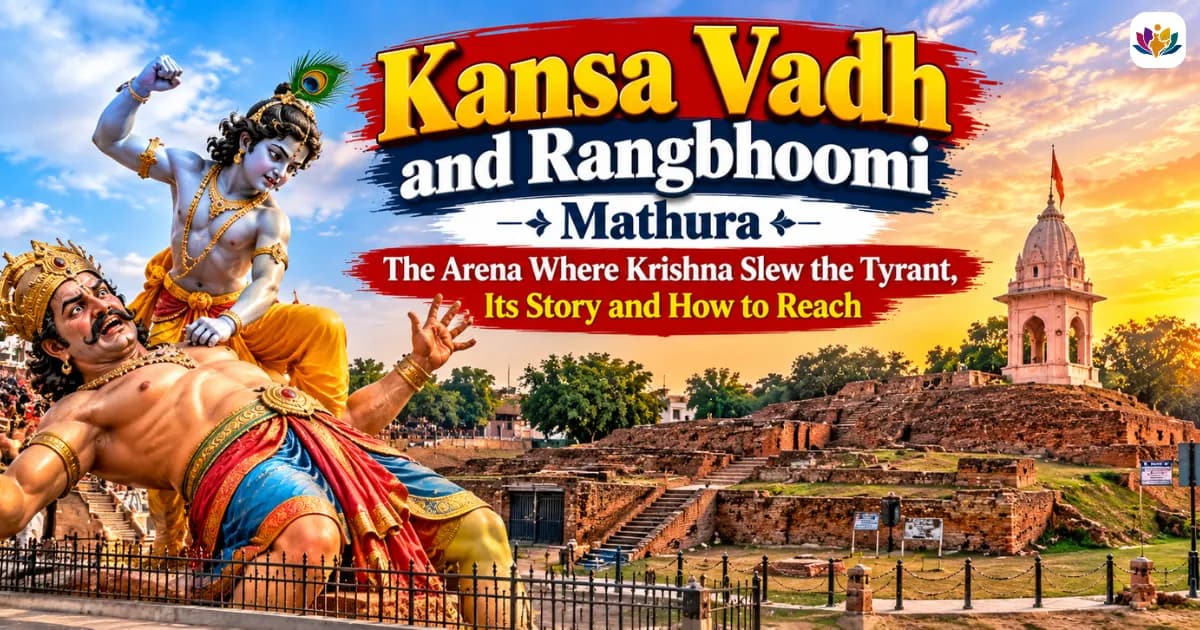
Rangbhoomi, also called the Kansa Vadh Sthal or Kans Tila, is the open-air site in Mathura revered as the ancient wrestling arena where Lord Krishna killed his tyrant uncle, King Kansa. It stands opposite the Main Post Office, near the Rangeshwar Mahadev temple, close to the Krishna Janmabhoomi complex and Vishram Ghat. By the Srimad Bhagavatam, Kansa lured Krishna and Balarama to a wrestling festival as a trap; Krishna killed the elephant Kuvalayapida and the wrestler Chanura, Balarama killed Mushtika and Krishna then dragged Kansa from his throne and slew him, fulfilling the prophecy of his birth. Each year a great Kansa Vadh Mela is held here. To visit Rangbhoomi and the Kansa Vadh sites with a local guide, call or WhatsApp +91 7302265809.
The whole of Krishna's early life points toward a single afternoon in Mathura. The prophecy at his birth, the exchange of the children, the years hidden in Gokul, all of it leads to the wrestling arena where the boy finally faced the uncle who had tried for years to kill him. That arena is Rangbhoomi, revered as the Kansa Vadh Sthal, the exact ground where Krishna slew King Kansa and set Mathura free. It is one of the most meaningful open-air sites in the whole city and the climax of the Krishna story is made real in stone and earth. Plan your visit with our Mathura Vrindavan tour packages.
Kansa Vadh and Rangbhoomi at a Glance: Key Takeaways
What it is: Rangbhoomi, the Kansa Vadh Sthal (Kans Tila), the open-air arena in Mathura where Krishna slew King Kansa.
Location: opposite the Main Post Office, near Rangeshwar Mahadev Mandir, Mathura 281001, close to Krishna Janmabhoomi and Vishram Ghat.
The event: Kansa trapped Krishna and Balarama at a wrestling festival and bow sacrificed; the brothers defeated his champions and Krishna killed Kansa.
The cast: the elephant Kuvalayapida and wrestlers Chanura and Mushtika fell first, then Kansa himself.
What followed: Krishna freed his parents Devaki and Vasudeva and restored his grandfather Ugrasena to the throne of Mathura.
The festival: the annual Kansa Vadh Mela, on Dashami before Devotthan Ekadashi (usually November), with a giant Kansa effigy.
A Word From Your Guide
I am Gurudutt, born in Gokul and guiding pilgrims through Braj since 2018, more than fifty thousand of them over the years. Rangbhoomi is a site I always try to include, because without it the Krishna story has no ending; this is where the prophecy of his birth is fulfilled. Many visitors do the Janmabhoomi and the temples but never stand on the ground where Kansa actually fell. In this guide I will tell you exactly what and where Rangbhoomi is, the full story of the Kansa Vadh as the Bhagavatam gives it, what Krishna did immediately after, the real archaeology of this ancient ground, the great annual Kansa Vadh Mela and how to reach the site and fold it into a Mathura day. Everything here is from the scripture and the living tradition of Mathura.
Rangbhoomi (Kansa Vadh Sthal) at a Glance
Detail | Information |
Also known as | Rangbhoomi, Kansa Vadh Sthal, Kans Tila |
What it is | Open-air site, the ancient wrestling arena of Kansa Vadh |
Location | Opposite Main Post Office, near Rangeshwar Mahadev, Mathura 281001 |
Linked scripture | Srimad Bhagavatam (the killing of Kansa) |
Entry | Free, open-air site; the nearby temple keeps its own hours |
Annual festival | Kansa Vadh Mela, Dashami before Devotthan Ekadashi (Nov) |
An open-air heritage site rather than a timed temple; visit in daylight and confirm festival dates locally.
The Story of Kansa Vadh: The Trap That Became His End
King Kansa, Krishna's maternal uncle, had been warned at Devaki's wedding that her eighth child would kill him and he had spent his whole reign trying to prevent it. When he learned that Krishna and Balarama lived and were growing strong, he set one final trap.
The invitation. Kansa organised a grand wrestling festival and a bow sacrifice, the Dhanur Yajna, in Mathura and had the brothers invited from Gokul, meaning it as an assassination. He stationed his deadliest champions to crush them.
The arena. As Krishna and Balarama approached Rangbhoomi, Kansa first lost the maddened war elephant Kuvalayapida at the gate. Krishna killed the elephant and entered the arena carrying its tusk. Within, the royal wrestlers waited.
The duel. Krishna faced the champion wrestler Chanura and overcame and killed him; Balarama, Krishna's mighty elder brother honoured at Dauji Baldeo, overpowered and killed Mushtika at the same moment. One by one the tyrant's warriors fell.
The end of Kansa. Seeing his champions destroyed, a panicked Kansa ordered the brothers seized. But Krishna leapt onto the royal podium, dragged the tyrant by his hair down onto the arena floor and dealt the fatal blow. The prophecy of his birth was fulfilled and the long tyranny over Mathura was over.
Adversary | Role | Defeated by |
Kuvalayapida | The maddened war elephant at the gate | Krishna |
Chanura | Kansa's champion wrestler | Krishna |
Mushtika | The second royal wrestler | Balarama |
Kansa | The tyrant king himself | Krishna |
The adversaries of Rangbhoomi, in the order the Bhagavatam gives them.
What Krishna Did After the Kansa Vadh
The slaying of Kansa was not the end of the day but the beginning of Mathura's freedom. The scriptures and local tradition tell what followed at once:
He freed his parents. Krishna rushed to the prison of Krishna Janmabhoomi and released his biological parents, Devaki and Vasudeva, from the chains Kansa had kept them in for years.
He restored the rightful king. Krishna reinstated his righteous grandfather, King Ugrasena, Kansa's own father, back onto the throne of Mathura, refusing the crown for himself.
He rested at the Yamuna. Local tradition holds that after the exhausting battle Krishna walked down to the river to sit and rest, which is why that bank is called Vishram Ghat, the ghat of rest, to this day.
The tyrant's own fort, Kans Qila, still stands by the Yamuna, the silent counterpart to the arena where he fell.
The History and Archaeology of Rangbhoomi
Rangbhoomi is not only sacred but genuinely ancient ground. Archaeological finds around Mathura trace the city's urban importance back to at least the 6th century BCE, among the oldest continuously important cities in India. In the age of the Mauryan Empire the area around Rangbhoomi was a prominent Buddhist hub, before the long tide of history returned it to a core site of Hindu worship and devotion. Standing on this mound, you are standing on one of the oldest layers of Mathura itself, a place that has been a centre of the city for well over two thousand years.
The Annual Kansa Vadh Mela
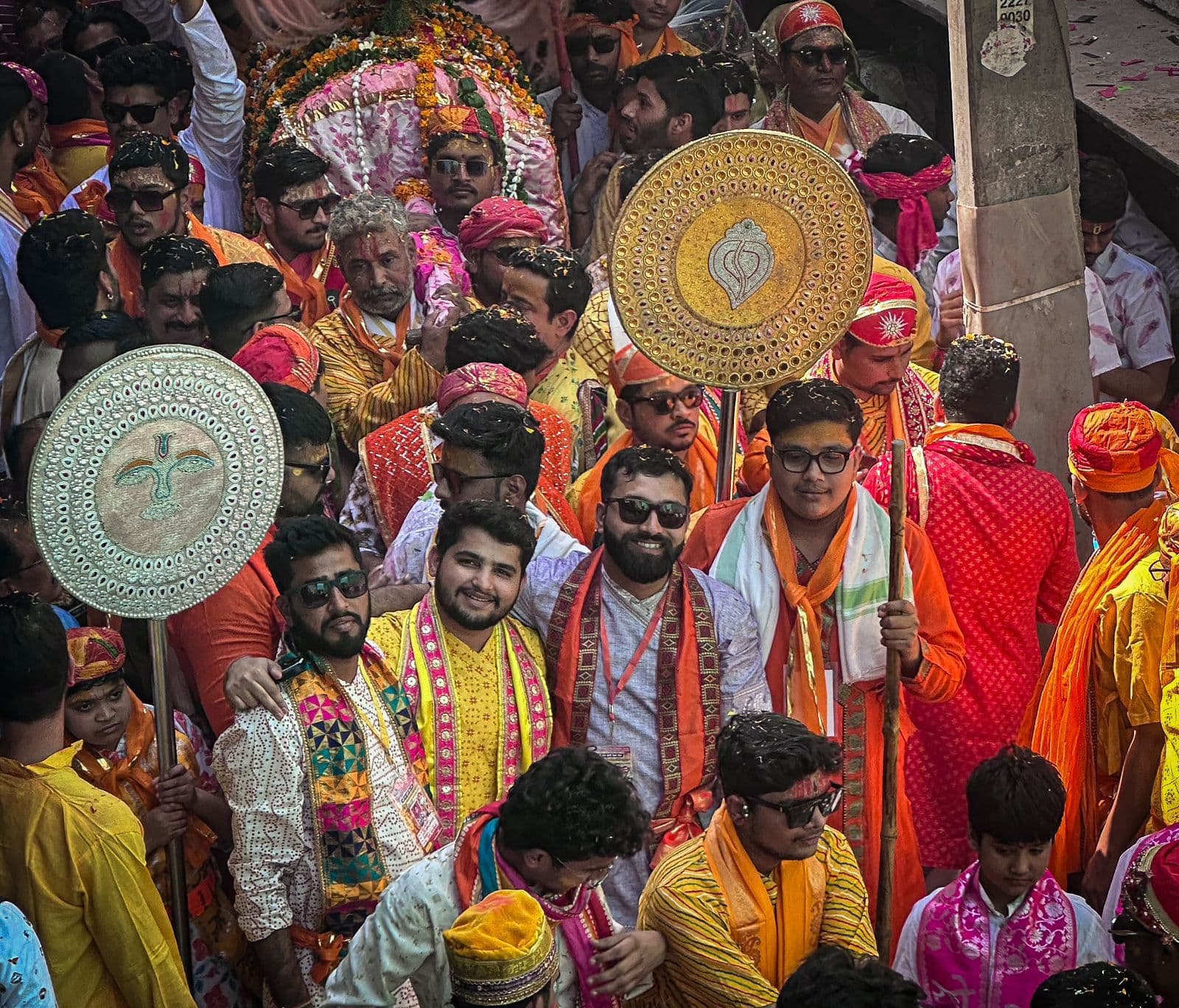
Once a year, Rangbhoomi comes thunderously alive. On Dashami, the day before Devotthan Ekadashi (typically in November), the local Chaturvedi community of Mathura hosts the great Kansa Vadh Mela, a tradition carried on for generations. It is one of the most striking folk spectacles in Braj:
A massive effigy of Kansa, often 18 to 50 feet tall, is built and paraded through the streets of Mathura to the mound.
Young men dressed as Krishna and Balarama re-enact the ancient duel and symbolically slay the effigy.
Devotees strike the fallen effigy with wooden sticks, celebrating the victory of good over evil with great joy.
It is a living festival, not a staged show and to witness it is to see the Kansa Vadh story carried unbroken from the Bhagavatam into the streets of today's Mathura. For the dates and the wider calendar, see our guide to Braj festivals.
Location and How to Reach Rangbhoomi
Rangbhoomi stands opposite the Main Post Office in Mathura, near the Rangeshwar Mahadev temple, pincode 281001, close to the Yamuna and a short distance from the Krishna Janmabhoomi complex and Vishram Ghat. It sits right in the old heart of the city.
From Mathura Junction railway station: about 3 to 4 km; ten to fifteen minutes by auto or car.
From Krishna Janmabhoomi: roughly 2 km; very close, easily combined.
From Vishram Ghat: about 1 km toward the river; a short hop.
Landmark: look for the Main Post Office and the Rangeshwar Mahadev temple, the southern guardian Shiva, right beside the site.
Autos and e-rickshaws reach the area easily. As it sits among the Janmabhoomi cluster, a car makes the whole circuit comfortable and our Mathura Vrindavan taxi can plan the order for you.
Combine Your Visit: A Kansa Vadh Story Route
Rangbhoomi is best seen as part of a route that follows the whole Kansa story through Mathura, from the prison of Krishna's birth to the ghat of his rest. A natural sequence:
Order | Place | Why it fits |
1 | Krishna Janmabhoomi | The prison of Krishna's birth, where it all began |
2 | The tank beside the Janmabhoomi, linked to the infant Krishna | |
3 | Rangbhoomi (Kansa Vadh Sthal) | The arena where Krishna slew Kansa |
4 | Mathura's grand central temple, toward the river | |
5 | Vishram Ghat | The ghat of Krishna's rest after the battle, for the evening aarti |
A route that follows the Kansa story through the city; add the Gita Mandir if time allows.
Pilgrims who like their history full can also add the serene Gita Mandir on the Vrindavan road, where the Bhagavad Gita is carved in stone.
Best Time to Visit Rangbhoomi
The site is an open-air heritage ground, accessible in daylight through the year, but the time to see it truly alive is the Kansa Vadh Mela.
October to March: the most comfortable season for a Mathura day on foot.
Kansa Vadh Mela (Dashami before Devotthan Ekadashi, usually November): the one day the arena re-enacts its own legend; unforgettable but very crowded.
Janmashtami (Aug to Sep): the whole of Mathura celebrates Krishna's birth, the event this ground completes.
Mornings and late afternoons: the kindest hours for the open-air site and the nearby temples.
For a season-by-season plan across Braj, see our guide to the best time to visit Mathura Vrindavan. To have a puja performed at the nearby temples, our pooja services can arrange it.
Practical Tips for Your Visit
Know the story before you go; Rangbhoomi is open ground and its power is in what happened here, so read the legend first.
Combine it with the Janmabhoomi cluster; do the prison, the arena and the ghat together to follow the whole arc.
For the Mela, come early and expect crowds; the effigy procession draws the whole city.
Visit in daylight; as an open-air site it is best seen by day, with the nearby temples.
Mind your belongings in the busy old-city lanes, especially during the festival.
Pair with Rangeshwar Mahadev next door to honour the southern guardian of the city.
The Honest Bit
Let me be honest about what Rangbhoomi is: it is a historic open-air site and mound, not a grand temple with a managed darshan. On an ordinary day it is quiet and if you arrive without knowing the Kansa story you may see only open ground and wonder what the fuss is. Its whole meaning is in the event, so go knowing the legend and the ground comes alive in your imagination. The one day it is unmistakably powerful is the Kansa Vadh Mela, when the giant effigy and the re-enactment fill the streets, but that day is also extremely crowded. The site sits in the busy old heart of Mathura, so pair it with the Janmabhoomi and Vishram Ghat rather than making a special separate trip. If you would like a comfortable base from which to explore Mathura's heritage unhurried, our list of Mathura and Vrindavan hotels will help you choose.
Why Experience My India Is the Right Choice
I am Gurudutt, born in Gokul, guiding pilgrims through Braj since 2018, more than fifty thousand of them by now. Sites like Rangbhoomi are exactly where a local guide brings the stones to life: we know where the arena, the prison and the ghat each stand, the Bhagavata story to tell at each one, the right order to walk them, where the car can go in the old lanes and how to time a visit around the Kansa Vadh Mela if you want to see it. We are a Ministry of Tourism certified operator with a fleet of more than fifty vehicles, we meet you at the station or airport, we keep one clear fare with no surprises and we never charge for darshan that is free. We are rated 4.5 stars and we answer on WhatsApp from 8 AM to 9 PM.
Tip from Gurudutt: Walk the Kansa story in order and it will move you far more than any single stop. Begin at the Janmabhoomi prison where Krishna was born in chains, come to Rangbhoomi where he finally faced and felled the tyrant and end at Vishram Ghat where, the very same evening, a tired young victor sat down by the Yamuna to rest. Stand a moment on the Rangbhoomi mound and picture it: the roaring arena, the fallen elephant, the king dragged from his throne. This open ordinary-looking ground is where the whole reason for Krishna's birth came true. |
Related Guides
Mathura and Vrindavan places to see - the full map of shrines, ghats and sites worth your time.
Bhuteshwar Mahadev - the western guardian Shiva beside Krishna Janmabhoomi.
Mathura Vrindavan itinerary - how to order a Braj trip across the days you have.
Gokul - the village of Krishna's infancy, from where he came to Mathura.
Explore More Braj Guides
Mathura Vrindavan Temples hub - every major temple, ghat and sacred place in one place.
Rangji Mandir, Mathura Vrindavan - the vast South-Indian-style temple of the city.
Govardhan in Mathura - the sacred hill and its parikrama, for a fuller Braj trip.
Plan Your Mathura Darshan
Tell me your dates and where you are starting from and I will build you a Mathura day that follows the whole Kansa story, the prison, the arena and the ghat, in the right order and at the right hour and we can time it for the Kansa Vadh Mela if you wish to see it. A good base to begin from is our Mathura tour packages. Call or WhatsApp +91 7302265809, daily 8 AM to 9 PM. Packages start from ₹1,999 per person and we are rated 4.5 stars. Born in Gokul, Mathura.
Book Your Mathura - Vrindavan Trip Today 📞 +91-7302265809 💬 WhatsApp: +91-7302265809 Packages start from ₹1,999/ person | Rated 4.5★ / 204+ Reviews Explore all: Mathura Vrindavan Tour Packages Jai Shri Krishna 🙏 |
Gurudutt — Born & Raised in Braj Bhoomi
Guiding pilgrims through Mathura & Vrindavan since 2018 · 50,000+ pilgrims served