📌 QUICK ANSWER
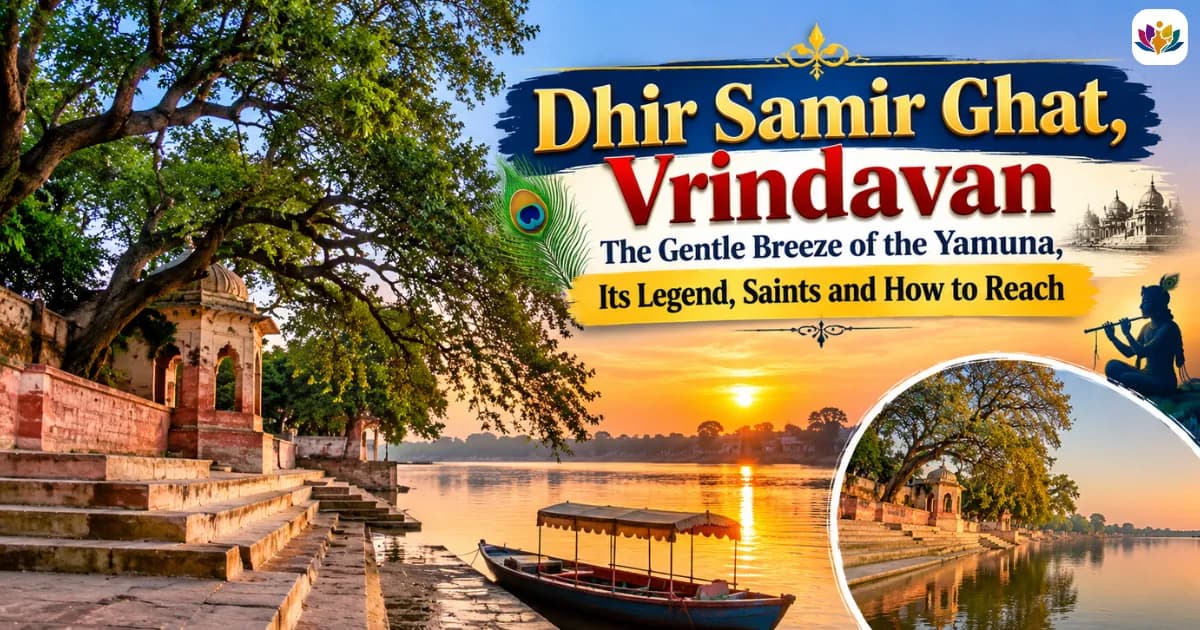
Dhir Samir Ghat (also spelled Dheer Sameer) is a serene, spiritually profound bank of the Yamuna in Vrindavan, near Keshi Ghat and Vanshi Vat. The name means 'gentle breeze': by legend, Krishna's flute at this grove was so enchanting that even the strong Vrindavan winds slowed to a gentle whisper to listen. The poet Jayadeva immortalised it in the Gita Govinda ('Dhira samire yamuna tire...'). It is revered as a mana-bhanjana site, where Krishna dissolved Radha's loving anger and it houses the samadhi of the saint Gauridas Pandit and the Shyam Ray deity he recovered from the Yamuna. To visit this quiet ghat with a guide who knows its stories, call or WhatsApp +91 7302265809.
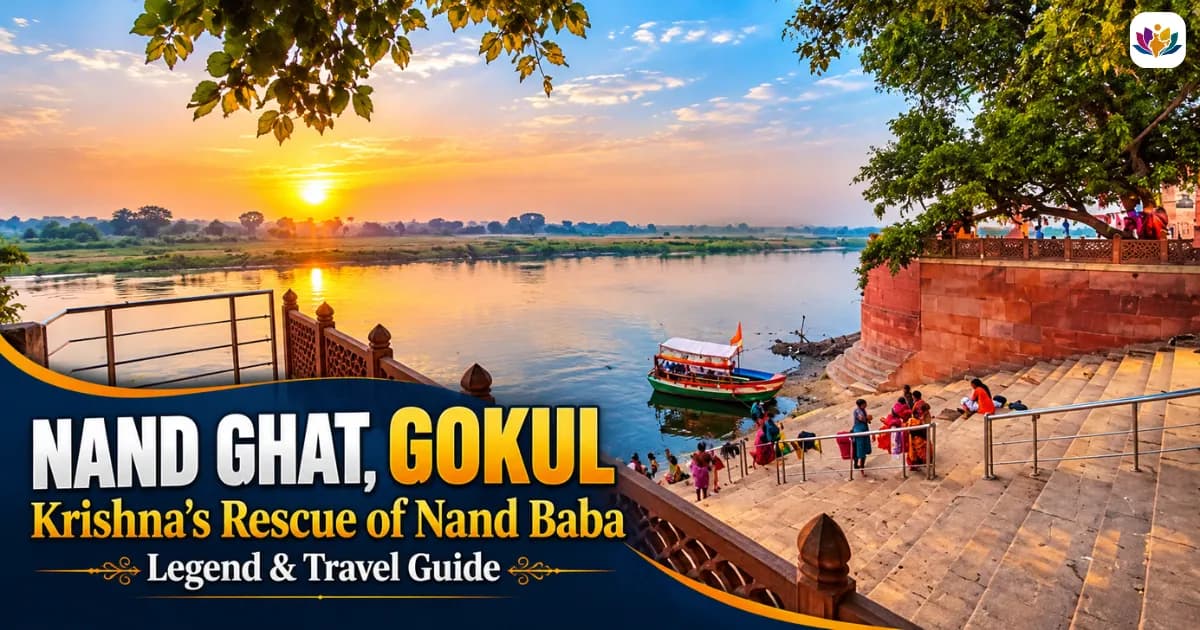
There is a stretch of the Yamuna in Vrindavan where the wind itself is said to have fallen quiet. The Brajwasis call it Dhir Samir, the gentle breeze and it is one of the most serene and least crowded banks of the river. It is a place of poets and saints rather than crowds, immortalised in a 12th-century Sanskrit masterpiece and remembered as the very spot where Krishna soothed Radha's loving anger. If you want the Vrindavan the old bhajan-singers knew, away from the queues, this quiet grove near Keshi Ghat is where you go. Plan your visit with our Mathura Vrindavan tour packages.
Dhir Samir Ghat at a Glance: Key Takeaways
Meaning: Dhir Samir translates as 'gentle breeze' (dhira, calm; samira, wind), from the legend of Krishna's flute calming the Yamuna winds.
Location: Dheer Sameer Ashram Kunj, Vanshivat Muhalla, near Keshi Ghat, Vrindavan, Uttar Pradesh 281121, a short walk northeast from Keshi Ghat and Vanshi Vat.
Literary roots: celebrated in Jayadeva's 12th-century Gita Govinda, in the famous line beginning 'Dhira samire yamuna tire'.
Spiritual significance: a mana-bhanjana sthala, where Krishna broke and dissolved Radha's jealous, loving anger (mana).
Saints: it holds the samadhi of Gauridas Pandit, a 16th-century companion of Chaitanya Mahaprabhu, revered as the incarnation of Subal Sakha.
Shyam Ray temple: the adjacent Dheer Sameer Kunj enshrines the Shyam Ray deity, which Gauridas Pandit is said to have recovered from the depths of the Yamuna.
A Word From Your Guide
I am Gurudutt, born in Gokul and guiding pilgrims through Braj since 2018, more than fifty thousand of them over the years. When a traveller tells me they have seen the big temples and now want the real, quiet Vrindavan, Dhir Samir is one of the first places I take them. It rewards those who know its story. In this guide I will explain what the name means and the flute legend behind it, the Gita Govinda verse that made it famous, why it is a mana-bhanjana site, the saints and the Shyam Ray deity that live here, exactly where it sits near Keshi Ghat and how to fold a slow evening at this ghat into your Vrindavan days. Everything here is from the Brajwasi tradition and the scriptures the elders still recite.
Dhir Samir Ghat at a Glance
Detail | Information |
Also spelled | Dheer Sameer Ghat / Dhir Samir Ghat |
Meaning | 'Gentle breeze' (dhira, calm; samira, wind) |
Location | Dheer Sameer Ashram Kunj, Vanshivat Muhalla, near Keshi Ghat, Vrindavan 281121 |
Presiding deity | Shyam Ray (recovered from the Yamuna by Gauridas Pandit) |
Significance | Mana-bhanjana sthala; Gita Govinda site; samadhi of Gauridas Pandit |
Best time | Dawn and dusk; cool months (Oct to Mar); Kartik is most sacred |
Crowd level | Low, a quiet oasis away from the main temple queues |
Details per the Brajwasi tradition; the Shyam Ray temple follows morning and evening darshan hours, so confirm locally.
The Meaning of Dhir Samir and the Legend of the Flute
The name Dhir Samir translates directly as the gentle breeze: dhira, meaning calm or gentle and samira, meaning the wind. Behind that lovely name lies one of the tenderest of the Braj legends. It is said that Krishna would sit at this grove along the Yamuna and play his flute and the melodies were so captivating that the fast, strong winds of Vrindavan would slow of their own accord to a soft, graceful whisper, just to linger near the music and listen. The bank was named for that stillness, the place where even the wind grew calm to hear the Lord play.
Literary Roots: Dhir Samir in Jayadeva's Gita Govinda
Dhir Samir is not only a place of legend but of literature. The ghat and its surrounding kunj are immortalised in the Gita Govinda, the 12th-century Sanskrit masterpiece of the poet Jayadeva, one of the most celebrated devotional poems ever written. Jayadeva penned the famous verse that opens 'Dhira samire yamuna tire vasati vane vanamali', describing a flower-garlanded Krishna, Vanamali, waiting patiently in the gentle breeze on the bank of the Yamuna for Radha to come to him. For centuries, those words have carried the name of this ghat across the whole of India and to stand here is to stand inside a line of that poem.
A Mana-Bhanjana Sthala: Where Krishna Softened Radha's Anger
Dhir Samir lies within the ancient Manikarnika grove and it is revered as a mana-bhanjana site. Mana is the proud, loving, jealous anger of a beloved; bhanjana means to break or dissolve it. This is the spot where, in the leela, Krishna skilfully broke and melted away the loving anger of Shrimati Radharani and won her back to sweetness. In the tradition of Braj, these moments of mana and its tender resolution are among the deepest of all the pastimes and Dhir Samir is one of the places most sacred to them. It is a theme you will also feel at Nidhivan and Seva Kunj, the grove of the nightly Raas, a short way from here.
The Saints of Dhir Samir: Gauridas Pandit and the Shyam Ray Deity
For centuries, great Vaishnava saints chose this quiet stretch of riverbank for intense meditation and bhajana, drawn by its stillness. Most revered among them is Gauridas Pandit, a prominent 16th-century saint and a close companion of Chaitanya Mahaprabhu, remembered in the tradition as the very incarnation of Subal Sakha, one of Krishna's dearest cowherd friends. His samadhi (tomb-shrine) is here at Dhir Samir.
The adjacent Dheer Sameer Kunj enshrines the deity of Shyam Ray, which Gauridas Pandit is said to have miraculously recovered from the depths of the Yamuna itself. This devotional lineage of saints and self-revealed deities is the same thread that runs through the great Goswami temples of Vrindavan, from Radha Damodar with its saints' samadhis to Radha Raman with its self-manifested deity. A quiet darshan of Shyam Ray at Dhir Samir, with a word for Gauridas Pandit, completes the visit. If you wish to have a puja or an offering made in your family's name here, our pooja services can arrange it with the local priests.
Location and How to Reach Dhir Samir Ghat
Dhir Samir sits in the Vanshivat Muhalla of old Vrindavan, close to the river and well away from the busiest temple lanes. Its address is Dheer Sameer Ashram Kunj, near Keshi Ghat, Vrindavan 281121. It is tucked into a small alley just behind the Maa Sharada Kutir, a short walk northeast of the famous Keshi Ghat and the ancient Vanshi Vat and Yamuna leela spots.
From Keshi Ghat: a five-minute walk northeast along the riverside lanes; the easiest landmark to navigate from.
From Banke Bihari Temple: about 1 km through the old lanes; ten to fifteen minutes on foot.
From Vrindavan's main road / parking: come to the Keshi Ghat area by e-rickshaw, then walk in; cars cannot enter the narrow riverside alleys.
On foot: ask for Dheer Sameer Kunj or Vanshivat; the locals all know it and the small alley behind Maa Sharada Kutir leads you in.
Because the lanes here are narrow and old, the practical way to arrive is to take a vehicle to the Keshi Ghat or Banke Bihari area and walk the last stretch. Our Mathura Vrindavan taxi drivers know exactly where to drop you for the shortest walk in.
Combine Your Visit: A Quiet Yamuna and Old-Vrindavan Walk
Dhir Samir is best enjoyed as part of a slow walk through riverside Vrindavan, ideally in the late afternoon so you end at the Yamuna for the evening aarti. A gentle sequence might run:
Order | Place | Why it fits |
1 | Begin at the grand 16th-century Goswami temple before walking riverward | |
2 | Vanshi Vat | The ancient banyan where Krishna called the gopis with his flute |
3 | Dhir Samir Ghat | The gentle-breeze bank: Shyam Ray darshan and Gauridas Pandit's samadhi |
4 | A short walk into the lanes to the beloved Radha Vallabh deity | |
5 | Keshi Ghat | End at the main ghat for the evening Yamuna aarti at dusk |
A representative late-afternoon walk; keep to daylight and take a guide for the old lanes.
Best Time to Visit Dhir Samir Ghat
The ghat is open through the day, but it is a place for the quiet hours. Come at dawn or at dusk, when the light is soft on the river and the stillness that gave the ghat its name is most felt.
Dawn and dusk: the most beautiful and meditative hours; dusk pairs naturally with the Keshi Ghat evening aarti.
October to March: the best season; cool, clear weather for walking the riverside lanes.
Kartik month (Oct to Nov): the most sacred time in Vrindavan, when the whole riverside is luminous with lamps.
April to June: very hot; visit only early morning or after sunset.
For a season-by-season plan across Braj, see our guide to the best time to visit Mathura Vrindavan.
Practical Tips for Visiting Dhir Samir
Walk, do not drive; leave the vehicle near Keshi Ghat or Banke Bihari and come in on foot through the lanes.
Come for the quiet; this is a place to sit a while by the water, not to rush through. Keep your voice low.
Go in daylight or at dusk with company; the old riverside alleys are atmospheric but confusing after dark.
Mind the monkeys near the ghats; hold your glasses, phone and prasad firmly.
Do not enter the Yamuna to bathe here carelessly; respect the ghat and take guidance on where it is safe.
Carry small notes for an offering at the Shyam Ray temple and the samadhi, given willingly.
The Honest Bit
Dhir Samir is not a grand, signposted monument. It is a small, old kunj down a narrow alley and if you arrive without knowing its story you might wonder why you came. Its whole value is in the poetry and the history: the Gita Govinda verse, the mana-bhanjana leela, Gauridas Pandit and the Shyam Ray deity. Go knowing those and it becomes unforgettable; go blind and it is just a quiet riverbank. The lanes around it are genuinely easy to get lost in and signage is poor, so a local who can walk you straight to it saves a lot of wandering. The Yamuna here, as across Vrindavan, is not always clean, so admire the river rather than plunge into it. If you would like a comfortable base from which to explore the riverside Vrindavan slowly, our list of Mathura and Vrindavan hotels will help you choose.
Why Experience My India Is the Right Choice
I am Gurudutt, born in Gokul, guiding pilgrims through Braj since 2018, more than fifty thousand of them by now. Hidden places like Dhir Samir are exactly where a local guide is worth everything: we know the alley behind Maa Sharada Kutir, the story at every stone, the right hour to come, where the car can wait and where you must walk and how to arrange a quiet darshan or puja with the kunj's own priests rather than being hurried by touts. We are a Ministry of Tourism certified operator with a fleet of more than fifty vehicles, we meet you at the station or airport, we keep one clear fare with no surprises and we never charge for darshan that is free. We are rated 4.5 stars and we answer on WhatsApp from 8 AM to 9 PM.
Tip from Gurudutt: Come to Dhir Samir in the last hour of daylight, not the middle of the day. Sit on the old steps with the Yamuna in front of you and let yourself remember the line of Jayadeva, Krishna waiting in the gentle breeze for Radha on this very bank. The wind really does seem softer here. Then walk the two minutes to Keshi Ghat for the evening aarti as the lamps are lit. That hour, from Dhir Samir to the aarti, is the most beautiful quiet thing in all of Vrindavan and almost no tour ever shows it to you. |
Related Guides
Vrindavan city map - find the riverside ghats and old lanes at a glance.
Banke Bihari Temple - the beloved heart of Vrindavan, a short walk from Dhir Samir.
Meera Bai Temple - the saint-poet of Krishna, in the same devotional lineage.
Mathura Vrindavan itinerary - how to order a Braj trip across the days you have.
Explore More Braj Guides
Mathura Vrindavan Temples hub - every major temple, ghat and sacred place in one place.
Madan Mohan Temple - the hilltop Goswami temple above the river nearby.
Braj festivals - Kartik, Holi, Janmashtami and the full Vrindavan calendar.
Mathura and Vrindavan places to see - the full map of shrines and ghats worth your time.
Plan Your Vrindavan Visit
Tell me your dates and where you are starting from and I will build you a Vrindavan that includes the quiet, poetic places like Dhir Samir, not just the famous queues: a slow riverside walk, the right temples in the right order and the evening aarti to close the day. A good base to begin from is our Mathura tour packages. Call or WhatsApp +91 7302265809, daily 8 AM to 9 PM. Packages start from ₹1,999 per person and we are rated 4.5 stars. Born in Gokul, Mathura.
Book Your Mathura - Vrindavan Trip Today 📞 +91-7302265809 💬 WhatsApp: +91-7302265809 Packages start from ₹1,999/ person | Rated 4.5★ / 204+ Reviews Explore all: Mathura Vrindavan Tour Packages Jai Shri Krishna 🙏 |
Gurudutt — Born & Raised in Braj Bhoomi
Guiding pilgrims through Mathura & Vrindavan since 2018 · 50,000+ pilgrims served